Walk through an open house in South Jersey right now, and you might notice something strange. One home down the street has a sold sign after a single weekend. Another, just a few blocks away...

Low Taxes Aren't Enough: Rising Utility Costs Are Squeezing New Jersey's Senior Buyers

Written by:
Date:
10 Jul 2026
Share via Facebook

Share via Linkedin

Share via X

Copy to clipboard

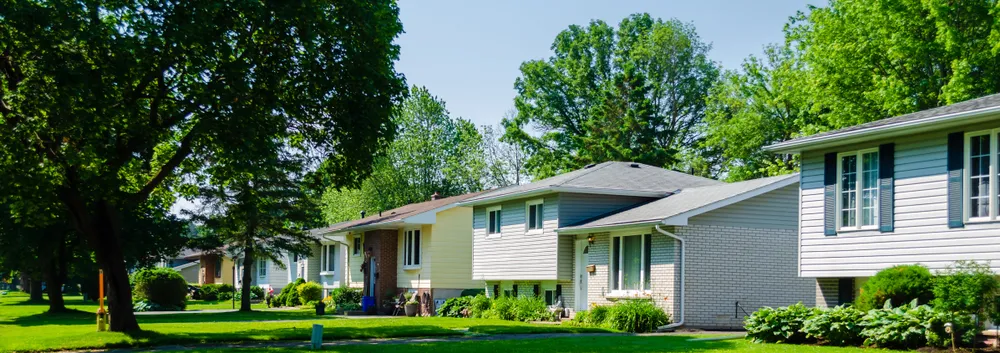
Ocean County’s Whiting and Manchester areas have long drawn retirees with a simple promise: dramatically lower property taxes than North Jersey. A single-family home here might carry an annual tax bill of $1,800, compared to $14,000 in Essex County for a similar property, according to Kenneth Freeman, a Realtor Associate and Senior Housing Specialist with Heart of Gold Realty (a member of ERA Byrne). For seniors on fixed incomes, that gap has made the region one of the most affordable options in the state. But Freeman argues that buyers who focus solely on the tax savings are miscalculating their true monthly cost, because utility expenses in these all-electric communities have surged to the point where they rival or exceed the savings that drew buyers here in the first place.
Freeman works exclusively in the 55-plus communities of Ocean and Monmouth Counties. He has watched buyers arrive from high-tax counties expecting to cut their housing costs dramatically, only to discover that monthly electric bills create a financial pressure they hadn’t anticipated.
When Electric Bills Spike
The issue is structural. Most of the senior communities in this area are all-electric, with no gas lines and no alternative heating source. During winter months, Freeman reports that electric bills in some homes have reached punishing levels. “We’ve had some of them that were upwards of $500 a month, and for seniors on a fixed income, that’s kind of rough,” he says.
A senior who moved from Essex County and saved roughly $12,000 annually in property taxes might assume they’ve freed up $1,000 a month in their budget. But if winter electric bills are running $500 – in a ranch-style home that’s typically modest in square footage, a significant chunk of that tax savings is consumed by a cost that doesn’t appear on any listing sheet or tax record.
Utility And Cost Pressures
Some communities have allowed natural gas service, and residents who’ve converted report meaningful savings. But conversion isn’t available everywhere, and for communities that remain all-electric, the cost exposure is baked into the infrastructure. A buyer can’t negotiate it away or inspect their way around it.
This utility pressure compounds other cost increases Freeman is tracking. Food costs, insurance, and general inflation hit fixed-income households hardest. The seniors in these communities aren’t absorbing one cost increase; they’re absorbing several simultaneously, against income that doesn’t adjust. Freeman says people “are afraid to sell, and some are afraid to buy” because of these overlapping pressures.
A Frozen, Mispriced Market
The result is a market frozen in place. Inventory is low because owners who locked in mortgage rates around 3% several years ago won’t trade up to current rates near 6%. Buyers are hesitant because the total cost picture, purchase price plus monthly fees plus utilities plus insurance plus rising food costs, adds up to more than the headline tax savings suggest. Freeman says open houses draw few or no visitors. Listings sit, then reduce.
Freeman describes one current listing where the sellers initially priced at $239,000. He told them it was overpriced, but they wanted to try. They’ve since dropped to $232,000 and are still waiting for serious interest. The pattern is common: sellers price based on what upgraded homes in better condition have listed for, rather than what their own property – with original cabinets and bathrooms – can realistically command.
Freeman places part of the blame on agents who provide misleading market analyses. Rather than pulling true comparables, some agents show sellers a list of higher-priced, fully upgraded properties and let the seller conclude their home is worth the same. “They just want to lock in the listing,” Freeman says. The seller lists high, the property sits, and eventually the price drops, but only after months of lost time.
What Buyers Should Weigh
For buyers evaluating a move to one of these communities, the practical step is to model total monthly cost across all seasons, not just the sticker price and the property tax line. Ask what the home’s heating source is. Ask for prior utility bills covering at least one full winter. If the community is all-electric with no gas conversion option, build that winter spike into your budget before committing.
The low-tax advantage is real and substantial. But buyers who treat it as the entire financial story may find their monthly budget tighter than expected once January arrives. Freeman frames the broader squeeze directly: “Until the federal government straightens things out and makes things affordable all the way around,” seniors in these communities face pressure from multiple directions at once, and no single savings, however large, guarantees comfort on a fixed income.
About the Expert: Kenneth Freeman is a Realtor Associate and Senior Housing Specialist with Heart of Gold Realty, serving the Ocean County, New Jersey senior and age-restricted community market for decades.
This article is intended for informational purposes only and does not constitute legal, financial, or investment advice. The views and opinions expressed herein reflect those of the individuals quoted and do not represent an endorsement of any company, product, or service mentioned. Readers should conduct their own due diligence and consult qualified professionals before making any investment decisions.
Similar Articles
Explore similar articles from Our Team of Experts.