

Amery, Wisconsin, about an hour from Minneapolis–St. Paul is one of many small cities actively seeking housing and business development. Unlike rural towns that merely express interest in ...

Why Canadian Downsizers Over 55 Are Choosing Rentals Over Condos

Written by:
Date:
17 Jul 2026
Share via Facebook

Share via Linkedin

Share via X

Copy to clipboard

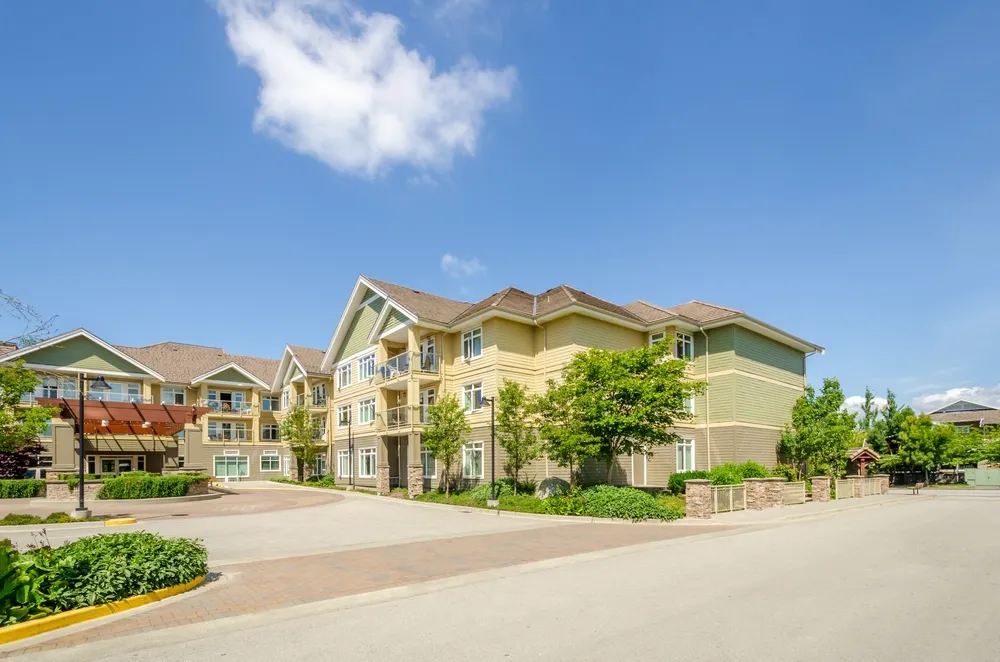
A growing number of Canadian homeowners over 55 are making a choice that would have seemed counterintuitive a generation ago: selling the family home and renting an apartment instead of buying a condo. For long-time homeowners who want flexibility and less maintenance, renting in a secondary market may now be the smarter financial and lifestyle decision, not a step backward.
Rising condo fees, maintenance assessments, and the opportunity cost of tying up home equity in another property are pushing this cohort toward purpose-built rental buildings that offer amenities comparable to ownership, without the obligations that come with it.
Built for Downsizers
Stavro Stathonikos, President and CEO of NexLiving Communities Inc., a publicly traded multifamily operator on the TSX Venture Exchange, says his company’s buildings are designed specifically for this demographic. Many of these tenants are previous homeowners aged 55 and older who want what Stathonikos calls a “lock and leave” lifestyle. Some maintain a winter home down south and want a low-maintenance base in the Canadian community where they raised their families.
The buildings reflect that market. NexLiving properties include golf simulators, community rooms, gyms, barber shops, and massage rooms. They are positioned near golf courses, parks, and hospitals. The average unit is around 1,000 square feet, larger than a typical rental, and costs roughly $1,500 Canadian per month in secondary markets.
For a homeowner who just sold a property worth $400,000 or $500,000, that monthly rent is a fraction of what a comparable condo with similar amenities would cost to own after factoring in condo fees, property taxes, and maintenance assessments. The freed-up equity can sit in investments or fund travel rather than being tied up in another property.
Better Tenants, Lower Costs
These tenants behave fundamentally differently from younger renters. People who maintained a home for 30 years know how to care for a space. They do not cause accidental damage from inexperience. They do not need to learn how appliances work. “They maintained a home for 30 years, raised a family in there, and now they go to apartments. It’s easy for them,” Stathonikos says.
This matters operationally. Buildings with downsizer tenants cost less to maintain, experience less turnover, and require fewer unit renovations between occupants. Stathonikos says his company takes the opposite approach from landlords who encourage turnover to reset rents higher. NexLiving prioritizes retention, and the cost savings are significant. Rather than spending capital to turn over units, the company retains that money and redirects it toward portfolio growth.
The Real Tradeoffs
The tension here is real, though. A renter – even a comfortable one – builds no equity. If you are 58 and sell your home to rent, you are betting that the investment returns on your freed-up capital will outperform whatever appreciation a condo might deliver. In a rising market, that bet could lose. And unlike a homeowner, a renter is subject to lease terms, potential rent increases, and ultimately the landlord’s decisions about the building’s future.
There is also the question of supply. Because institutional capital has largely avoided Canadian secondary markets, the number of purpose-built rental buildings with high-end amenities remains limited. If you are a downsizer in a mid-sized Canadian city, you may find only one or two buildings that match what you are looking for. That is not the same as having choices.
Finding the Right Fit
Stathonikos acknowledges that higher-priced units – those above $2,000 per month – represent a small slice of the portfolio and face more competitive pressure. The sweet spot for this demographic appears to be the $1,500 range, where demand is strong, and tenants are less price-sensitive because the alternative in Toronto or Vancouver would cost more than double.
For homeowners considering this path, the practical filter is whether you can find a building where the amenities and space genuinely replace what you had in your home, not a downgrade in square footage paired with a long commute. The buildings that work for downsizers tend to be in established communities, near the services older adults actually use, rather than downtown towers designed for young professionals.
Growth and Open Questions
NexLiving reports that its portfolio has grown from roughly 35 apartments per million shares of ownership three years ago to 60 or 70 today, according to the company’s own figures, a sign, Stathonikos argues, that the downsizer model is generating enough retained cash to fund expansion without outside capital raises. Whether that growth pace holds depends on whether secondary markets continue to attract population at the rates the company is currently observing. Other multifamily operators in Canada take different approaches to tenant mix and market selection, so prospective renters should compare options where available.
For downsizers weighing the decision now, the calculus comes down to whether freed-up capital, lower monthly obligations, and reduced maintenance responsibilities outweigh the loss of equity growth and the control that comes with ownership. In secondary markets where rental supply remains thin, and condo costs continue to climb, the math increasingly favors renting, but only when the right building exists in the right community.
About the Expert: Stavro Stathonikos is President and CEO of NexLiving Communities Inc., a publicly listed multifamily operator on the TSX Venture Exchange focused on Canadian secondary markets outside Toronto and Vancouver, currently managing approximately 2,000 apartments.
This article is intended for informational purposes only and does not constitute legal, financial, or investment advice. The views and opinions expressed herein reflect those of the individuals quoted and do not represent an endorsement of any company, product, or service mentioned. Readers should conduct their own due diligence and consult qualified professionals before making any investment decisions.
Similar Articles
Explore similar articles from Our Team of Experts.