

Multifamily owners are having the same conversation everywhere right now. Rents have been flat for two years. Operating expenses keep climbing. The obvious levers — occupancy, unit upgrade...

Las Vegas Is Absorbing California's Outflow – and the Business Relocations Are Catching Up to the Buyers

Written by:
Date:
06 Jul 2026
Share via Facebook

Share via Linkedin

Share via X

Copy to clipboard

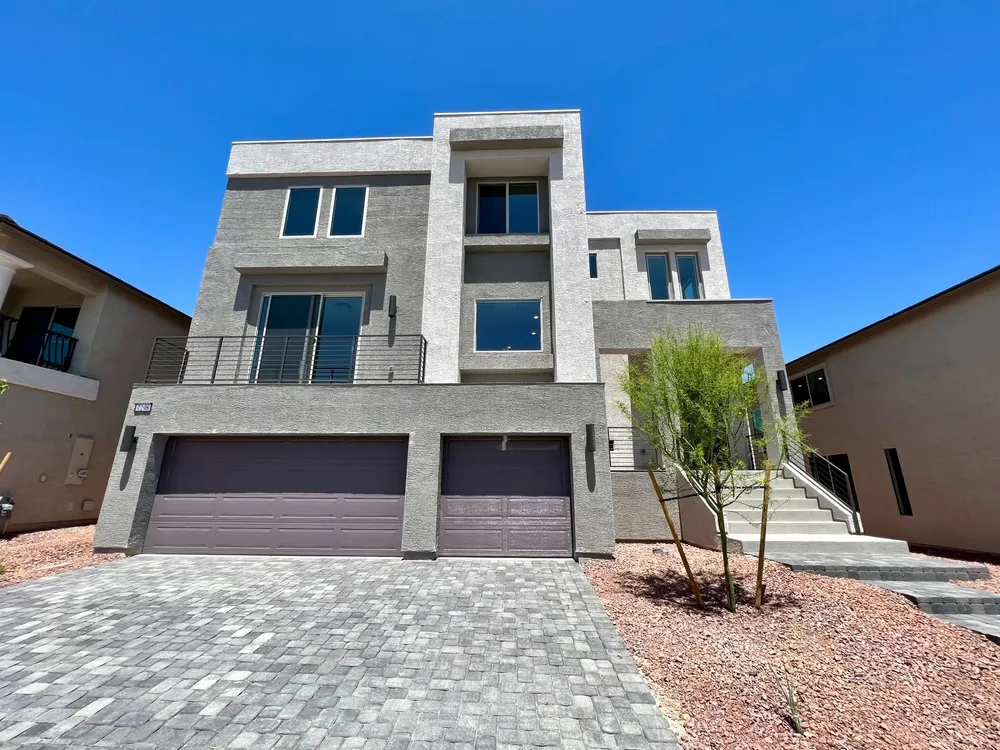
The Las Vegas housing market in mid-2026 tells two different stories depending on where you look. In some price ranges, well-prepared homes are moving quickly. In others, listings are sitting as buyers grow more selective and sellers hold onto pricing that no longer reflects current demand. With inventory rising and rates still elevated, the gap between what sells and what stalls has widened noticeably this year.
Delinda Crampton, Founder and Team Leader of The Crampton Group at Berkshire Hathaway HomeServices Nevada Properties, has spent 23 years building a referral-based practice serving relocating physicians, probate families, and California transplants. Her ground-level view illustrates where Las Vegas stands today.
Divided by Price and Condition
The clearest pattern in Henderson and Summerlin – the two neighborhoods most frequently requested by relocating buyers – is that performance depends on both price point and property condition.
Homes in the $1 million to $3 million range and those under $400,000 are moving well, according to Crampton, but only when they’re turnkey. With more inventory available, buyers have grown pickier. “There’s enough inventory on the market now that buyers have more selection,” she says.
That selectivity is creating a visible split. Move-in ready properties are transacting. Those that need work or are priced above what the market supports are not. Crampton estimates around half of current inventory is overpriced, resulting in frequent price reductions across the market. The middle ground – particularly homes in the $400,000 to $800,000 range that require cosmetic updates – appears to be where sellers are working hardest to attract offers.
The Rate Lock Effect and Pent-Up Demand
Like most markets across the country, Las Vegas is feeling the weight of the rate lock-in effect. Homeowners who secured mortgages at three percent or below are reluctant to trade into today’s rate environment, keeping a meaningful portion of potential inventory off the market. “It’s not that they’re married to the house; they’re married to their rate,” Crampton says.
The transactions happening tend to be driven by life events – death, divorce, growing families, marriage, and job relocation. These are not discretionary moves. Broader demand, however, hasn’t disappeared. Crampton expects a meaningful uptick in activity once rates reach the mid-fives, a threshold she considers more important than any local factor in determining when volume returns.
The California Migration
One driver that remains consistent regardless of rate conditions is inbound migration from California. The Crampton Group recently closed a transaction with a buyer relocating from the Bay Area to Lake Las Vegas, part of a steady stream drawn by the cost-of-living differential, the absence of a state income tax, and a business environment that is more landlord and employer friendly than California’s.
“We’ve got a lot of businesses that are moving here as well, and putting their headquarters here because it is so friendly towards businesses,” Crampton notes. For individual buyers, the calculus is often straightforward: more home, lower taxes, and a lifestyle that now includes professional sports franchises, proximity to national recreation areas, and a dining scene that has matured well beyond the Strip.
Physician Relocation
Beyond California migrants, Las Vegas is attracting specialized professionals through institutional channels. The Crampton Group serves as a designated physician realtor for Valley Health System hospitals and the UNLV Medical School, working with doctors who are often evaluating Las Vegas as a place to live while interviewing for positions.
These buyers need more than a home search; they need orientation to the city itself. Crampton describes her role as part advocate, part guide, helping physicians understand neighborhoods, schools, and lifestyle options before they commit to relocating. Summerlin consistently emerges as the preferred destination for this profile, combining proximity to major medical facilities with master-planned community infrastructure and green space that families prioritize.
Probate Real Estate
Crampton handles roughly a dozen probate transactions annually, supported by an attorney referral network and a reputation for managing complex, emotionally charged situations. Nevada’s probate sales involve specific contract language, court submission through an attorney, and a six-to-eight-week timeline as offers go through the court approval process.
Most probate families are out of state, managing grief, legal process, and a property they may never have seen. Crampton prices these listings at market value rather than discounting them, which she credits for the rarity of competing bids at court hearings, something that has happened only twice in her career. A recent probate listing with significant deferred maintenance still drew multiple investor offers and closed above market value.
Investor Considerations
For investors evaluating Las Vegas, current conditions require recalibrated expectations. Crampton frames the baseline question directly: Are you comfortable with a 5% return? During the market’s bottom, 18% returns were available widely. That market no longer exists.
Short-term rental investment, which draws consistent interest given Las Vegas’s tourism profile, comes with more friction than many investors expect. Licensing requirements, an 800-foot minimum distance rule from the nearest Airbnb in certain zones, and HOA restrictions that prohibit short-term rentals across much of the valley combine to make the model harder to execute than it appears. “It’s not so easy here,” Crampton says.
The more active investor segment is focused on fix-and-flip activity in east and north Las Vegas, where entry costs remain accessible. One concern that repeatedly surfaces among out-of-state buyers is water supply, given Lake Mead’s well-publicized decline. Crampton pushes back with some specificity.
Las Vegas sits above an underground reservoir, a fact many prospective buyers don’t know. The Southern Nevada Water Authority maintains a rolling 30-year plan and has installed a lower intake at Lake Mead to access water at reduced reservoir levels. The region consistently uses less than its allocated four percent of Colorado River inflow despite continued population growth. “The conservation they’ve done is incredible,” Crampton notes. “Despite our growth, the conservation measures have been that good.”
The trajectory for the rest of 2026 hinges largely on interest rates. If they move into the mid-fives, the combination of pent-up seller inventory, continued inbound migration, and a landlord-friendly regulatory environment could quickly push Las Vegas from a cautious market to an active one. Until then, the deals getting done are the ones priced right and ready to move into, and the properties that miss on either count are likely to sit longer than their owners expect.
About the Expert: Delinda Crampton, Founder and Team Leader of The Crampton Group at Berkshire Hathaway HomeServices Nevada Properties, has spent 23 years building a referral-based practice serving relocating physicians, probate families, and California transplants. Her ground-level view illustrates where Las Vegas stands today.
This article is based on information provided by the expert source cited above. It is intended for general informational purposes only and does not constitute legal, financial, or real estate advice. Readers should conduct their own research and consult qualified professionals before making any real estate or financial decisions.
Similar Articles
Explore similar articles from Our Team of Experts.



From Classroom to Inspection Site: How Professional Training is Shaping the Home Inspection Industry
The home inspection industry is experiencing a shift driven by professionals who bring diverse backgrounds and innovative approaches to traditional property assessment. This change reflects ...