

Rising home prices along the South Jersey Shore are pushing buyers into new areas, creating fresh opportunities for both homeowners and investors. Eric Millstein, a real estate associate wit...

Why New Yorkers Move To Hudson and Bergen Counties

Written by:
Date:
03 Jul 2026
Share via Facebook

Share via Linkedin

Share via X

Copy to clipboard

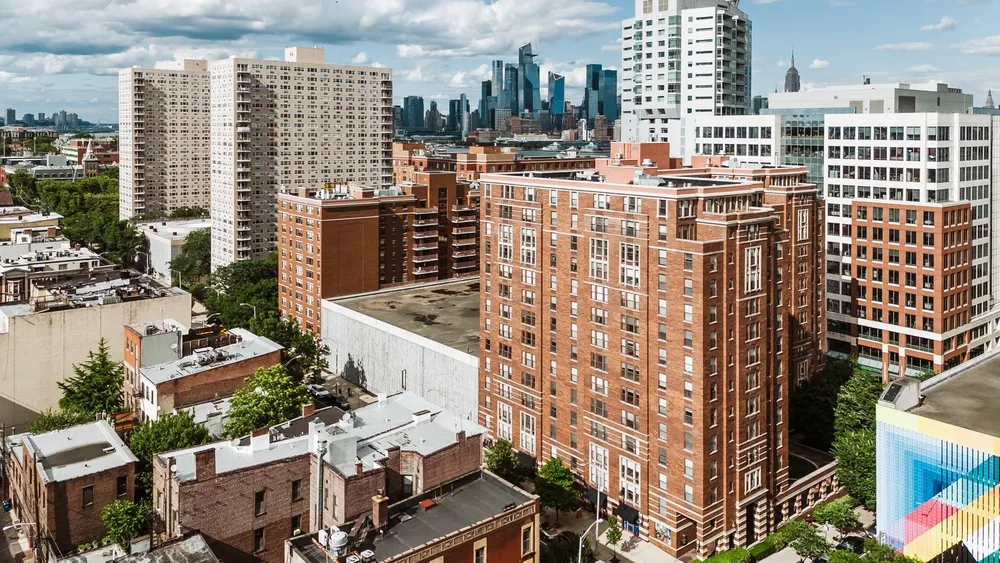
The New York metropolitan area has long shaped real estate demand across northern New Jersey, but the dynamics playing out in Hudson and Bergen Counties right now reflect something more specific than simple proximity to the city. Tight inventory, steady rental demand, and a structural shortage of developable land are combining to create a market that continues to hold its value even as interest rates weigh on affordability across much of the country.
Jorge Aviles, Team Director at Prism Realty Group with Prominent Properties Sotheby’s International Realty, has spent more than two decades working across both counties. His background in commercial banking and Wall Street trading gives him a numbers-first perspective on market conditions.
The Proximity Premium
The fundamental case for Hudson and Bergen Counties starts with geography. For buyers and renters priced out of Manhattan, these markets offer genuine access to New York City without Manhattan prices.
Hudson County delivers urban density; Union City has been recognized in the Guinness Book of World Records as one of the most densely populated areas in the country, while offering slightly more breathing room than Manhattan itself. “You’ve got the hustle and bustle over there, and you get a little peace once you come over to Jersey,” Aviles says.
Bergen County draws a distinct buyer profile, more family-oriented, more suburban in character, with greenery and a community feel that appeals to those who want distance from the city’s intensity without sacrificing the commute. The practical reality sometimes surprises even skeptical New Yorkers. “I’ve had people who lived in Forest Hills, Queens, with a train station right down the block, who moved to Rutherford and got into Manhattan quicker,” Aviles says.
That commute calculus, combined with lower transfer taxes and closing costs compared to New York, tends to be the deciding factor for Manhattan transplants. Once buyers run the numbers, the resistance fades.
What’s Moving and What Isn’t
The current market is driven by asset type, and understanding that distinction matters more than broad headlines about days on market or price trends. Aviles recently closed a commercial deal, two adjacent properties at 1412 and 1414 Summit Avenue that sold for just under $1.1 million. The buyer, a physician, plans to convert the mixed-use building for medical use. On the residential side, a single-family home in Bergen County under $900,000 attracted multiple offers and closed above asking price within two months of the search beginning.
Condos and townhouses are moving more slowly. HOA fees and the way lenders price condo mortgages add a layer of cost that’s making buyers hesitant in the current rate environment. Multifamily properties, by contrast, remain in demand. Two- to four-unit buildings in Hudson County attract investor interest quickly, given the county’s density and renter population. Bergen County skews more toward single-family homes and select two-family pockets.
For investors specifically, the vacancy picture in Hudson County stands out. Aviles estimates occupancy runs near 99%, with vacancy around 1%. That kind of stability is difficult to find in less supply-constrained markets.
The Inventory Constraint
One of the more persistent misreads of this market is the assumption that it’s vulnerable to a broader correction. Aviles argues a structural reality limits the risk: there simply isn’t land available to flood the market with new supply.
“You might have a replacement on a property – knock it down, put a new two-family – but you don’t have a massive amount of land like Florida and Texas,” he says. Unlike sunbelt states, where developers can build outward, Hudson and Bergen Counties are physically constrained, which keeps supply tight regardless of demand cycles.
He also points to the equity position of current homeowners as a stabilizing factor. Roughly 40% of all U.S. properties carry no mortgage, and a significant portion of those who do have refinanced at 4% or lower during the pandemic. With rates now elevated, those homeowners have little incentive to sell. The result is that listings are largely coming from life events – relocations, divorces, estate sales – rather than financial distress. Foreclosure activity, while ticking up slightly in some areas, remains a fraction of what it was during the last cycle.
Where Aviles Sees Opportunity
For investors looking to deploy capital in the region, Bayonne stands out as a market worth watching. A planned movie studio development is expected to bring significant employment to the area, which typically drives increased rental demand and upward pressure on values. “That’s going to be an opportunity because they’re going to have a new business, a ton of people working there,” Aviles says.
Bergen County offers a different profile, less multifamily inventory, higher price points, and a more affluent buyer base. Commercial deals there require 30–35% down, and with rates elevated, cap rate compression has slowed investor activity. “If the numbers are not there because interest rates are higher on the commercial segment, it slows down the market,” Aviles notes.
Adaptive Reuse and the Seasonal Window
Beyond conventional investment plays, one trend gaining traction is the conversion of underperforming retail space – particularly malls – into mixed-use developments combining housing, office space, restaurants, and entertainment. Whether these projects deliver on their promise remains to be seen, but they reflect a recognition that land scarcity requires creative densification rather than greenfield development.
One structural quirk that outside investors sometimes overlook is the Northeast’s seasonal market cycle. Unlike Florida or California, where transactions flow year-round, the New Jersey market compresses into roughly ten active months. “Once winter comes in, it stops everything,” Aviles explains. Spring and early summer represent the most active window, making timing a more meaningful variable here than in sunbelt markets.
For investors and buyers considering a move into Hudson or Bergen County, the core thesis remains intact: limited land, persistent demand, and strong ties to the largest job market in the country create a floor that has proven durable across multiple cycles. The nuance lies in knowing which asset type, which submarket, and which moment in the calendar to act.
About the Expert: Jorge Aviles is Team Director at Prism Realty Group with Prominent Properties Sotheby’s International Realty, with more than two decades of experience across Hudson and Bergen Counties in northern New Jersey. His background includes commercial banking and Wall Street trading.
This article is based on information provided by the expert source cited above. It is intended for general informational purposes only and does not constitute legal, financial, or real estate advice. Readers should conduct their own research and consult qualified professionals before making any real estate or financial decisions.
Similar Articles
Explore similar articles from Our Team of Experts.