
Upstate South Carolina’s commercial real estate market faces a growing challenge: large amounts of vacant office space that may never attract tenants again. But according to Maggie Steck, ...

Bought in Central Texas in 2022? Here Is What Being Underwater Actually Means for You

Written by:
Date:
17 Jul 2026
Share via Facebook

Share via Linkedin

Share via X

Copy to clipboard

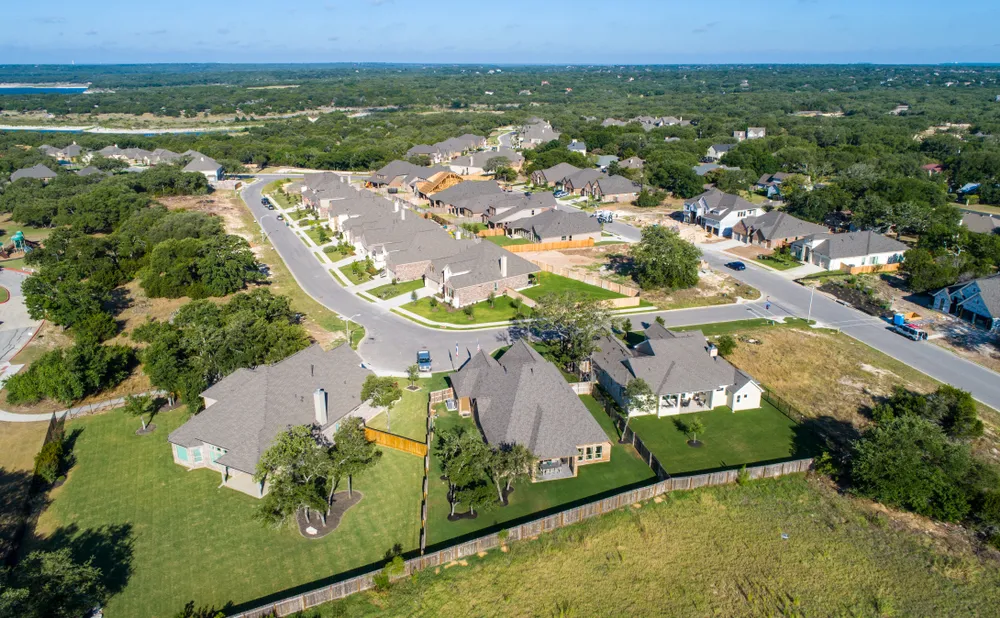
Homeowners who purchased in Central Texas near the market’s mid-2022 peak are now sitting on roughly 20 percent less value than what they paid. That is not a rounding error; it is a meaningful loss on paper, and local brokers say many of these owners are effectively stuck. They cannot sell without bringing money to the closing table, and the market shows no signs of a rapid snapback that would bail them out. What local experts are watching, though, is whether being underwater today is actually a problem or simply a discomfort, depending on how long you plan to stay.
Tanya Kerr, broker associate and founder of T. Kerr Property Group in Georgetown, Texas, does not sugarcoat the situation. Her team works primarily across Williamson County and downtown Austin, and she sees the numbers clearly. “People who bought at the height of the market are underwater right now,” Kerr says. “There’s nothing we can do about that.”
How the Drop Happened
The decline was steep because the run-up was unsustainable. Central Texas saw prices spike during 2021 and early 2022 as remote workers flooded in from coastal cities, interest rates sat near historic lows, and inventory collapsed. The correction that followed brought prices back closer to where long-term trend lines suggested they should be. “The market just appreciated too fast,” Kerr says. “It wasn’t sustainable.”
The stabilization since then offers some comfort, but not much for anyone who needs to sell soon. Kerr notes that prices have held relatively steady for roughly the past 18 months. That means the bleeding has stopped, but recovery has not begun in a meaningful way. If you bought at the 2022 peak and owe what you paid, you are still roughly 20 percent short of break-even before factoring in selling costs like agent commissions, closing fees, and any repairs needed to list.
When It Becomes a Problem
This creates a practical trap for owners whose life circumstances have changed. A job relocation, a divorce, a family needing more space; these are the situations where being underwater moves from an abstract paper loss into a real financial problem. You either bring cash to closing, negotiate a short sale with your lender, or you stay put and wait.
For owners who can stay, the calculation looks different. Central Texas continues to attract employers and residents. Data centers, aerospace companies, and entertainment projects are in various stages of development across the region. Population growth has not reversed. If you have a fixed-rate mortgage locked in at 2021 or early 2022 rates – likely somewhere in the 3 to 4 percent range – your monthly payment is lower than what a new buyer would face today at current rates. That low payment is itself a form of equity, even if the home’s market value has not caught up.
Where Demand Concentrates
The segment of the market that is moving in mid-2026 also offers a clue about where recovery may eventually start. Homes priced under $400,000 that are in good condition and priced correctly are selling briskly, sometimes with multiple offers. Kerr describes this as the strongest segment of the market right now. “The first-time homebuyer, that’s still moving really quickly,” she says. This suggests that demand has not disappeared; it has simply concentrated in a lower price range.
The uncomfortable truth is that owners who bought above $400,000 in 2022 face a longer wait. The luxury and mid-range segments require sharper pricing and better condition to attract offers, and even then, days on market run longer. A full recovery to 2022 peak values is not something any local broker is projecting in the near term.
The Honest Math
What does this mean practically? If you bought in Central Texas in 2022 and you can comfortably stay for another three to five years, the combination of a low locked-in rate, continued population growth, and new commercial development gives you reasonable odds of eventually recovering your equity. If you need to sell within the next 12 to 18 months, the math requires honest accounting: your home is likely worth less than you owe, selling costs will add another 6 to 8 percent, and the market is not moving fast enough to close that gap. Williamson County sales volume has ticked up only two to five percent year over year, according to Kerr, growth, but not the kind that drives rapid price recovery.
The longer-term outlook hinges on whether job growth and population gains continue at their current pace. If they do, price recovery becomes a matter of patience rather than hope. But for owners who cannot wait, the gap between what they owe and what they can sell for remains the defining constraint, and no amount of regional optimism changes the arithmetic at the closing table.
About the Expert: Tanya Kerr is a Broker Associate and Founder of T. Kerr Property Group, leading a 13-agent team covering Central Texas from South Austin through North Williamson County, including Georgetown, Round Rock, Leander, and Cedar Park.
This article is intended for informational purposes only and does not constitute legal, financial, or investment advice. The views and opinions expressed herein reflect those of the individuals quoted and do not represent an endorsement of any company, product, or service mentioned. Readers should conduct their own due diligence and consult qualified professionals before making any investment decisions.
Similar Articles
Explore similar articles from Our Team of Experts.