
Marketing leader explains why national approaches fail in real estate’s hyper-local digital landscape . The assumption that digital house-hunting behavior is consistent across markets ...

Why Topanga Canyon, California's Buyer Pool Has Shrunk to Mostly Locals

Written by:
Date:
09 Jul 2026
Share via Facebook

Share via Linkedin

Share via X

Copy to clipboard

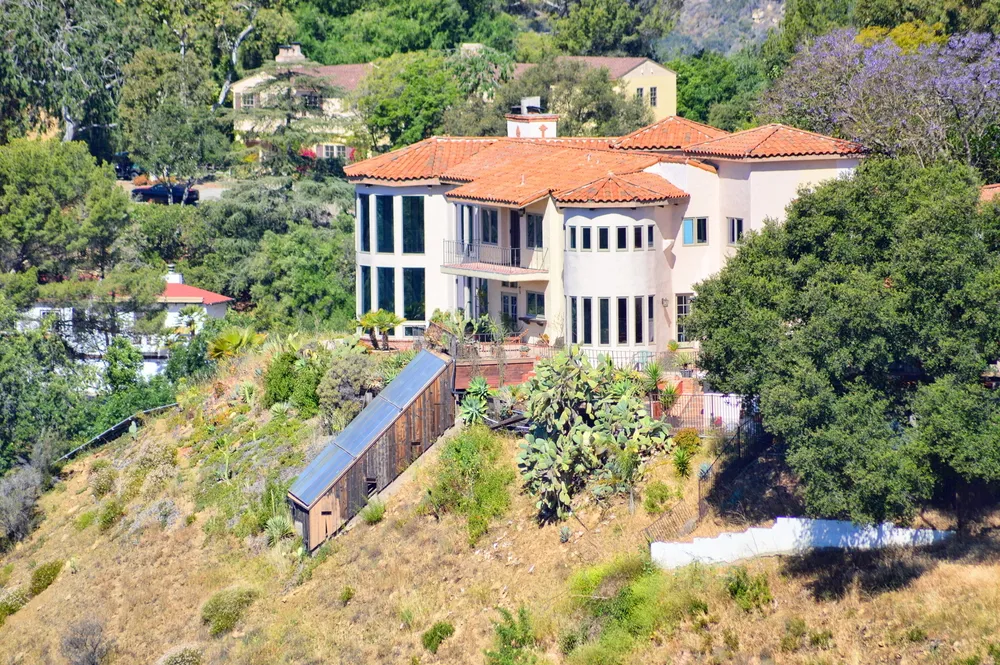
When a housing market loses its outside buyers, prices feel it. That is the situation unfolding in Topanga Canyon right now, where a series of disruptions over the past two years has filtered the buyer pool down to people who already know the area, and shrunk it considerably. Agents working the canyon say the implications for sellers are significant and not yet fully priced in.
Simon Van Meervenne, a realtor with Snyder Sutton Real Estate who lives and works in Topanga Canyon, describes a market that has moved through several distinct phases over the past decade. Understanding that arc matters for anyone thinking about buying or selling there today.
How Topanga Got Here
Topanga’s rise as a desirable market began around 2016, when rising prices in Malibu, the Palisades, and Santa Monica pushed buyers to look for alternatives still close to the west side of Los Angeles. Topanga fit: closer to the city than Malibu, less expensive than the Palisades, and offering canyon terrain, older and highly individual homes, and a character that attracted creative and independent-minded buyers. That momentum peaked sharply during the pandemic, when demand for space and distance from dense urban living drove an influx of buyers unlike anything Van Meervenne had seen.
Then came the reversal. Rising interest rates slowed the market starting in 2022. A landslide blocked canyon access for three months in 2024, wiping out the spring selling season. The Palisades fires in early 2025 closed the canyon again and put fire risk at the center of every buyer conversation. Each disruption layered onto the last.
Outside Buyers Have Stepped Back
The cumulative effect has been a dramatic narrowing of who is actually buying in Topanga in 2026. Van Meervenne says the market is now driven almost entirely by people who have already rented in the canyon and decided to stay, or by existing residents looking to upgrade. Outside buyers, people discovering Topanga for the first time, relocating from other states, or moving from other parts of Los Angeles without prior familiarity, have largely stepped back.
Part of this is practical. The canyon was physically difficult to reach for extended periods, which interrupted the normal process by which new buyers discover a place, visit it repeatedly, and build enough comfort to make an offer. Part of it is psychological: fire risk now requires active engagement rather than quiet acceptance, and buyers who have not already made their peace with canyon living are less likely to start that process now.
There is also an economic factor specific to Topanga’s creative buyer base. Van Meervenne points to the 2023 Hollywood studio strike and its aftermath as a meaningful drag on demand. After the strike ended, studio employment dropped sharply; Van Meervenne estimates roughly a third of studio workers were laid off, though he notes those figures should be verified independently. His observation is that the timing of the real estate slowdown in Topanga tracks closely with that employment contraction. Creative workers in film and television have historically been an important part of the canyon’s buyer pool, in part because project-based pay structures can produce large lump sums that make a down payment feasible. Fewer people receiving those payments means fewer buyers in the market.
Sellers Now Face Single Offers
The result is a buyer pool that is smaller, more locally concentrated, and more cautious than it was even three years ago. With fewer competing buyers, sellers cannot rely on multiple offers to push a sale price above asking. Van Meervenne describes most Topanga transactions right now as involving a single offer, sometimes two. That is a fundamentally different negotiating environment than the one sellers experienced in 2020 and 2021, and it requires a different approach to pricing.
For buyers, a shrunken pool carries advantages. Less competition means more time to evaluate a property carefully, more room to negotiate, and less pressure to waive contingencies. The canyon’s quirks, irregular terrain, older structures, the absence of standardized development, mean that due diligence matters more here than in most markets, and a slower pace creates space for it.
Outside Buyers May Return
The longer-term question is whether outside buyers return as the disruptions fade. Van Meervenne notes that Topanga has never been a widely recognized name the way Laurel Canyon is; its reputation is more localized, built through word of mouth among people already embedded in Los Angeles. That means the recovery of outside interest is likely to be gradual rather than sudden. Sellers counting on a wave of new discovery to support their asking price may be waiting longer than they expect.
One marker worth watching: when the stock market was rattled by geopolitical tensions earlier in 2026, buyer activity in Topanga went quiet for roughly two weeks. When markets stabilized, buyers returned. That sensitivity to broader financial confidence suggests the canyon’s already-thin buyer pool can evaporate quickly when economic uncertainty rises, a risk that sellers should factor into their timing decisions.
About the Expert: Simon Van Meervenne is a Realtor with Snyder Sutton Real Estate, living and working in Topanga Canyon in greater Los Angeles.
This article is intended for informational purposes only and does not constitute legal, financial, or investment advice. The views and opinions expressed herein reflect those of the individuals quoted and do not represent an endorsement of any company, product, or service mentioned. Readers should conduct their own due diligence and consult qualified professionals before making any investment decisions.
Similar Articles
Explore similar articles from Our Team of Experts.