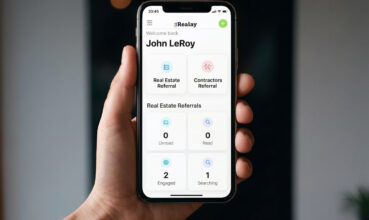

Michigan-based platform combines organization, standardization, documentation, and monetization to level the playing field. Independent real estate brokers face a persistent challenge that n...

Stop Waiting for Rates to Drop. New York Investors Who Sit on the Sidelines Are Losing Deals.

Written by:
Date:
16 Jun 2026
Share via Facebook

Share via Linkedin

Share via X

Copy to clipboard


Waiting on rates. Chasing a quarter point. Staying loyal to one lender long past the point when that relationship stopped serving you. These are not dramatic errors. They rarely feel like mistakes in the moment. But according to the people who see the consequences play out regularly, they are among the most expensive habits a real estate investor can carry.
We Lend LLC, a private lender focused exclusively on the New York and New Jersey market, has funded over 1,400 loans and more than $700 million in originations. CEO and Founder Ruben Izgelov has watched borrower behavior closely across that deal volume, and the patterns he sees repeated are not about bad deals. They are about avoidable decisions that cost investors time, money, and opportunity.
Waiting for a Better Rate Is Usually the Wrong Move
The most common mistake Izgelov sees is borrowers stalling on a deal because they are waiting for the Federal Reserve to cut rates or for market conditions to improve. The reasoning sounds sensible. But the investors who consistently execute outperform the ones who wait.
“The answer is no, do not wait, just execute and move on,” Izgelov said. “Most of the time, those who are on the sidelines are the ones who are not doing as well as the ones who are just executing.”
The math behind this is straightforward. A real estate investment that performs at current rates still generates returns. The opportunity cost of sitting out, which includes deals that close without you, relationships that build without your participation, and market knowledge that develops through active deal-doing, is harder to quantify but consistently significant.
This does not mean borrowers should ignore pricing entirely. Rates matter, and a lender’s cost structure should be competitive. But negotiating aggressively over small rate differences and then switching lenders to save a quarter of a basis point is a different problem entirely.
Jumping Ship Over a Quarter Point Damages Long-Term Relationships
Private lending is relationship-based in a way that institutional lending is not. A private lender who knows a borrower, has seen them execute, and trusts their judgment will extend flexibility that a new lender simply cannot. That flexibility does not show up on a term sheet. It shows up when a deal has complications, when a timeline slips, or when a borrower needs a structure that falls slightly outside the standard parameters.
Borrowers who chase small rate differences by constantly switching lenders never build that kind of relationship depth with anyone. And the lenders they keep returning to have no particular reason to prioritize them.
“We are very relationship-based,” Izgelov said. “If I know you are committed to me, I am going to be committed to you.”
The practical implication is that borrowers who do consistent deal volume with a lender earn a degree of priority and flexibility that genuinely changes their operational capability. That is worth more over time than the savings from shaving a quarter point on individual transactions.
Working With Only One Lender Is Its Own Risk
The flip side of chasing multiple lenders for small price differences is the opposite mistake: working exclusively with one lender and never building backup relationships. Izgelov has experienced this problem from the borrower side himself, having completed over 100 fix-and-flip transactions before founding We Lend.
Lenders get concentrated in specific asset classes or submarkets. They go on vacation. They get cautious at precisely the moment a borrower needs them to be flexible. A borrower with only one hard money relationship will eventually hit a deal that the lender cannot or will not do, and if there is no backup relationship already in place, that deal is dead.
“I always tell every single borrower: have multiple working hard money relationships, do not just work with one,” he said. “I say that from personal experience.”
The right approach is not to spread volume equally across multiple lenders, which defeats the relationship-building logic above. It is to have one primary lender relationship that gets most of the deal flow, and at least one secondary relationship that stays warm through occasional transactions. That way, when the primary lender cannot move on a deal, there is an established relationship ready to step in.
Documents First, Everything Else Second
Beyond strategy, the most operationally immediate mistake Izgelov sees is borrowers arriving unprepared. The speed at which a private lender can close a deal is almost entirely a function of how quickly a borrower can produce complete documentation. We Lend closed a $3 million mixed-use loan in under 48 hours. That was possible because the borrower had everything the lender needed to process the transaction in parallel with the appraisal and title work.
The standard closing window is seven to ten days. It extends when documents arrive in pieces, when questions have to be chased, or when scope-of-work information is incomplete. Borrowers who treat document preparation as something to handle reactively, rather than something to have ready before approaching a lender, consistently lose time they cannot get back on competitive deals.
For more on how We Lend structures its loan process, visit welendllc.com/how-it-works.
Ruben Izgelov is the CEO and Founder of We Lend LLC, a private real estate lender specializing in bridge loans, ground-up construction, and complex situation financing across the New York and New Jersey markets.
This article is based on information provided by the expert source cited above. It is intended for general informational purposes only and does not constitute legal, financial, or real estate advice. Readers should conduct their own research and consult qualified professionals before making any real estate or financial decisions.
Disclosure: Individuals or companies mentioned may have a commercial relationship with KeyCrew.
Similar Articles
Explore similar articles from Our Team of Experts.