
For decades, Florida has been the default retirement destination for East Coast residents, prized for its warm weather and low taxes. But a growing number of retirees from New Jersey, Pennsy...

Why Owning Just One Rental Property Is Riskier Than You Think

Written by:
Date:
01 Jul 2026
Share via Facebook

Share via Linkedin

Share via X

Copy to clipboard

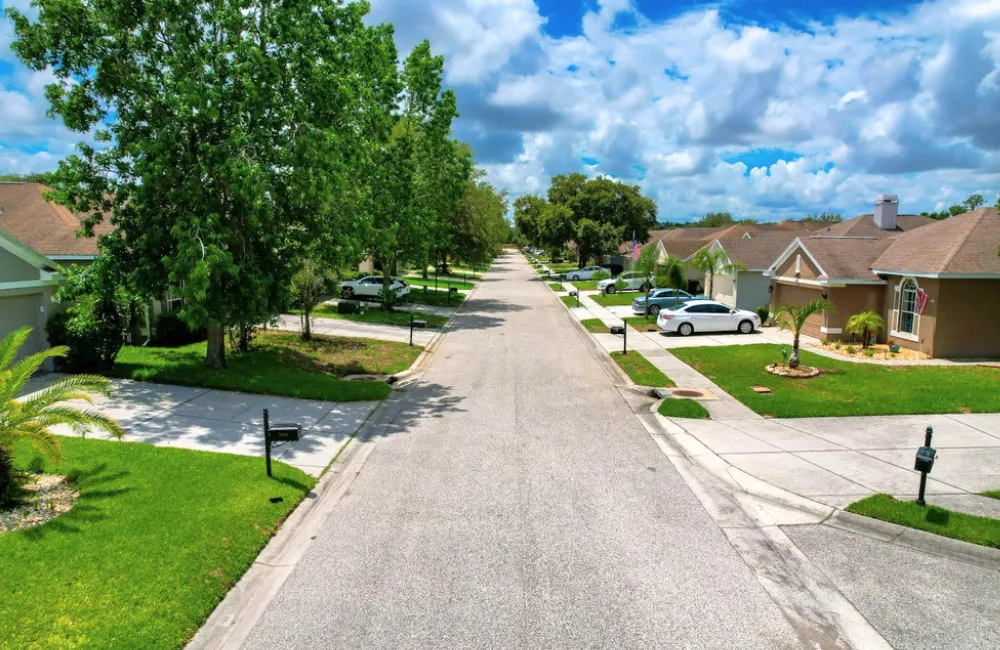
The standard advice for first-time rental investors sounds sensible: start small, buy one property, get your footing, then grow. But some experienced investors and the agents who work with them argue that single-property ownership is actually the riskiest way to enter the rental market, not the safest.
Shirley Weems, a Realtor with Waterman Real Estate, Inc. on Florida’s Space Coast, works with rental investors at every stage, from first-timers buying their initial property to established local owners with hundreds of units. The one-property approach, she says, creates a vulnerability that most new investors do not see coming until they are already living it.
The problem is concentration. When you own a single rental, every dollar of income comes from that one unit. If the tenant stops paying, you are not making money; you are managing a problem. If the roof fails, or the air conditioning goes out, or the property sits vacant between tenants for two months, your entire rental income disappears while expenses keep running. There is no other property generating cash flow to offset the loss.
“When you have one property, if that one property is causing you problems, then you’re not making money,” Weems said. “You’re only dealing with a problem property.”
Ten Properties, Two Problems
The math changes meaningfully with even a small portfolio. If you own ten properties and two are causing problems at any given time, you are still collecting income on the other eight. The troubled properties become a manageable drag rather than a full stop on your investment.
This does not mean new investors should overextend themselves financially to buy multiple properties at once. Weems distinguishes between taking on too much debt and building a portfolio deliberately. The strategy she describes to clients who are just getting started is a structured one-per-year approach – buying a single property, building equity over twelve months, then pulling that equity out to fund the next purchase. In theory, the same initial down payment cycles through the portfolio repeatedly, with each property eventually contributing to the next.
That equity-recycling model has real appeal, especially in a market like the Space Coast where prices have pulled back from their 2021 and 2022 peaks. Lower entry prices mean a smaller initial down payment goes further, and the equity math works more favorably when you are not buying at the top.
The Honest Caveat
The honest caveat is that the one-per-year model only works if each property actually builds equity on schedule, and in a market where prices are still declining, that is not guaranteed. Weems does not oversell the timeline. The approach assumes things go the way they should, as she puts it, which in a softening market is an assumption worth examining carefully before committing.
For investors weighing the Space Coast specifically, Weems points to rentals as a more durable strategy than flipping right now. The resale market is crowded with new construction that older, renovated homes cannot easily compete against on price. A flip that cost $200,000 to buy and $50,000 to renovate still has to sell against a brand-new home at the same price point, and buyers tend to choose new. Rentals sidestep that competition entirely, because a tenant is not comparing your 1995 house to a new build the way a buyer would.
A Diverse Tenant Mix
The Space Coast rental market draws a mix of tenants: long-term renters, students, and Section 8 households, along with short-term Airbnb demand tied to the area’s proximity to the coast and its launch-viewing corridor. That variety gives landlords some flexibility in how they position a property, though each rental category carries its own management demands and regulatory considerations that vary by municipality.
What Weems consistently steers new investors toward is volume over perfection. A portfolio of modest, cash-flowing properties spread across different price points and tenant types is more resilient than a single premium rental that has to perform flawlessly every month to justify the investment. In Brevard County, where entry-level homes in Palm Bay were still available well under $200,000 as of mid-2026, building that kind of diversified base is more accessible than in most coastal Florida markets.
The investors she describes as most successful locally are not the out-of-state buyers who pick up a handful of properties and manage them remotely. They are the six to ten deeply local investors who have spent years accumulating hundreds of units and know the market’s rhythms from the inside. Scale, in her telling, is not just a goal – it is the mechanism that makes the whole model work.
One Property, One Failure Point
For new investors considering the Space Coast or similar markets, the takeaway is not that you need to buy ten properties tomorrow. It is that the perceived safety of owning just one rental is largely an illusion. A single property concentrates every risk – vacancy, maintenance, nonpayment – into one point of failure. Building toward even a small portfolio, methodically and within your financial limits, spreads that risk in ways that make the entire investment more likely to survive its inevitable rough patches.
About the Expert: Shirley Weems is a Realtor with Waterman Real Estate, Inc., serving the Space Coast and Brevard County market in Florida since 2006.
This article is intended for informational purposes only and does not constitute legal, financial, or investment advice. The views and opinions expressed herein reflect those of the individuals quoted and do not represent an endorsement of any company, product, or service mentioned. Readers should conduct their own due diligence and consult qualified professionals before making any investment decisions.
Similar Articles
Explore similar articles from Our Team of Experts.