The commercial real estate industry stands at an inflection point. While other sectors have undergone significant digital changes over the past decade, real estate has remained relatively un...

What San Luis Obispo's Market Reveals About Coastal California Real Estate

Written by:
Date:
19 Jun 2026
Share via Facebook

Share via Linkedin

Share via X

Copy to clipboard

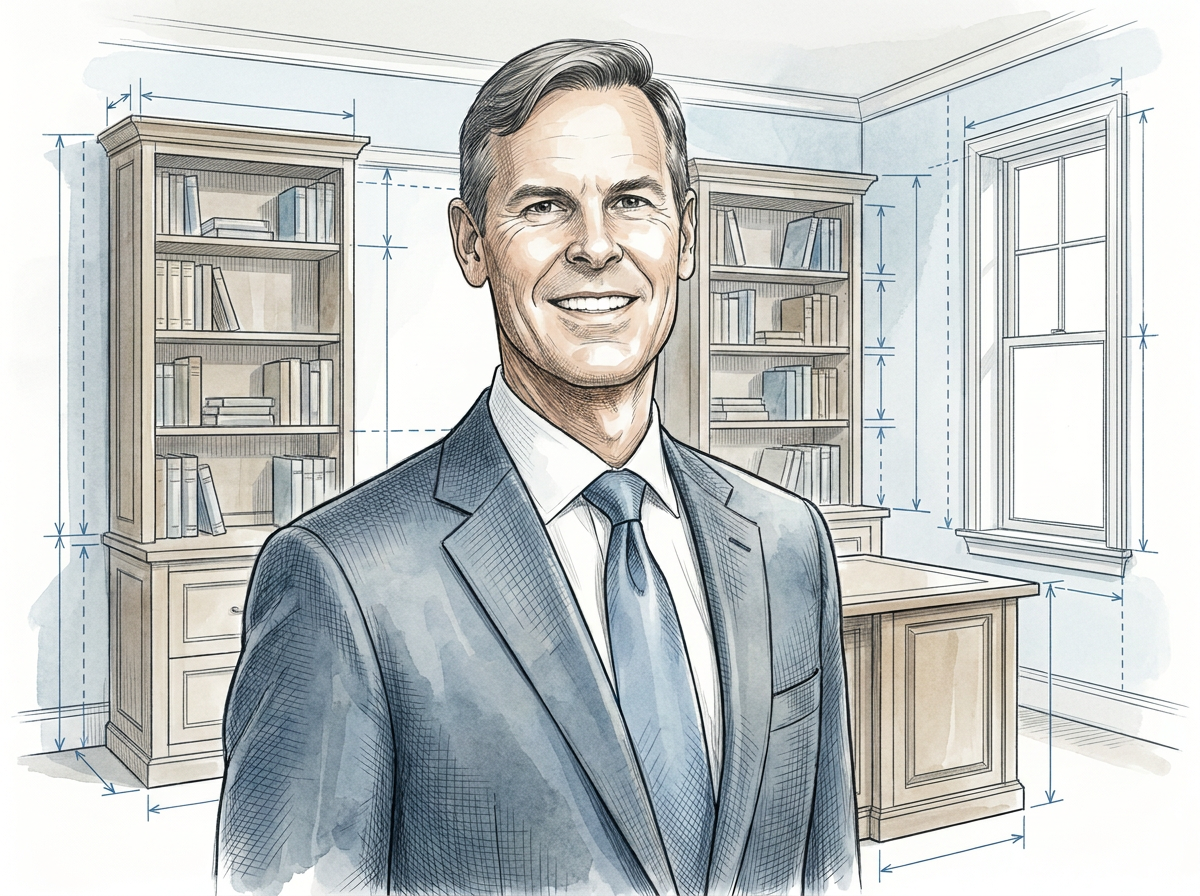
The Central Coast of California sits roughly equidistant between Los Angeles and San Francisco, about 185 miles from each, and that geographic middle ground tells only part of the story. San Luis Obispo County has quietly developed into one of California’s more distinctive real estate markets, shaped by limited inventory, strong lifestyle appeal, and a buyer profile that has moved upmarket over the past decade. For Hal Sweasey, a broker with Equity Union with 35 years of experience and roughly 3,300 transactions under his belt, the market offers a useful lens on broader trends playing out across the state.
A Market Built on Scarcity
San Luis Obispo’s appeal is easy to summarize: coastal access, low crime, minimal traffic, a well-regarded university, and proximity to wine country. What is harder to solve is the supply problem that has defined the area for generations.
The county’s geography – bounded by mountains and coastline – limits the amount of developable land. Combined with the rate-lock dynamic that has kept long-term owners in place across California, this results in a market where buyers often have to wait rather than search. Sweasey recalls selling a house for a woman who bought it in 1967 and said it was one of two available at the time. That constraint has never fully eased.
“It’s kind of like, find out where you want to be, and then when something comes up there, we’ll give you a call,” Sweasey says. For buyers accustomed to larger urban markets with deeper inventory, that adjustment can be significant.
Who Is Actually Buying
The buyer profile in San Luis Obispo has moved sharply upmarket in recent years. A price ceiling that once sat around one million dollars has expanded considerably. Sweasey notes that buyers now routinely arrive with budgets of three to four million, with flexibility to reach five or six million for the right property. “This area used not to have that kind of exposure,” he says.
Much of that demand comes from out-of-town buyers, often from the Bay Area or other high-cost markets, who have done well financially and are looking for a lifestyle change without sacrificing quality. The university connection also plays a consistent role. Families who visit for graduation, alumni who attended decades ago, and retirees seeking a slower pace all feed into the same limited pool of available homes.
First-time buyers face a much harder path. Sweasey says almost all first-time buyers in the area now need family help and points to national data showing the average age of a first-time homebuyer has risen to around 40, up from 28 not long ago. “To me, that’s not healthy,” he says.
The investor segment has also cooled. Rising insurance costs, higher interest rates, and elevated maintenance expenses have compressed returns on small multifamily properties. Existing landlords benefit from grandfathered insurance rates and locked-in financing that a new buyer simply cannot replicate, making current owners the most advantaged holders of those assets.
Reading the Current Moment
The past 18 months have brought visible volatility to the Central Coast. From early 2024 through late summer, prices softened, and inventory climbed by roughly 70 percent in some segments. Homes that had sold quickly at peak prices were sitting on the market longer and closing for less. Then the market stabilized. By the start of 2026, sales were running 10 to 15 percent ahead of the prior year.
More recently, broader economic uncertainty has introduced hesitation. Sweasey says the tariff announcements initially put buyers on hold for several weeks before activity resumed. He describes ongoing caution among buyers as they monitor both interest rates and equity markets.
That connects to what Sweasey calls the K-shaped economy, a dynamic where asset holders continue to build wealth while wage earners fall further behind. In a market like San Luis Obispo, where many buyers have tech-sector compensation tied to stock performance, sentiment can shift quickly. “If people feel poor, they’re less likely to buy a new car or a house,” he says. “Psychologically, that matters.”
Where Deals Are Getting Done
Performance varies considerably by property type within the county. A well-maintained single-family home on a modest parcel recently drew eight offers and sold $260,000 above its $1.5 million list price. Condos, meanwhile, face headwinds from higher HOA fees, rising insurance costs, and tighter lending standards that have become more common since the Florida condominium collapses brought scrutiny to the entire asset class nationwide.
Turnkey properties command a clear premium. The gap between a move-in-ready home and one that needs work has widened as construction costs have remained elevated, forcing sellers of fixer-uppers to adjust pricing significantly downward.
One of the more persistent friction points is the inspection process. Sweasey estimates the county’s escrow fallout rate sits around 40 percent, with condition disputes as the primary cause. His approach is to front-load the disclosure process before offers come in, ordering termite, home, and sewer inspections at the seller’s expense before listing. At a cost of about $1,100, this eliminates the most common source of deal collapse. “The buyer and seller agree on price, the buyer thinks they know the condition, and then the inspection opens everything back up,” he says. Getting ahead of that dynamic produces cleaner closings and often a stronger final price.
Staying Relevant Over the Long Term
Sweasey recently shifted away from running a large team toward a smaller, more focused operation. Managing agents, staff, and overhead had pulled him away from direct client work. “I went from a good player to a player-coach, and the coaching was taking so much of my time that I lost the player,” he explains.
The move to Equity Union came after his previous brokerage’s parent company began closing offices across California, a sign of how difficult the current environment is for broker-owners managing large networks.
His content strategy has also built steadily over time. A monthly market update newsletter, now reaching around 15,000 subscribers, has been running for 12 years. A podcast grew organically, reaching 141,000 subscribers and roughly 7 million views last year. Neither was designed primarily as a lead generation tool, but both have kept him visible to clients who are months or years away from a transaction.
The Enduring Case for Local Expertise
In a market as particular as San Luis Obispo, where inventory is thin, buyer profiles are rising, and the gap between a well-prepared listing and a poorly prepared one can run into six figures, the value of deep local knowledge remains difficult to replicate. Technology and new brokerage models have prompted repeated predictions about the diminishing role of agents. Still, Sweasey is skeptical that any of them fully account for what people want when navigating a major financial decision.
“There’s always going to be a need for good guidance,” he says. “There’ll always be life events that make people want to sell a house, and reasons why people want to own one.”
About the Expert: Hal Sweasey is a broker with Equity Union, with 35 years of experience and approximately 3,300 transactions serving the San Luis Obispo County market on California’s Central Coast.
This article is based on information provided by the expert source cited above. It is intended for general informational purposes only and does not constitute legal, financial, or real estate advice. Readers should conduct their own research and consult qualified professionals before making any real estate or financial decisions.
Similar Articles
Explore similar articles from Our Team of Experts.