
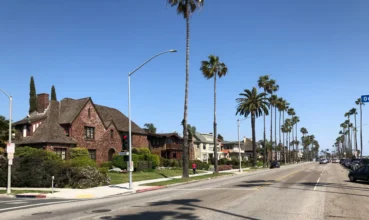
Among Southern California’s beach communities, Long Beach occupies an unusual position. While comparable coastal neighborhoods in Manhattan Beach, Newport Beach, or Laguna Beach price ...

Winter Haven, Florida's Waterfront Market Faces a Reckoning With Pricing Reality

Written by:
Date:
16 Jun 2026
Share via Facebook

Share via Linkedin

Share via X

Copy to clipboard


The Central Florida real estate market is undergoing a period of adjustment that many sellers find difficult to accept. In Winter Haven, a lakeside city positioned between Orlando and Tampa, the gap between seller expectations and buyer capacity has become one of the defining tensions of mid-2026. For agents working this market daily, the conversations happening at listing appointments look quite different from the optimism of just a few years ago.
Keith St. Onge, a Realtor with La Rosa Realty Prestige who has built his business around the area’s extensive lake system, has been delivering a consistent message to his seller clients this year: be ready to move on price, and move quickly. “If you’re not getting any showings or offers in the first two weeks, you’ve got to drop your price, and you’ve got to be aggressive dropping it,” he says.
One Market, Two Pressures
Winter Haven sits in Polk County, which contains more than 550 lakes, and the area has long attracted buyers seeking waterfront access at prices well below what comparable properties would command in coastal markets. That relative affordability remains a draw, but the current environment is shaped by two competing forces: sellers who are reluctant to adjust their expectations, and buyers who are either priced out by interest rates or waiting on the sidelines.
The interest rate environment is the clearest constraint on buyer activity. St. Onge identifies 5.5% as a threshold that would meaningfully expand the pool of qualified buyers. With rates still above 6%, many prospective purchasers simply cannot afford to move forward. Others remain locked into low rates from prior years and are unwilling to trade up. “They’re either stuck renting or just aren’t making the move because the interest rate is high,” he explains.
This lock-in effect is particularly visible in the waterfront segment. Owners on the chain of lakes, who might otherwise consider selling, are holding tight. The result is a frustrating dynamic for buyers: demand exists, but the supply of desirable waterfront properties has thinned considerably.
What’s Moving and What Isn’t
Across most price points and property types, homes are sitting on the market longer than they did a year or two ago. St. Onge points to a 400-unit property priced at $399,900 that has been on the market for over six months without an offer, and a lakefront home with a new pool and roof at $465,000 that has similarly failed to attract a buyer. “Everything is sitting right now for a longer period of time than normal,” he says.
The one exception is premium waterfront inventory, and the reason is straightforward: scarcity. When a well-priced lakefront property does come to market, it tends to generate immediate attention. St. Onge describes a $800,000 waterfront listing that drew multiple showings right away and received an offer within three weeks. “The high-range waterfronts are moving just because there are so few out there,” he says.
For everything else, active buyers are negotiating hard. St. Onge recently submitted an offer $20,000 below the asking price with a $5,000 concession request, and the seller accepted without countering. That pattern, aggressive offers paired with concession demands, has become standard for buyers who are willing to act in the current environment.
New Construction Filling a Gap
While resale inventory languishes, new construction is providing some relief. Builders are offering entry-level homes in the $285,000 to $300,000 range, and many are sweetening deals with incentives that are difficult to ignore. Closing cost coverage worth $7,000 to $10,000, combined with builder-financed mortgage rates as low as 4.99%, has shifted the calculus for buyers who initially resisted the idea of living in a homeowners association community.
St. Onge says many buyers arrive saying they don’t want an HOA, but reconsider when they see the value proposition: a new home with modern finishes at a price point below most resale waterfront properties, paired with below-market financing. “When they see the value of getting a brand new house for $285,000 to $300,000, and the builder is covering closing costs and offering a below-market rate, they realize an HOA isn’t that bad,” he says.
This dynamic is channeling a meaningful share of buyer demand toward new developments, helping absorb some of the population growth the region continues to experience. Florida’s inbound migration remains a steady tailwind, with buyers from New England, the Midwest, and the West Coast drawn by the price differential and lifestyle.
The Investor Angle
For investors, Winter Haven’s positioning between two major metros continues to make it an attractive target. Distressed properties in the $100,000 to $175,000 range still exist, and with renovation, St. Onge estimates that returns of 50% are achievable. The challenge is competition. “A lot of investors are already here, so it is a very competitive market,” he notes, adding that finding the right deal requires persistence and local knowledge.
The broader opportunity for capital deployment remains intact. Prices are lower here than in most comparable Florida markets, and the fundamentals supporting long-term demand, population growth, relative affordability, and recreational appeal have not changed.
Seller Mindset
Perhaps the most significant barrier to a healthier market isn’t rates or inventory; it’s the psychological adjustment sellers are still working through. St. Onge anticipated this reckoning at the end of 2025, when he began warning clients that 2026 would be the year they’d have to confront inflated price expectations. “I told them prices are way too high, and I saw it coming,” he says. “Sure enough, several of my clients were sitting on their listings for a long time.”
The conversation he now has upfront with every seller is straightforward: expect to sell for less than you think you can get, and be prepared to move on price faster than feels comfortable. It is not a message people enjoy hearing, but St. Onge sees it as essential to setting realistic expectations in a market where buyer capacity is genuinely constrained.
Looking ahead, the most significant variable remains interest rates. A new Federal Reserve chair is expected to speak in the coming weeks, and St. Onge is among those watching closely for any signal that relief may be on the way. “What I’ve been telling my customers is that interest rates need to come down, and I expect they will within the next year. We can never tell what the market holds in the future, but interest rates coming down is my hope.” Although, as someone told me not long ago… Hope isn’t a strategy, so be willing to be flexible with the current market conditions.”
For buyers with the means and flexibility to act now, the Winter Haven market offers a window that may not stay open indefinitely. Scarce waterfront inventory, motivated sellers willing to negotiate, and builder incentives that effectively lower the cost of entry all favor those who can move. For sellers, the lesson of the past several months is becoming harder to ignore: pricing to the market, rather than to memory, is the only reliable path to a closed deal.
About the Expert: Keith St. Onge is a Realtor with La Rosa Realty Prestige, serving the Winter Haven area and broader Polk County market in Central Florida, with a focus on the region’s extensive lake system.
This article is intended for informational purposes only and does not constitute legal, financial, or investment advice. The views and opinions expressed herein reflect those of the individuals quoted and do not represent an endorsement of any company, product, or service mentioned. Readers should conduct their own due diligence and consult qualified professionals before making any investment decisions.
Similar Articles
Explore similar articles from Our Team of Experts.