

Following in his grandfather’s footsteps, Alex Mehran Jr. brings a distinctly personal approach to leading Mehran Realty Group, a comprehensive property management and consulting firm ...

The New York Lake Town Where Big-City Buyers Are Chasing Their Retirement Dream

Written by:
Date:
10 Jun 2026
Share via Facebook

Share via Linkedin

Share via X

Copy to clipboard

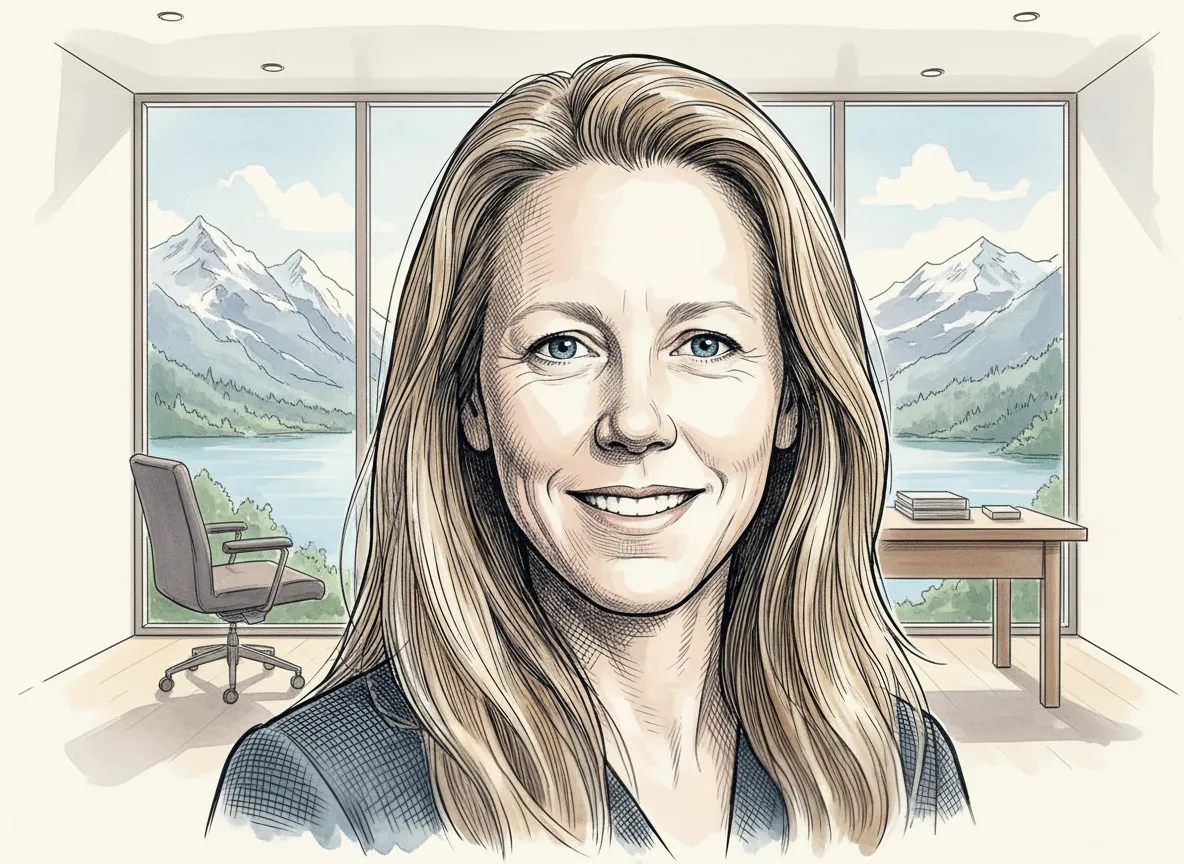
Along the western shores of Essex County, New York, Lake Champlain’s waterfront communities – particularly Willsboro and Essex – are drawing a growing wave of buyers from New York City, Connecticut, Boston, and even Canada. They’re chasing something increasingly hard to find: a genuine seasonal retreat with limited inventory and a strong sense of place. For JoAnna Giltner, Principal Broker at Covered Bridge Realty, this steady influx has defined the past several years of business.
Covered Bridge Realty is a two-person operation that Giltner runs with her sister, after taking over the agency from their father. Despite its small size, the firm has carved out a well-defined niche over 15 years: waterfront second homes on Lake Champlain. “Our focus is on waterfront second homes on Lake Champlain, specifically Willsboro and Essex,” Giltner says. “That’s really where we put all of our energy and our knowledge, because it is a complicated purchase for a lot of people who are coming from afar.”
Buyers Chasing a Dream
The typical Covered Bridge buyer isn’t a first-time homeowner or a resident upgrading their primary residence. Roughly 95% of buyers come from outside the area, and the demographic has remained consistent even as other rural markets experienced surges during and after the pandemic.
Most buyers fall into the late 50s to early 60s age range – couples preparing for retirement who have finished paying for their children’s education and are ready to invest in themselves. These buyers typically plan to use the property for three seasons, gradually extending their time on the lake as retirement settles in. The lake house becomes less of an investment vehicle and more of a milestone. “They’ve succeeded, they’ve got the kids out of college, and now this is for them,” Giltner notes.
That emotional dimension shapes how transactions unfold. Buyers are often deliberate, sometimes spending multiple seasons exploring different lakes across the region before committing. “These are properties people don’t need,” Giltner says. “These are properties they dream about, and they have to fit perfectly.”
Supply Shrinks, Prices Rise
One of the most distinctive features of this market is its structural supply constraint. Because the area falls within the Adirondack Park, land use regulations prevent the kind of subdivision and expansion common in other growing markets. The inventory is, in practical terms, fixed.
What has changed is the quality and character of the existing stock. Many of the modest cabins built in the 1940s through 1960s – when families would spend entire summers on the lake – have been renovated into well-appointed homes. That upgrading, combined with increased regional exposure, has pushed prices steadily upward. “The pricing in our area is still increasing,” Giltner notes. “We are still feeling a lot of pressure upward on the prices.”
Assessed values have climbed enough that some long-tenured waterfront owners – people who have held their properties for 20 or 30 years – are finding it harder to justify the carrying costs. That financial pressure is one of the primary drivers of new inventory entering the market. “It does force a lot of them to sell,” Giltner observes.
A Market on Its Own Clock
Lake Champlain’s waterfront market runs on a timeline that defies conventional real estate logic. The selling season spans roughly May through October, closing out after Columbus Day – a window that once stretched across two full seasons before a property found a buyer. That timeline has since compressed sharply, with most homes now moving within a single season and some within days of listing.
Transactions here also follow an unusual arc. Deals frequently come together during summer showings but don’t close until late fall, long after both buyer and seller have left the lake. Estate sales add further complexity – many listings come to market because an owner has passed or can no longer travel, leaving the selling process entirely in the hands of family members managing it from a distance.
That combination – a compressed selling window, remote decision-makers, and emotionally weighted properties – means buyers need to move with intention. Hesitation between seasons can mean missing a property entirely, and waiting for a better-timed opportunity often means waiting for one that never comes.
Discovering Lake Champlain
Beyond the loyal return visitors who have known Lake Champlain for decades, a newer cohort of buyers is arriving with no prior connection to the area. Giltner describes a meaningful increase in the number of people discovering the region for the first time, often surprised by what they find.
The area offers more services and resources than many buyers expect from a rural lakefront community – local contractors, service providers, and community infrastructure that can support second-home ownership without requiring constant presence. “People who have discovered it are shocked at what they find, because we are a very established area,” Giltner says.
That balance – growth without losing the rural, seasonal identity – appears to be holding. Buyers are staying longer into the shoulder seasons, and the community is becoming less dependent on a narrow summer window. “It’s not just a sleepy summer community but a vibrant all-year-round community,” Giltner says, “and that’s been really exciting to see.”
What Buyers Get Wrong
For buyers approaching this market from metropolitan areas, the most common miscalculation is assuming there will be options. The combination of regulatory constraints, strong demand, and a fixed shoreline means that even in a normal year, the selection is thin. “People think that there will be an endless supply,” Giltner says, “and when they come to the area, they realize that’s not the case.”
That scarcity, combined with the emotional weight these properties carry – often representing decades of family memory on both the selling and buying sides – makes patience and local knowledge essential.
Looking ahead, the fundamentals that define this market show no sign of loosening. Supply remains capped by regulation. Demand continues to grow as more buyers from major metros discover the area. And the demographic pipeline – affluent couples approaching retirement – remains steady. For sellers, rising assessed values and carrying costs will likely continue to push properties onto the market at a measured pace. For buyers, the lesson is clear: waiting for more inventory is unlikely to pay off, and the window to act when the right property appears may be shorter than expected.
About the Expert: JoAnna Giltner is the Principal Broker at Covered Bridge Realty, a two-person agency she runs with her sister in Essex County, New York, specializing in waterfront second homes on Lake Champlain in the Willsboro and Essex, NY areas. The firm has operated for 15 years, having been taken over from her father.
This article is based on information provided by the expert source cited above. It is intended for general informational purposes only and does not constitute legal, financial, or real estate advice. Readers should conduct their own research and consult qualified professionals before making any real estate or financial decisions.
Similar Articles
Explore similar articles from Our Team of Experts.