Across the country, the story is the same. Buyers are competing for fewer homes, developers are hesitating to break ground, and the gap between what people can afford and what’s actual...

Beyond the Hyperscale Hype: Where Smart Data Center Money Is Actually Going

Written by:
Date:
20 May 2026
Share via Facebook

Share via Linkedin

Share via X

Copy to clipboard

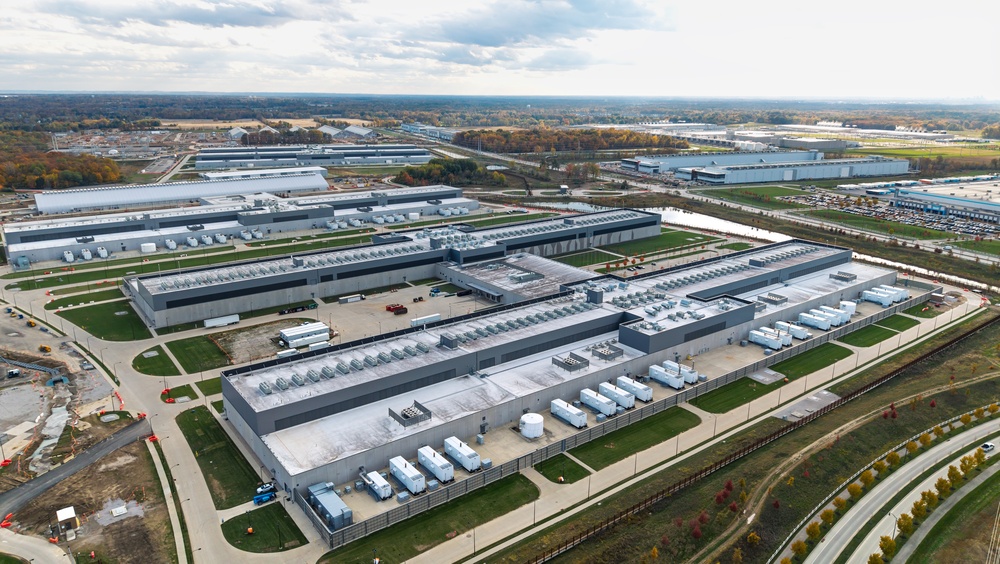
When capital flows into a single asset class faster than almost any other in recent memory, the instinct is to chase the headline. In 2025, data centers accounted for roughly a third of all global private real estate funding, a figure that would have seemed implausible five years ago, when the asset class was still considered a specialty play requiring explanation. Today, it needs a waiting list.
But the headline may be obscuring a more useful story. The surge in institutional capital has concentrated heavily on hyperscale development: the massive campus builds in established corridors like Northern Virginia that serve the largest cloud and AI platforms. That concentration has left a significant segment of the market underserved, and according to investors and developers actively working in the space, that’s where the more durable opportunity actually lives.
“The hyperscale conversation leaves out a huge segment of the market,” says Daniel Kaufman, president of Kaufman & Company in Los Angeles. That segment includes regional operators, smaller AI workloads, and businesses that need data infrastructure but don’t require a massive campus in Northern Virginia. “That’s where we see durable opportunity,” he says.
Kaufman’s business has been developing modular micro data center assets through an initiative called Project Zero, commissioning facilities starting in Detroit and expanding into Texas, Florida, and the Northeast. The model is deliberately distributed and mid-scale, built on the premise that demand for AI infrastructure isn’t monolithic and that a large portion of it will never require hyperscale capacity.
What Actually Changed
The transformation of data centers from niche asset class to institutional staple happened faster than almost anyone predicted. Two or three years ago, data centers required a specialized investor to underwrite. Today, the logic is straightforward enough that institutional capital has moved in force.
What changed wasn’t the underlying concept – it was the scale of the demand. AI stopped being a topic of conversation and became an operational infrastructure requirement, and it happened across industries simultaneously. When enterprises at scale suddenly need processing power, the real estate housing that infrastructure becomes strategic. Kaufman puts it plainly: “For the first time, capital flowing into data centers has surpassed capital flowing into office buildings. That’s not a trend. That’s a structural realignment.”
Zach WalkerLieb, Managing Partner at Willow Manor (a division of Keller Williams The Marketplace One), frames it similarly. “Institutional capital has followed the demand,” he says. The speed of that follow-through – from niche to core asset class in roughly 24 months – is what distinguishes this cycle from earlier industrial or logistics booms.
Constraints That Capital Can’t Solve
Here is where the story gets more complicated and more interesting. The bottleneck isn’t demand or capital availability. It’s infrastructure – specifically, power access, grid wait times that can stretch for months or years, and cooling capacity.
“The demand is real,” Kaufman says. “But like any asset class that gets hot fast, underwriting discipline is separating the long-term players from the tourists. Power availability, grid interconnection timelines, and cooling infrastructure are the actual constraints, not capital.”
Will Mitchell, CEO of construction finance platform Rabbet, echoes the point. “The money the companies have to spend on them is not going away soon,” he says. But money alone doesn’t move a project through a constrained grid queue.
The wait times to connect to the grid in high-demand corridors are now measured in years. That timeline is largely immune to capital pressure: a well-funded developer waits in the same queue as everyone else. For developers willing to look beyond saturated markets toward secondary locations with available power capacity, that constraint becomes a competitive advantage rather than a barrier, which is precisely where the mid-market opportunity Kaufman describes becomes most actionable.
The Community Equation
Layered on top of physical infrastructure constraints is a force that doesn’t show up in most underwriting models: community resistance. And it is intensifying. The objections range widely. Neighbors complain about noise and industrial encroachment into residential or rural areas. Local officials weigh the land and infrastructure commitments against facilities that employ dozens of workers, not thousands. And at the resource level, the concerns are acute.
Melissa Connell, founder and broker of Palm & Pine Realty Group. in Florida, points to consumption as a primary driver of pushback. “The drain on natural resources, especially water, is a major factor,” she says. Data centers require significant cooling infrastructure, and in water-stressed regions, that requirement has become a genuine public flashpoint. “Site availability and citizen response will be a long-standing negative driver,” Connell adds.
The resource question connects directly to grid pressure. In markets where power infrastructure is already under strain, a large data center proposal triggers concerns about reliability for existing residents – brownouts, rate increases, cascading grid stress – before a single server goes online. Those concerns are no longer abstract, and local governments in several markets have responded with moratoriums, stricter permitting requirements, or outright opposition.
This dynamic practically reinforces the mid-market thesis. Distributed, modular facilities in secondary markets with available power and less contentious regulatory environments can sidestep many of the bottlenecks that slow or block larger hyperscale projects.
Beyond the Campus
Data center development is driving demand well beyond the facilities themselves. The ripple effects reach into industrial real estate, land markets, and the broader construction economy of whatever region a facility lands in – electrical contractors, HVAC specialists, fiber installers, steel fabricators, and concrete suppliers all see sustained work through the construction cycle and beyond.
Logan Freeman, a managing broker at MWCR Advisors in Kansas City, offers a ground-level illustration. “The secondary impact is often more interesting than the data center itself,” he says. A major facility generates downstream demand for manufacturers, warehousing users, component suppliers, and contractors – and that demand is showing up in industrial absorption figures across secondary markets.
The flip side is land competition. Data center buyers are paying a premium for sites with strong power and water access, driving up prices to levels that traditional warehouse and logistics developers can’t match. A site that would have gone to a distribution tenant two years ago may now be out of reach entirely — claimed by a hyperscaler before a conventional industrial buyer gets to the table.
How Long Can This Last?
So, the demand is real, and the capital is committed. But how far and how fast it translates into operating facilities is another question. AI infrastructure requirements are deepening, not stabilizing, and the computing power needed to support them will continue to require physical real estate. That’s a structural shift, not a cycle. But the path from capital commitment to operating facility is constrained by genuinely difficult-to-resolve issues on an accelerated timeline.
Practically, that means the data center opportunity is genuine and durable, but not uniformly accessible. The developers and investors generating the most consistent returns are likely those who have done the infrastructure homework first: who know where the power is, who understand the grid interconnection timeline, and who have assessed community dynamics before committing capital.
“Is the appetite sustainable?” Kaufman asks. “Yes, as long as the power grid and capital markets keep up. Those are the two real constraints.”
The hyperscale story is real. But the more useful question for most investors isn’t whether data centers are a good bet, but rather where the power is, who’s already in the grid queue, and whether the community will let you build.
Similar Articles
Explore similar articles from Our Team of Experts.