
The foreclosure process moves slowly. The decisions that lead to losing a property often happen in the first weeks, not the final ones. That’s what Gelt Financial, a national private l...

Florida Just Passed a Law Funding Vertiport Infrastructure - Here Is What It Means for Real Estate.

Written by:
Date:
19 May 2026
Share via Facebook

Share via Linkedin

Share via X

Copy to clipboard

Florida has a habit of getting ahead of itself on infrastructure. Sometimes that works out. This time, the state is funding landing pads for aircraft that are not yet in commercial production – and the bet is that the technology will catch up before the concrete does.
For buyers and developers tracking where South Florida’s property premiums are heading over the next decade, The Mastropieri Group has been watching this story closely. Here is what the law does, where the technology actually stands, and what it could realistically mean for real estate.
What Florida’s New Law Actually Does
Governor Ron DeSantis signed HB 1093 on April 21, 2026. The law authorizes the Florida Department of Transportation to fund vertiport construction across the state. Vertiports are landing and takeoff hubs for VTOL aircraft – electric vehicles that combine characteristics of airplanes and helicopters, capable of vertical takeoff without a runway. They are what most press coverage calls “flying cars,” though the more accurate description is short-haul electric air taxis.
The funding structure has two scenarios. If federal funds are unavailable, FDOT may cover 100% of public vertiport construction costs. If federal funds are available, FDOT may cover up to 80% of the non-federal share. The first planned facility is SunTrax in Polk County, a transportation testing center announced in October 2025 where FDOT plans to research and develop an aerial highway network.
This follows a 2025 transportation package requiring FDOT to develop an advanced air mobility plan in coordination with the Department of Commerce. DeSantis and Transportation Secretary Jared Perdue became active proponents after viewing VTOL prototypes at the Paris Air Show in 2025.
Where the Technology Actually Stands
Honest assessment: this is early. Most VTOL aircraft currently in production are built for military use. Commercial civilian production is limited. There is one operational vertiport in the United States, located in Chicago. Several other states have vertiports under construction but none operational.
Florida is funding infrastructure before the primary aircraft are in commercial production. The legislation is essentially a bet that the technology will mature on a timeline consistent with current projections – roughly five to ten years – and that the state will have the physical network in place to support it when it does.
That is not an unreasonable bet. But it is a bet.
Why South Florida’s Corridor Makes Geographic Sense
If aerial mobility is going to work somewhere, the case for South Florida is straightforward. The stretch from West Palm Beach to Miami is one of the most consistently congested commute corridors in the country – 70 miles along I-95 and US 1 where highway expansion is not a realistic option and rail capacity falls well short of demand. A point-to-point aerial option that bypasses surface traffic entirely addresses a problem that conventional infrastructure spending has not been able to solve.
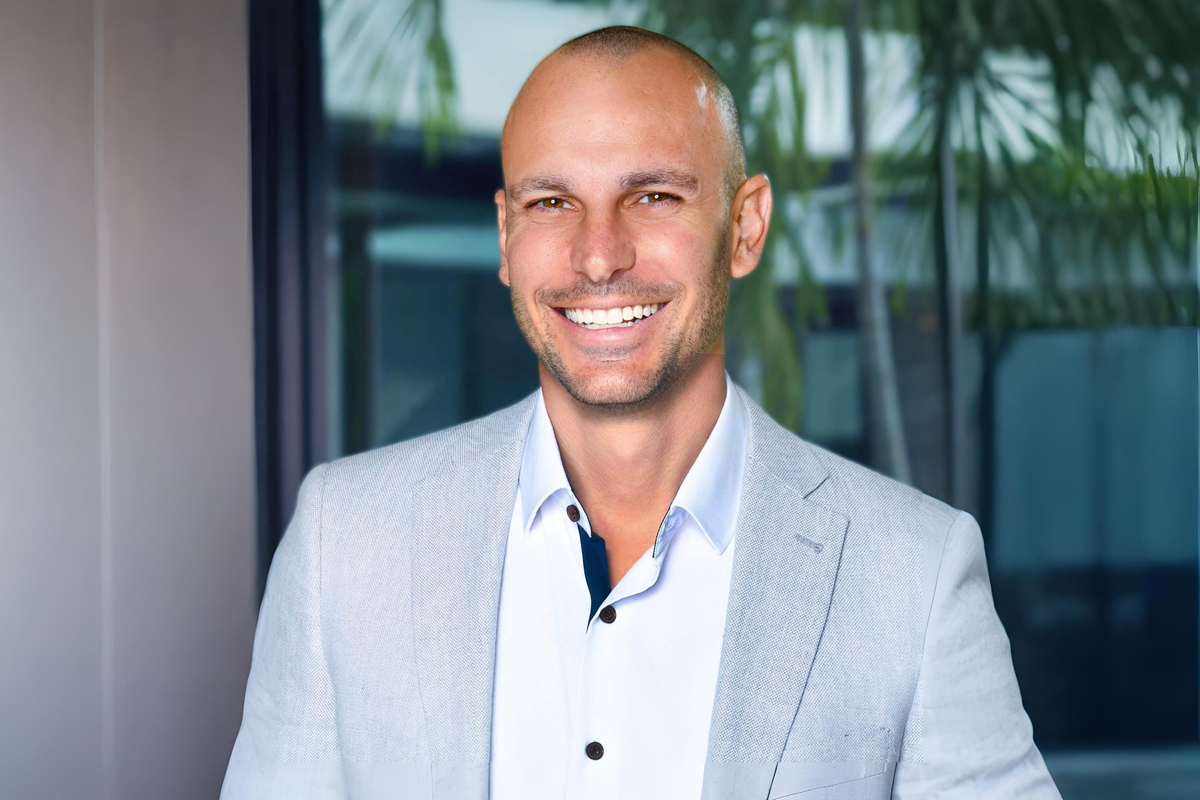
Larry Mastropieri, broker and founder of The Mastropieri Group, puts it plainly: “The South Florida corridor between West Palm Beach and Miami is the obvious use case. If this technology works anywhere, that corridor makes a lot of sense.”
What This Could Mean for Boca Raton and South Florida Real Estate
The real estate angle is still speculative, but it is worth tracking now rather than later. Vertiports require physical infrastructure: rooftop landing pads, charging facilities, waiting areas, and security integration. Mixed-use and commercial towers being designed or permitted today – particularly those near I-95 corridors – could incorporate vertiport-ready rooftop specs as a long-range design decision.
No South Florida developer has announced vertiport integration into a project as of publication. But the funding mechanism is now law, the testing infrastructure is underway, and the geographic logic for South Florida is sound. As Mastropieri notes, “If aerial mobility becomes part of how people move around South Florida, then access to vertiport infrastructure could become an amenity. It sounds futuristic, but so did a lot of things before they became normal.” Developers who factor this into long-horizon planning will be better positioned than those who dismiss it outright.
For buyers and investors exploring available properties across South Florida, The Mastropieri Group can be reached at (561) 544-7000.
The Mastropieri Group is a luxury real estate brokerage serving Palm Beach and Broward Counties, with over 2,000 closed transactions and 2,000+ five-star reviews.
This article is based on information provided by the expert source cited above. It is intended for general informational purposes only and does not constitute legal, financial, or real estate advice. Readers should conduct their own research and consult qualified professionals before making any real estate or financial decisions.
Disclosure: Individuals or companies mentioned may have a commercial relationship with KeyCrew.
Similar Articles
Explore similar articles from Our Team of Experts.