
In a conversation with KeyCrew Journal, Weinstock shared insights from his journey from reluctant law school graduate to commercial real estate leader, his commitment to mentorship through D...

Westchester, New York Housing Market Stays Tight as Suburban Demand Holds

Written by:
Date:
21 May 2026
Share via Facebook

Share via Linkedin

Share via X

Copy to clipboard

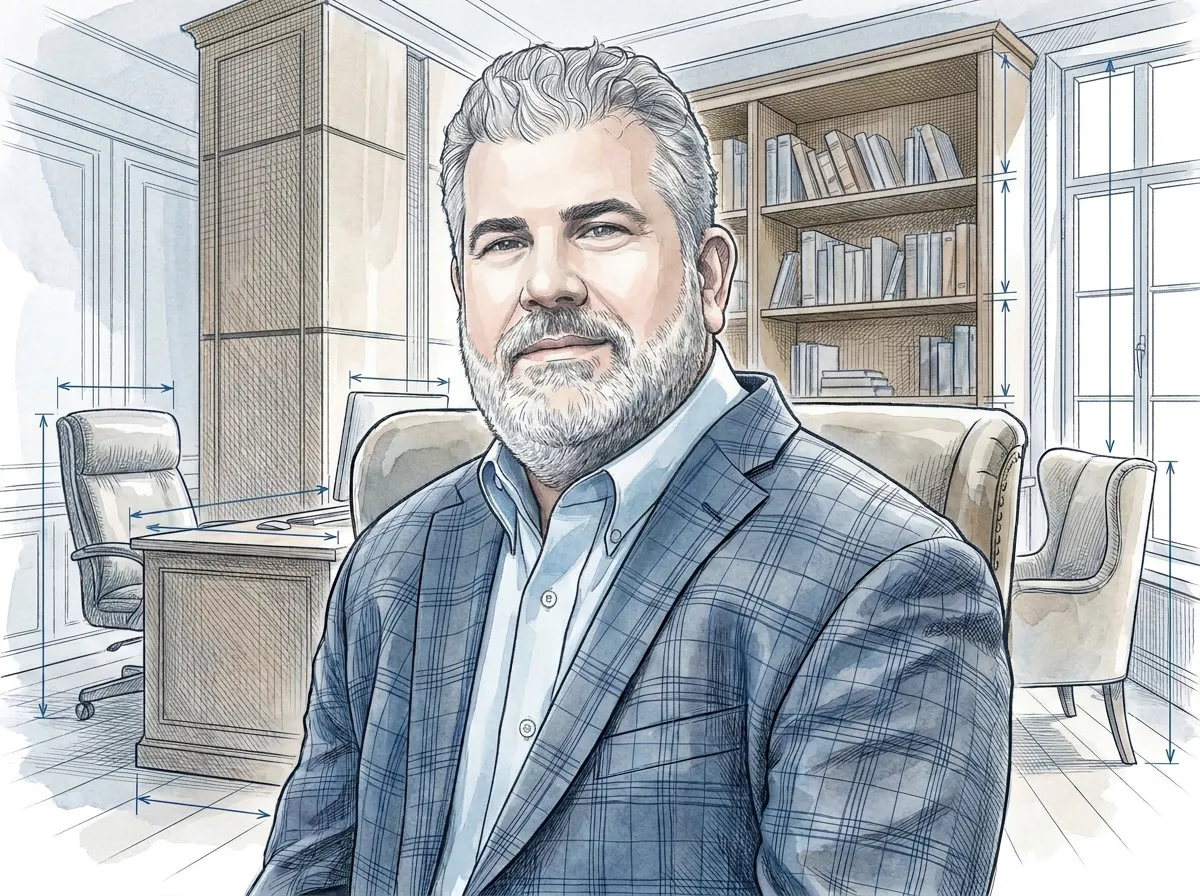
About eight years into running his own brokerage, Daniel Berger has guided clients through multiple market cycles in Westchester County, New York and Fairfield County, Connecticut — low-rate frenzies, pandemic-era migrations, and the slower, more deliberate market that followed. As broker-owner of RE/MAX Prestige Properties, he personally closed 55 transactions totaling over $40 million in 2025, while his 15-agent team reached $90 million in volume. That output — sustained without a transaction coordinator or administrative support — reflects both the pace of the market and his hands-on approach.
Before real estate, Berger spent more than two decades in the beverage industry, bringing a sales and marketing background that shaped his unconventional, client-first approach to the business. That discipline, combined with an operating style where he handles his own payroll, installs his own yard signs, and manages every transaction personally — has built a referral-driven practice where clients return and recommend him by name.
Suburb Never Slowed
Westchester sits in an unusual position in the broader New York metro area. It is close enough to Manhattan to serve as a natural landing spot for city dwellers ready to buy, yet far enough to offer space and school districts that urban neighborhoods rarely can. For the past decade, Berger says the market has stayed consistently busy. Housing supply remains well below buyer demand, and that imbalance has not resolved itself even as interest rates climbed and sentiment softened in other parts of the country.
As return-to-office policies take hold — even two or three days a week — buyers have pulled back toward commuter-accessible suburbs rather than the rural areas that briefly attracted attention during COVID. “You still need to go into the office at some point,” Berger notes. The net effect is that suburbia — not exurbia — has absorbed much of the demand.
Price Points Diverge
Not all price points are behaving the same way. At the lower end, competition remains intense. At higher price points, activity has moderated. A recent offer Berger submitted on a $1.5 million property came in second out of five competing bids — well below the 15 competing offers common a few years ago.
The property types drawing the most interest share a specific set of characteristics. Multi-family homes where an owner can live in one unit and rent the other are the most sought-after and least available, according to Berger. Single-family homes priced between $750,000 and $1.1 million in well-regarded school districts are similarly scarce. “Those are hard properties to find in nicer towns — almost impossible,” Berger says. School district quality remains one of the most consistent drivers of value across the county.
Rethinking Interest Rates
Buyers tend to bid based on monthly payments rather than home prices. When rates are low, more buyers qualify for higher loan amounts, which drives competition and pushes prices up. A higher-rate environment, while uncomfortable on paper, can benefit buyers willing to stay disciplined. Fewer competing bids, lower sale prices, and the option to refinance later are all advantages for patient buyers.
“You’d rather be a buyer in a 10% interest rate market, because there’ll be very few people bidding against you,” Berger explains. “But if you buy the house at 30% over what the value should be, it doesn’t matter if rates come down — you still overpaid.”
That long-term framing shapes how he advises clients on timing and strategy, particularly those treating a purchase as a multi-year investment.
Reading Investment Value
Berger’s approach to evaluating investment opportunities is straightforward: any property can work at the right price, but the analysis must account for estimated revenues, known expenses, and future capital needs. “A property doesn’t just cost what you buy it at on closing — it’s how much work does it need to become the asset you want it to be,” he says.
He applies that framework to his own portfolio. Over the past year, he purchased a townhouse in his own town, gut-renovating it for rental with a projected 10% return. He also holds a 25% stake in a former firehouse on Main Street in Beacon, New York, being redeveloped into ground-floor retail and four upper-floor apartments. Those investments inform how he advises clients on the less visible costs of ownership: carrying costs during vacancies, unexpected repairs, and the importance of conservative underwriting.
Different investors have different thresholds. Some are satisfied with a 3–5% return if it keeps their capital out of a volatile stock market. Others need higher yields to justify the illiquidity. Understanding which type of investor he is working with determines how he structures every recommendation.
Where Deals Break
Deals that fall apart tend to do so for process-related reasons rather than price disagreements. Berger points to unprepared lenders, incomplete listing disclosures, and unresolved permit issues as the most common friction points.
His response is to front-load due diligence before a property hits the market — researching open permits, identifying potential violations, and resolving issues before they surface. “Deal killers are when you have a lender that’s not professional, hasn’t dotted the i’s and crossed the t’s, or there’s sloppiness in the listing where you don’t identify proper things beforehand,” he says.
He also shared a more unusual example: two separate clients passed away during active transactions over the past year, requiring him to work with estates, letters of administration, and in one case a near-foreclosure situation.
AI Finds Clients
Berger draws a clear line between what AI can and cannot do in real estate. New clients increasingly find him through AI-driven searches, which has shaped how he approaches content marketing. He now proactively publishes articles designed to surface in AI-generated results.
But the transactional work — positioning an offer, navigating inspections, managing a difficult closing — is where he sees human judgment as irreplaceable. “An AI bot doesn’t show you the house,” he says. “A person shows you the house, and that’s the secret sauce.” For complex, high-stakes moments in a transaction, a knowledgeable agent who answers the phone still matters more than any platform.
Westchester’s Near-Term Outlook
As of mid-2026, Berger is watching macroeconomic uncertainty — inflation, interest rate direction, and global instability — as the main variables that could affect buyer sentiment in Westchester County. If employment confidence weakens, he expects more sellers to enter the market while buyer activity pulls back, potentially loosening the supply constraints that have defined the county for years.
For now, the outlook looks more like a continuation than a turning point: tight inventory, selective buyers, and steady demand from a population that continues to see Westchester as a practical and desirable place to put down roots.
About the Expert: Daniel Berger is broker-owner of RE/MAX Prestige Properties licensed in New York and Connecticut, with a focus on Westchester County, New York and Fairfield County, Connecticut, with a decade of experience running his own brokerage.
This article is based on information provided by the expert source cited above. It is intended for general informational purposes only and does not constitute legal, financial, or real estate advice. Readers should conduct their own research and consult qualified professionals before making any real estate or financial decisions.
Similar Articles
Explore similar articles from Our Team of Experts.