
The Florida real estate market is showing signs of a gradual rebound, but moving a deal from contract to closing has become more complicated than ever. Fluctuating mortgage rates, stricter f...

How Public Art Is Driving Economic Development in Chicago's Underserved Corridors

Written by:
Date:
20 May 2026
Share via Facebook

Share via Linkedin

Share via X

Copy to clipboard

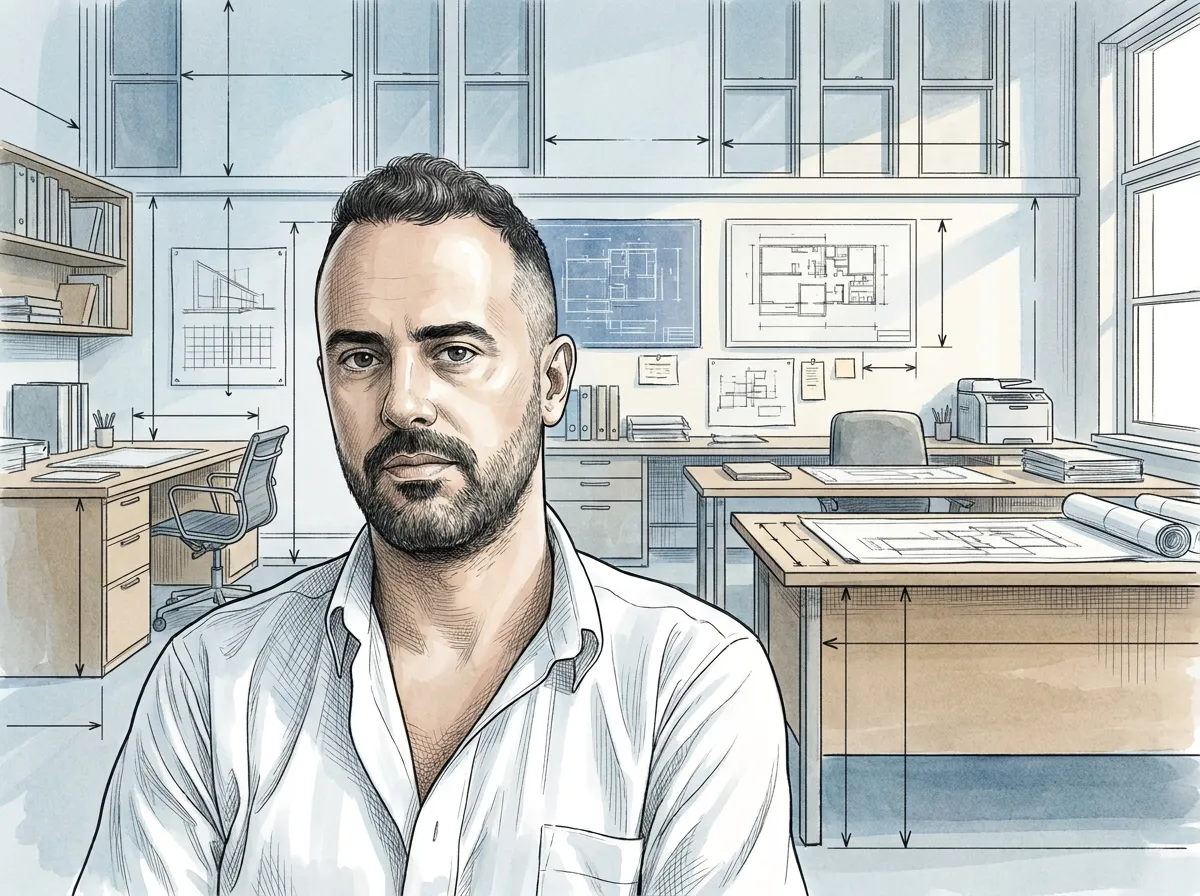
In cities across the United States, the conversation around revitalizing underserved urban neighborhoods often centers on zoning changes, tax incentives, and infrastructure spending. What gets less attention is the role that public art and placemaking play in making those investments work. In Chicago’s Bronzeville neighborhood, one practitioner is putting that theory into practice at a scale drawing attention well beyond the city’s borders.
Christopher Devins, an urban planner and artist behind Chris Devins Creative, operates at the intersection of public art and economic development. His work offers a ground-level view of what community revitalization actually requires, and where the process tends to break down.
Identity as an Economic Engine
Devins frames his approach around three pillars he considers essential to sustainable community development: identity, sustainability, and mobility. Of the three, identity is where his work begins.
A neighborhood with a clearly defined identity, he argues, can market itself to surrounding communities and draw visitors who might otherwise have no reason to come. He points to Chicago’s Chinatown as an example, a place where cultural identity is immediately legible and functions as an economic draw. Devins calls this “destination economics.”
The effects are measurable. When people recognize what a neighborhood offers, awareness extends to surrounding areas, and visitors stay longer. “Two to three hours on your commercial corridor is raising your commercial sales per square foot, because people will stop by and get a coffee as they’re walking through your neighborhood,” Devins says.
Bronzeville, historically known as Chicago’s Black Metropolis, serves as his primary case study. The neighborhood has both daytime programming, including coffee shops and retail, and evening offerings such as gallery tours. In Devins’ model, public art is the most cost-effective tool for communicating and reinforcing that identity to external audiences.
The Bronzeville Trail
The centerpiece of his current work is the Bronzeville Trail, a two-mile elevated hiking and biking path being developed along the former Old Kenwood Embankment rail line on Chicago’s South Side. The project falls under the national Rails to Trails network, which repurposes decommissioned rail infrastructure for public use. Similar projects include Chicago’s 606 Trail and Detroit’s Joe Louis Greenway.
At a projected cost of $100 million, the trail has already secured roughly $10 million in funding, with work underway on lighting and street improvements around the trail’s base. Demolishing the structure would cost an estimated $200 million, making preservation the fiscally responsible option for both the city and state.
The project involves a layered web of stakeholders. Funding flows primarily from federal infrastructure allocations made under the Biden administration. The Cook County Land Bank holds the land surrounding the trail. City officials, local alderpersons, and community members all have a seat at the table. Real estate developers with holdings along the corridor are watching closely, aware that trail infrastructure tends to lift surrounding property values.
That last point is not without tension. “The community is concerned about property taxes rising,” Devins notes. Practical logistics add further complexity, including the need to design a bridge over King Drive that can open to accommodate the floats of the Bud Billiken Parade, the nation’s oldest African American parade.
How Developers Come In
Devins’ involvement in commercial projects often begins when a developer or business owner recognizes that a building needs to connect with its surroundings rather than occupy space. His work on the Mariano’s grocery store in Bronzeville illustrates the point.
Before retiring, Bob Mariano, scouting locations for what would become his flagship store, encountered Devins’ historical photo murals in the neighborhood and commissioned a 260-foot mural installation depicting notable Bronzeville residents. The work tied the new development to the neighborhood’s history. After Mariano’s sale to Kroger, the project’s visibility brought Devins additional commissions from other business owners who had seen the work.
Where the Process Gets Stuck
Despite growing interest in placemaking as a development tool, Devins is candid about the structural barriers that slow progress. The core problem, as he sees it, is a misalignment between who does the creative work and who controls the funding.
Grant funding and public contracts tend to flow toward established nonprofits and development organizations whose primary interest, in his assessment, is organizational sustainability rather than execution. Meanwhile, the practitioners with the expertise and track record to deliver results often lack the administrative infrastructure to compete for those resources. “You get money coming in to do this, but then it just kind of disappears into this black hole of bureaucracy,” he says.
The pattern is one that urban development professionals will recognize. Grassroots creatives build momentum in a neighborhood, generate media attention, and attract outside interest. Then, as the area gains profile, institutional actors move in, the original practitioners get sidelined, and the energy dissipates. “Once they’ve done their job and the professionalization of it happens, then come people whose main interest is just salaries and making money, and they really, truly don’t understand what’s going on.”
The Bigger Mistake Developers Make
Beyond bureaucratic friction, Devins points to a more basic error in how many developers approach community-specific projects. The tendency to import generic design solutions, using the same architect, the same aesthetic, the same programming that worked in another city, squanders what he considers a neighborhood’s most valuable asset: its distinctiveness.
“If you just put the same facade, the same architecture that you would use in California and put it in Bronzeville, you’re missing out on a chance to use the very individual and unique identity of an area to increase its economic development.”
Distinct neighborhoods attract visitors, generate media coverage, and create the kind of identity that sustains commercial activity over time. Generic development produces interchangeable environments.
Market Conditions and the Road Ahead
As of mid-2026, Devins is navigating a development environment that has slowed considerably. For-profit real estate development has pulled back, and many large-scale projects are struggling to assemble the private equity needed to move forward. Several high-profile Chicago developments, including the 78 project, Bronzeville Lakefront, and the Illinois Quantum Park, are in varying states of progress or delay.
In that environment, he sees tactical urbanism, the use of relatively low-cost, fast-moving interventions such as public art to generate momentum, as increasingly relevant. Large urban planning projects can cost anywhere from $50 million to $1 billion and take 20 years to implement. A well-targeted public art initiative, by contrast, can produce visible results in a single year for a fraction of that cost.
He also flags a more immediate concern: the proliferation of low-quality murals is beginning to dilute the impact of public art as a placemaking tool. “There may be too many people doing this, and they’re not having the effect,” he says, pointing to a shift in his own practice toward fine art aesthetics better suited to business districts.
The broader argument Devins is making, that cultural creators need more structural authority in the development process rather than being brought in as a finishing touch, is one that urban planners and real estate developers would do well to consider. The evidence, measured in foot traffic, media coverage, and commercial activity, is visible in neighborhoods like Bronzeville. The challenge is building a process that lets that evidence drive decisions.
About the Expert: Christopher Devins is an urban planner and artist behind Chris Devins Creative, based in Chicago’s Bronzeville neighborhood. His work focuses on public art and placemaking as tools for economic development and community revitalization in urban neighborhoods.
This article is based on information provided by the expert source cited above. It is intended for general informational purposes only and does not constitute legal, financial, or real estate advice. Readers should conduct their own research and consult qualified professionals before making any real estate or financial decisions.
Similar Articles
Explore similar articles from Our Team of Experts.