Texas commercial real estate financing has undergone significant changes over the past seven years, shaped by volatile interest rates, stricter lending standards, and evolving buyer and sell...

Santa Fe, New Mexico's Luxury Real Estate Market Is Finally Catching Up

Written by:
Date:
12 May 2026
Share via Facebook

Share via Linkedin

Share via X

Copy to clipboard

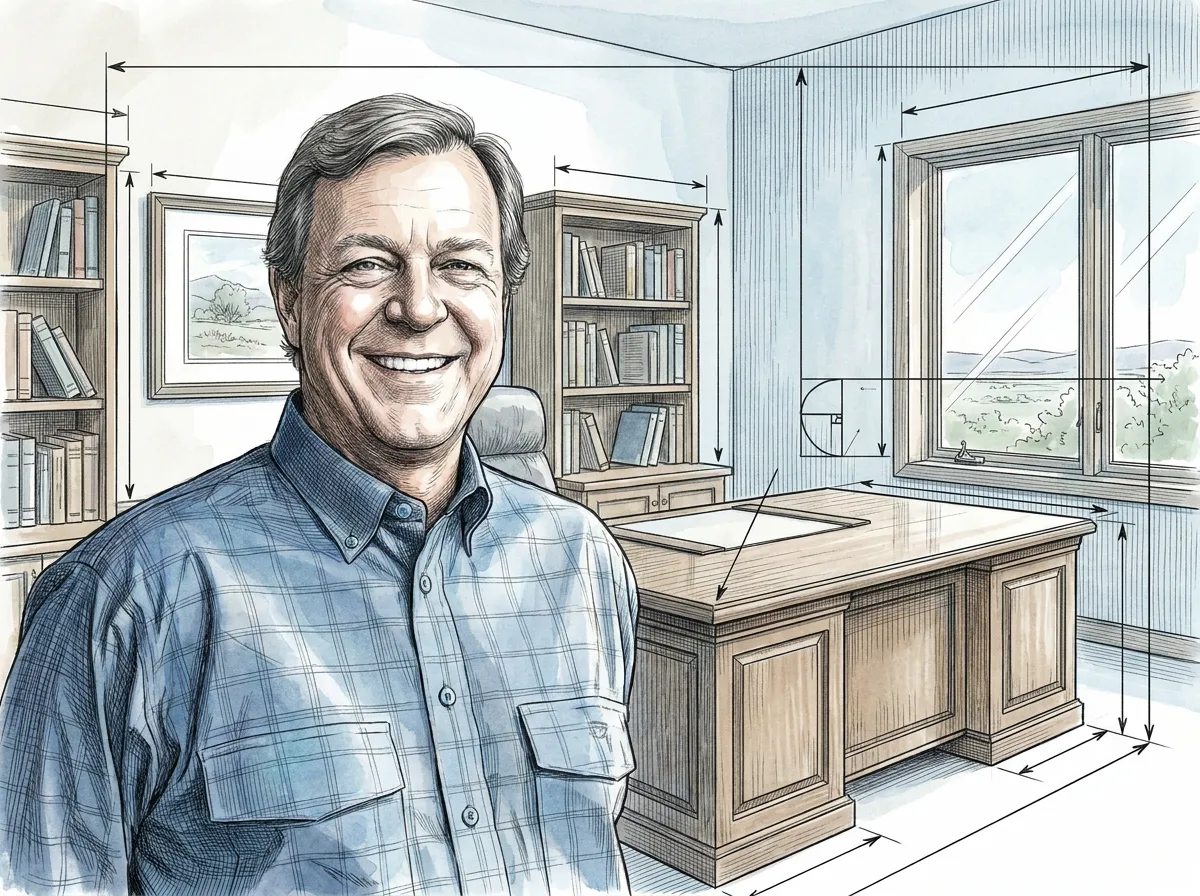
Santa Fe, New Mexico, is outpacing the national luxury real estate market. The city jumped 18 places to rank first among the country’s 60 most active luxury markets in Q1 2026, according to the Wall Street Journal’s quarterly luxury market index. Luxury prices rose 11.3% year over year during that period, while the national average for the same tier fell 2.9%.
For those who have watched the Santa Fe market closely for decades, the numbers confirm what they already believed. “We have known for years that Santa Fe was undervalued,” says Chris Webster, Senior Real Estate Advisor and Broker with Sotheby’s International Realty in Santa Fe, New Mexico, and CEO and publisher of Leading Estates of the World.
Prices Below Peer Markets
Sotheby’s International Realty’s 2026 Resort Report tracks 19 Mountain West resort communities, including Lake Tahoe, Park City, Sun Valley, Jackson Hole, Aspen, and Telluride. Within that peer group, Santa Fe consistently ranks among the least expensive markets despite offering comparable lifestyle appeal and limited supply.
Full-year 2025 data reinforces the upward trend: a 13.6% increase in sales compared to 2024, a 6.4% rise in average sale price, and a 3.2% increase in price per square foot. Properties priced at $2.5 million and above saw a 65% jump in transaction volume, with 89 sales compared to 54 the year prior.
Who Is Buying
Webster describes the typical purchaser as educated, well-traveled, and affluent, coming from California, New York, Texas, Oklahoma, Colorado, and Arizona. Climate is a recurring factor. Cities like Phoenix and Dallas regularly exceed 100 degrees for extended stretches in summer, and buyers from those markets seek relief in northern New Mexico’s higher elevation.
Tax considerations also play a role. While New Mexico has a state income tax, Santa Fe‘s property taxes are among the lowest in the country. “I’ve had clients ask me what the property taxes were on a property. I give them the answer, and they say, ‘Per month?’ And I say, no, per year,” Webster says. Many buyers already maintain legal domicile in states without income tax, such as Texas or Wyoming, and treat Santa Fe as a second or third home.
The post-COVID period accelerated trends already in motion. Remote work flexibility allowed buyers to act on longstanding interest, and inventory moved quickly. “Basically, all of our inventory flew off the shelf for a couple of years once people realized what the COVID effect was,” Webster says.
The Hourglass Economy
Unlike most American cities, which have a large middle class, Santa Fe’s economy resembles an hourglass: a sizable lower-income population, a concentration of wealth at the top, and a thin middle class in between. The primary economic engines are real estate, art, and tourism. The city draws more than two million visitors annually to a permanent population of roughly 90,000.
A large share of high-end properties are second homes owned by buyers based in Dallas, Los Angeles, or other major cities, so the actual affluent population is larger than census figures suggest. High-value properties are distributed across the city and surrounding areas rather than concentrated in a single neighborhood. The notable exception is Las Campanas, a private community that includes two Jack Nicklaus–designed golf courses, an equestrian center, a swimming, tennis, fitness, and spa facility, along with multiple clubhouses.
Ranch and Rural Demand
Demand extends well beyond the city limits. Webster divides interest in surrounding ranch properties into two categories: those seeking working ranches and those seeking recreational ones. A typical pattern involves a buyer starting with a home in Santa Fe, then returning to ask about ranch properties an hour or two outside the city.
“Many of these clients, once they buy a nice house in Santa Fe, ask me to find them commercial properties in town or some ranch property that’s an escape so they can have that wilderness experience,” Webster says.
Preservation vs. Development
Santa Fe’s adobe architectural tradition, rooted in Native American Pueblo construction, is protected in historic districts and broadly influential across the city’s design standards. Recent development pressure, partly driven by housing demand from workers at Los Alamos National Laboratory, has produced multi-story apartment buildings that locals consider out of character.
The tension between preservation and density is not new. Webster recounts a well-known local story: a commercial building near The Plaza drew such opposition that protesters spray-painted “UGLY” on its exterior roughly 50 times during construction, with workers sandblasting it off each following morning. A parking garage built the same year won the Old Santa Fe Association’s annual award for best new construction.
“Those that care about Santa Fe don’t oppose change or further development,” Webster says. “They want it to be done with an aesthetically pleasing completion as opposed to something that’s garish and out of context.”
What Comes Next
The first quarter of 2026 has been slower than recent years, which Webster attributes to typical seasonality rather than any softening in underlying demand. He expects activity to pick up through spring and summer.
Expanding air access is one factor shaping the longer-term outlook. For years, Santa Fe had direct flights from only three gateways: Dallas, Denver, and Phoenix. Los Angeles and Houston have since been added, with routes to Chicago and Atlanta under consideration. Markets like Jackson Hole and Savannah have 12 to 15 nonstop gateway cities, and the accessibility those markets enjoy has contributed to their higher price premiums. As Santa Fe adds routes, the barrier to getting there decreases, a factor that historically correlates with increased buyer interest and transaction volume.
Santa Fe offers what buyers in the Mountain West seek: cultural distinction, natural beauty, and limited supply, at prices that remain below comparable markets. Growing air connectivity and national media attention suggest the gap between Santa Fe’s profile and its price point will continue to narrow.
About the Expert: Chris Webster is a senior real estate advisor and broker with Sotheby’s International Realty in Santa Fe and is also the CEO and publisher of Leading Estates of the World, a global network connecting buyers, sellers, and real estate professionals in the ultra-luxury market. Based in Santa Fe, New Mexico, Webster has spent five decades working at the intersection of high-end real estate, wealth, and design.
This article is based on information provided by the expert source cited above. It is intended for general informational purposes only and does not constitute legal, financial, or real estate advice. Readers should conduct their own research and consult qualified professionals before making any real estate or financial decisions.
Similar Articles
Explore similar articles from Our Team of Experts.