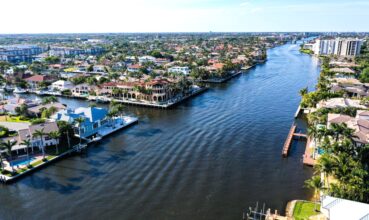

Orlando’s luxury real estate market is experiencing a fundamental shift in buyer behavior, with affluent house hunters now taking weeks rather than days to make purchase decisions, acc...

AI Boom Fills San Francisco Bay Area Apartments While Offices Struggle

Written by:
Date:
19 Mar 2026
Share via Facebook

Share via Linkedin

Share via X

Copy to clipboard


San Francisco Bay Area apartment occupancy is rising quickly, fueled by an AI boom reshaping demand in unexpected ways. The surge is not driven by highly paid employees at Google or Meta in luxury towers. According to Marc Lipsett, Director of Loan Production at Walker Realty Capital, demand is coming from hundreds of smaller AI companies whose employees are seeking standard apartments throughout the region.
“There are over 400 AI companies in the Bay Area,” Lipsett says. While the largest firms draw headlines, most activity comes from startups and smaller companies building specialized tools and products. These workers are not executives or top earners living in high-end buildings. They are technical staff and entrepreneurs working across the AI ecosystem, occupying regular apartments that would otherwise lease more slowly.
This distinction points to a more stable and widespread boost in apartment demand. Unlike a typical tech boom concentrated in luxury housing, the current influx is spread across many neighborhoods and price points. These are not executives who will leave after a failed funding round. They are workers embedded in a broad, growing industry, filling units that might otherwise remain vacant.
AI Workers Choose Standard Apartments
Lipsett illustrates this trend with a personal example. His son, a graduate student in San Francisco, lost a roommate in a three-bedroom apartment and needed a replacement. The new roommate turned out to be a Midwestern entrepreneur running his own small AI company.
“I figured that those people would be in Google tower or some of the luxury apartments, but there are a lot of people involved in AI who are in the weeds trying to make a small tool,” Lipsett says.
This experience reflects what regional occupancy data shows. San Francisco apartment occupancy rates have improved sharply. The effect is spreading to nearby markets like Oakland, where landlords report strong, stable occupancy.
“San Francisco apartment occupancy has really improved, and that radiates out typically,” Lipsett says. “My Oakland landlords are seeing bedrock occupancy.”
Rents are rising, creating a positive cycle for apartment owners who struggled during the pandemic. The improvement is broad-based across property types and neighborhoods, suggesting demand is not confined to a single segment or driven by short-term speculation.
Remote Work Keeps Offices Struggling
While apartment demand strengthens, San Francisco Bay Area office space continues to struggle. Lipsett says the AI boom has not translated into significant office leasing because persistent work-from-home arrangements have not changed.
“San Francisco had one of the highest remote work percentages in the country, and even though offices have come back somewhat, they’re just not there,” Lipsett says. “There’s less demand for average quality offices.”
Lipsett emphasizes that AI is not reducing office demand by eliminating jobs. Workers have not returned to offices at pre-pandemic levels, leaving a large surplus of standard office space with little prospect for quick absorption.
“I do not think that AI has affected the office occupancy itself,” Lipsett says. “It’s not that AI is eliminating jobs, and therefore, you don’t need as many offices. We are still suffering from the work-from-home phenomenon.”
There are exceptions. Highly amenitized office buildings are leasing at top rates and maintaining strong occupancy. The Transamerica building recently secured one of San Francisco’s highest-priced leases, showing that trophy assets can still draw tenants willing to pay a premium.
“As highly amenitized offices, they are poised to do well, although the ownership is transferring and not profitably,” Lipsett says.
However, these are outliers. Most San Francisco Bay Area office buildings are standard quality and face ongoing challenges from structural oversupply and sustained remote work. For these properties, even a surge of new AI companies has not improved leasing prospects.
Office Values Drop, Apartments Hold
The gap between apartment and office performance is clear in property values. San Francisco Bay Area office buildings that sold for $1,000 per square foot in 2019 dropped to around $200 per square foot after the pandemic. Values have partially recovered to roughly $350 per square foot, still far below previous highs.
This sharp decline reflects a structural shift in office demand, not just a temporary downturn. The way companies use office space has changed. The market is adjusting to sustained lower demand.
For apartment owners, the picture is very different. While office values have dropped by two-thirds or more, apartment values have remained stable and are beginning to recover as occupancy and rents rise.
Apartment Lending Stays Favorable
Walker Realty Capital specializes in small-balance commercial loans, focusing on apartment properties in California and Washington State. Lipsett says apartments remain the strongest asset class, supported by steady, necessity-driven demand that persists through economic cycles. The company also finances retail, office, and specialty properties, but apartment lending is its core business.
Small-balance apartment markets have proven resilient even during broader downturns, with most landlords able to cover debt service when rents soften. As demand from AI workers spreads through the San Francisco Bay Area, Lipsett expects apartment lending conditions to stay favorable.
Office lending remains difficult, with lenders requiring higher equity and more conservative terms, even for well-located properties. The strength in apartments alongside weakness in offices highlights how distinct factors drive real estate cycles. Strong growth in one sector does not automatically benefit all property types. Today’s market shows that even with a booming industry like AI, the impact on real estate varies widely depending on how and where people live and work.
Similar Articles
Explore similar articles from Our Team of Experts.