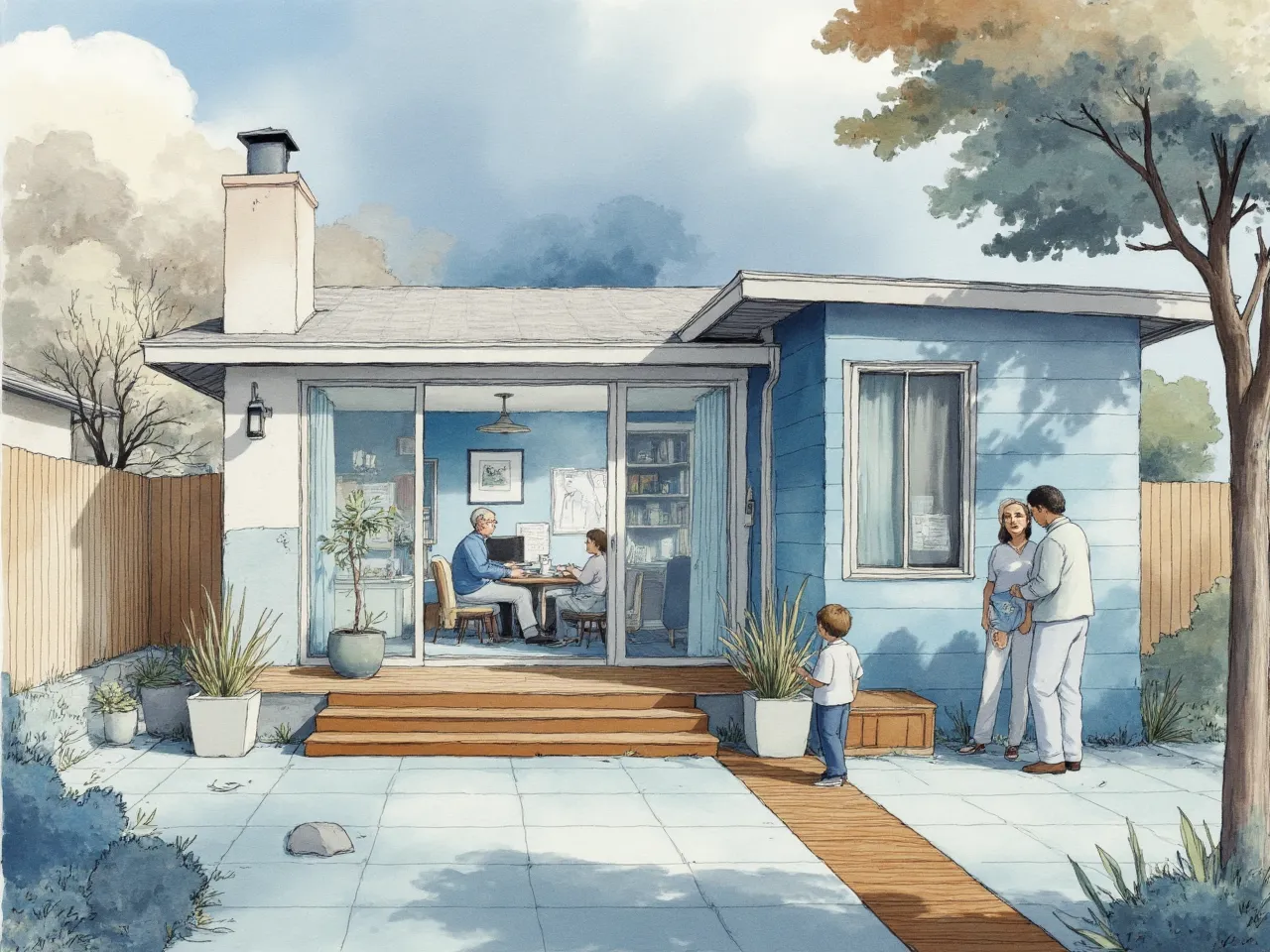
A growing number of East Bay, California, home buyers are searching for properties that serve both child-rearing and elder care needs, according to Victoria Bell, a realtor with Better Homes and Gardens Real Estate in Berkeley. This focus on multigenerational living is changing what buyers consider desirable in affluent markets, as families seek homes that function as extended-family compounds rather than traditional single-family residences.
Bell has seen an increase in clients looking for homes that accommodate both children and aging parents. She explains that these buyers need a “totally different kind of house” than in years past — one with features that support both privacy and shared living.
Balancing School Quality and Elder Care
Today’s multigenerational buyers are balancing two primary concerns: securing access to top public schools for their children and ensuring their homes can support aging parents. Bell notes that school district quality remains a top priority. The need for properties with separate living spaces or accessible layouts for older adults now matches it.
This combination of priorities narrows the field of suitable homes. Buyers want strong school districts and floor plans with independent-living options, such as in-law suites, ground-floor bedrooms, or accessory dwelling units, while maintaining proximity among family members. As a result, competition for these properties is high, especially in markets where the minimum price for such homes is around $1.5 million.
Buyers Plan Decades of Needs
The trend is most evident among financially stable buyers who can afford to plan for decades of their family’s needs. These families are not just buying for their current situation but are making long-term decisions that anticipate raising children and supporting elderly parents under one roof.
Bell’s clients are increasingly motivated by the rising cost of senior care facilities. For many families, investing in a larger home is more economical than paying for separate housing and institutional elder care. The upfront expense of a multigenerational property can pay off by reducing future care costs and keeping family members together.
Cultural attitudes are also shifting. There is a growing expectation among some families that elder care is a shared responsibility rather than something to outsource. Bell, a former senior-living sales director, observes that more families prefer to keep their parents at home. This reflects a broader shift in how affluent households approach aging and care.
Buyers Seek Flexible, Accessible Designs
This demand for multigenerational housing is driving interest in homes with specific architectural features. Buyers are looking for properties with separate entrances, accessible bathrooms, ground-floor bedrooms, and flexible layouts that allow for privacy and independence. Homes with accessory dwelling units or in-law suites are especially sought after.
The East Bay’s housing stock is known for its architectural diversity. This variety offers more options than markets dominated by standardized developments. However, finding a property that combines good schools, architectural suitability, and true multigenerational functionality remains rare.
Developers and architects who recognize this demand may find opportunities to design new homes or renovate existing ones to fit the needs of multigenerational buyers. In affluent markets, there is a willingness to pay a premium for properties that address these complex family requirements.
Multigenerational Properties Offer Long-Term Value
For real estate professionals, serving multigenerational buyers means understanding that these clients are making compound decisions. They are not just focused on their immediate needs but are planning for a 20- to 30-year horizon that includes children’s schooling, parents’ care, and changing family structures.
Bell describes her role as helping clients adapt to new life stages and transition to homes that better fit their evolving needs. The process involves practical planning and emotional adjustment as families move from old living arrangements to homes designed for multiple generations.
The trend also offers opportunities for property investors. Homes configured for multigenerational living — those with flexible layouts, separate living spaces, and accessibility features — may hold their value better in markets where demand for these arrangements is growing. Such properties could also attract higher rents from families seeking multigenerational solutions without committing to a purchase.
East Bay May Signal National Shift
The East Bay, California, pattern may foreshadow a wider shift as demographic and economic pressures mount. An aging Baby Boomer population is increasing the need for elder care, while younger generations face high housing costs and financial constraints. These factors are likely to drive continued demand for multigenerational housing, potentially spreading beyond affluent areas.
As more families seek homes that support both children and aging parents, property requirements in desirable markets will continue to change. The homes that command the most interest — and the highest prices — will increasingly be those that offer flexibility, accessibility, and the ability to support family life across generations. For buyers, sellers, and investors, understanding this evolving demand is key to navigating the competitive real estate landscape in the East Bay, California.
Major real estate companies are increasingly restricting access to their proprietary databases. Data ownership now outweighs transaction volume or brand recognition as the primary source of ...
With mortgage rates above 6.5%, leading real estate teams are shifting away from urgency-based sales tactics and focusing on educating buyers about price negotiation and future refinancing. ...
Local real estate expert Veldin “Dean” Miskic, co-founder of Pelican Vista Realty, recently shared insights on key concerns in Cape Coral’s property market. In an exclusive...
Walk through Margate or Ventnor on the South Jersey Shore right now, and you’ll see a surge of construction activity. Crews are demolishing and rebuilding homes at a pace not seen in years...
While analysts warn about potential oversupply in Miami’s luxury housing market, new construction is commanding record premiums and strong demand. According to Joelle Oiknine, Senior Globa...
Ultra-high-net-worth buyers in South Florida are turning away from custom construction projects and favoring turnkey properties, marking a clear change in how the region’s luxury real esta...