
Major San Francisco office properties are trading at dramatic discounts to replacement cost, creating what one local expert calls an unprecedented opportunity for investors with ready capita...

San Francisco Single-Family Homes Kept Gaining Value While Condos Lost Ground for Three Years

Written by:
Date:
07 Mar 2026
Share via Facebook

Share via Linkedin

Share via X

Copy to clipboard

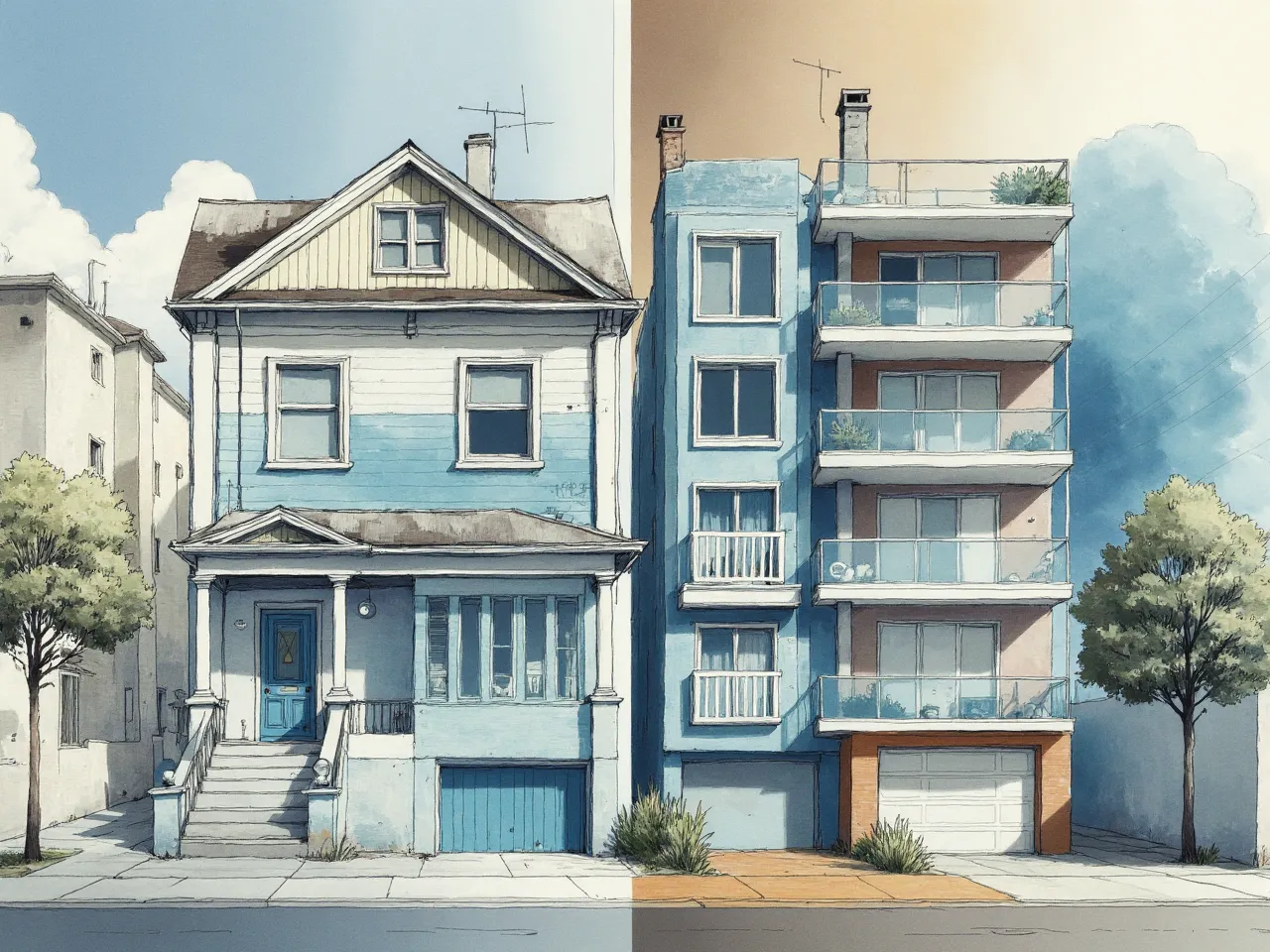
The pandemic triggered a sharp divide in San Francisco’s housing market: single-family homes gained value while condos lost ground, according to Tim Gullicksen, Team Lead at Gullicksen Group, Corcoran Icon Properties. The divide persisted through 2025 and only began to reverse in early 2026, revealing a lasting shift in what buyers prioritize in urban housing.
Why San Francisco Condo Buyers Avoided Shared Spaces After the Pandemic
The divergence began as soon as COVID-19 arrived in 2020, as buyers quickly started avoiding properties with shared infrastructure. Gullicksen says large condo buildings with elevators, common mail rooms, and lobbies saw the steepest declines. “Condos in bigger buildings where you’re dependent on elevators, where there’s a lot of shared spaces, those were freaking people out,” he says.
Smaller two- and three-unit Victorian buildings with private entrances fared somewhat better but still lost value. In contrast, single-family homes continued to appreciate, contradicting previous assumptions about urban property values. The preference for single-family homes persisted even after COVID restrictions eased, suggesting that buyers’ concerns went beyond temporary health fears and reflected deeper unease with urban density and shared amenities.
As a result, sellers of properties with any drawbacks, such as limited parking, shared laundry, or busy street locations, found it much harder to sell. Homes that would have sold quickly in 2019 lingered on the market or required significant price reductions well into 2025.
Why Shrinking Single-Family Home Supply Is Driving Up Prices Across San Francisco
One key factor behind the appreciation of single-family homes is the declining share of these properties in San Francisco’s housing stock. Gullicksen notes that new construction in the city overwhelmingly consists of larger condo buildings rather than single-family homes. “Single-family homes are shrinking as a total percentage of supply, and there’s still a demand for them for a variety of reasons,” he says.
Buyers want privacy, quiet, and the ability to avoid homeowner association rules. San Francisco’s limited land for new single-family construction has created structural scarcity that reinforces those preferences. Demand for single-family homes is driven not just by pandemic-era priorities but by ongoing desires for space, private yards, and independence in managing property maintenance, motivations that appear lasting rather than temporary.
Single-family homes now command a premium in every San Francisco neighborhood, including those previously seen as less desirable due to walkability or weather. “Anywhere there’s a single-family home in San Francisco, even in neighborhoods that haven’t been as popular or are considered less walkable or have really foggy weather, does not matter – if it’s a house, it’s going to sell,” Gullicksen says.
Neighborhoods along the Pacific coast and south of Highway 280, which saw heavy foreclosures during the 2008–2010 recession, are now among the most active markets in the city. Property type has become more important than location or climate in determining buyer demand, displacing location as the primary measure of desirability.
San Francisco Condos Are Rebounding in 2026, but Rental Pressure May Be Driving Demand
The condo market began to rebound in January 2026, with multiple offers and rising prices, but Gullicksen believes the recovery is driven less by renewed enthusiasm for condo living and more by pressure in the rental market.
Gullicksen cites a recent listing: a tenants-in-common property priced at $899,000, with no possibility of condo conversion, shared laundry, tandem parking, and outdated interiors. Despite these drawbacks, the property attracted over 40 agents requesting disclosures in the first week and received strong offers. “Instead of selling for 1.1 or maybe a bit more, we’re going to close at almost 1.4,” Gullicksen says.
The rebound is stark compared to late 2025, when similar properties struggled to draw interest. The increase in demand suggests that some buyers are being pushed out of the rental market by rising rents or limited inventory, rather than making a positive choice for condo living. Gullicksen views the recovery as a response to rental market pressure rather than a durable change in buyer preference.
How San Francisco’s Rent Control Laws Create Different Investment Profiles by Property Type
For investors, property type dictates both opportunity and risk in San Francisco, largely because rent control applies to multi-unit buildings but not to individually owned condos.
Gullicksen says condos offer more flexibility for investors seeking short-term holds or the ability to raise rents freely. “Condos are not subject to rent control, so you can buy a condo in San Francisco, rent it out, and when the lease is up, you can raise the rent to whatever you think the market will bear,” he says.
Multi-unit buildings with five or more units typically offer lower per-unit prices but are subject to strict rent control. If the building has tenants paying below-market rents, owners cannot raise those rents significantly. That makes these properties best suited for long-term investors with substantial reserves. “If there are super low rents in place, they’re going to be there for the foreseeable future. You can’t change that,” Gullicksen says.
Single-family homes, despite their strong appreciation, are rarely attractive to investors unless they plan to use the property themselves. The economics of renting out a single-family home are less favorable than the economics of condos or multi-unit buildings, given higher purchase prices and limited potential for rent growth.
For investors with sufficient capital and patience, five-plus-unit buildings can be worthwhile if they are prepared to navigate rent control restrictions. Investors who need flexibility or quicker returns will find fewer regulatory hurdles and better rental income prospects in condos. Single-family homes remain primarily the domain of owner-occupants, even as single-family property values continue to rise.
What San Francisco’s Condo and Single-Family Divide Means for Buyers and Investors
San Francisco’s three-year divide between condos and single-family homes has reshaped pricing and buyer expectations across the city. The pandemic exposed and amplified long-standing tensions about density, privacy, and control over one’s living environment. While the condo market has recently seen increased activity, the underlying driver appears to be rental market stress rather than renewed confidence in shared living.
For buyers and investors, understanding how property type shapes value and risk has become a critical factor in San Francisco real estate decisions. The market rewards privacy, independence, and flexibility, and penalizes properties that fall short of those expectations. As supply constraints persist and regulatory differences between property types remain, San Francisco’s housing market is likely to stay divided between single-family homes and condos for years to come.
Similar Articles
Explore similar articles from Our Team of Experts.

Perspectives, Real Estate Investment, Residential Real Estate, Commercial Real Estate, Market Analysis & Policy
A veteran DC-area real estate expert is challenging the way institutional investors view the DMV market, particularly their outdated perceptions of Arlington and other close-in suburbs. R...