
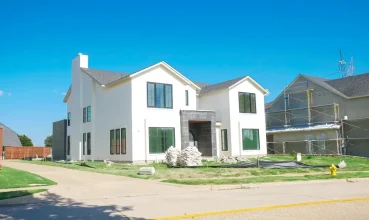
Most private owners in Dallas-Fort Worth (DFW) don’t learn the true cost of their custom home or renovation until the design is fully complete. By then, changing anything means startin...

Florida Workforce Housing Developers Battle Neighborhood Opposition to Get Essential Worker Housing Built

Written by:
Date:
07 Mar 2026
Share via Facebook

Share via Linkedin

Share via X

Copy to clipboard


Workforce housing developers continue to face strong resistance from existing residents who often misunderstand what modern affordable housing projects actually provide, according to Miles Alexander III, Founder and Managing Partner at Alexander Goshen. The firm, which develops mixed-use and multifamily projects across Florida, Texas, and Georgia, reports that community opposition remains one of the most consistent barriers to project approval. This is true even when developments include support services and meet high construction standards, bearing no resemblance to the outdated image of public housing.
“You have the NIMBYs in these communities who don’t want affordable housing in their neighborhoods,” Alexander says. He attributes much of this resistance to a lack of understanding about what modern workforce housing programs actually involve.
Alexander Goshen has about 1,500 workforce and affordable housing units in its pipeline, targeting households earning 80% or less of the area’s median income. Projects include teacher housing in partnership with local school boards, mixed-income buildings with ground-floor retail for small businesses, and multifamily properties engineered to withstand hurricanes and other natural disasters. Despite these features, Alexander says his team regularly encounters skepticism and outright opposition at city council meetings and public hearings.
Misconceptions About Affordable Housing Drive Neighborhood Opposition
Alexander points out that much of the pushback comes from outdated ideas about affordable housing. Community members often associate new projects with deteriorating public housing or temporary structures, rather than with the permanent, code-compliant buildings now being developed.
“Affordable housing doesn’t mean we’re bringing in trailer parks,” Alexander says. Alexander Goshen’s projects provide stable housing along with educational and support programs to help residents build financial stability and integrate more fully into the community.
The firm partners with nonprofit organizations to offer financial literacy training, job placement, and other resident services. Alexander Goshen also works directly with municipalities to prioritize essential workers, including teachers, firefighters, and police officers, who tend to receive a warmer reception from existing residents than the generic “affordable housing” label typically generates.
However, Alexander notes that adding these services and meeting higher construction standards does not guarantee community support. His team spends considerable time at public forums clarifying the differences between modern workforce housing and the older, stigmatized public housing projects that residents fear.
“We’ve been through many hearings and council meetings, answering questions about what affordable housing really is,” Alexander says.
Community Engagement as a Core Strategy
To address local concerns, Alexander Goshen has made community engagement central to its development process. The firm holds meetings with neighborhood groups, presents detailed plans at public hearings, and works with city officials to explain the benefits of workforce housing to current residents.
Alexander believes much of the resistance would diminish if communities recognized that workforce housing serves people already contributing to the local economy, including teachers, first responders, and service workers, rather than the transient or economically unstable populations that residents may envision.
“We’re not just building a project home or something isolated from the community,” Alexander says.
Two recent projects illustrate this community-integrated approach. The Apartment Club, a 67-unit development in Tampa, includes 26 units reserved for workforce housing and 7,000 square feet of retail space for local businesses. In St. Petersburg, Alexander Goshen is developing the Tomlinson Building, a 14-story, 202-unit project in partnership with the Pinellas County School Board. The building will provide housing for teachers and school district staff.
Both projects are designed to blend into their neighborhoods by incorporating retail space, partnering with local institutions, and prioritizing essential workers. Alexander Goshen’s approach aims to position workforce housing as a community asset rather than a burden.
Workforce Housing Opposition Is a Nationwide Problem
The resistance Alexander Goshen faces is not limited to Florida. Affordable and workforce housing developers nationwide report similar challenges in securing local support, even as housing shortages worsen and essential workers are increasingly unable to afford market-rate rents.
The persistent gap between what developers are building and what the public fears remains a major barrier to increasing housing supply. If community opposition continues to delay or block projects, the shortage of workforce housing will deepen, especially in high-cost areas where teachers, firefighters, and other essential workers cannot afford to live.
Alexander’s experience shows that clear communication and transparency can help, but these efforts are not always enough. Developers must also demonstrate a long-term commitment to quality construction, resident services, and integration with the surrounding community. That commitment must be renewed for every project and at every public hearing.
The Path Forward: Closing the Gap Between Perception and Reality
Whether sustained community engagement can shift public attitudes on a broader scale remains uncertain. For now, developers like Alexander Goshen must navigate a process in which even well-designed, well-funded projects can face resistance rooted in outdated assumptions about affordable housing.
As housing shortages grow and the need for workforce housing intensifies, the challenge for developers will be not only to deliver quality projects but also to close the information gap that fuels opposition. Success may depend on sustained, project-by-project efforts to demonstrate the value and stability that modern affordable housing provides for communities and their essential workers.
Similar Articles
Explore similar articles from Our Team of Experts.