
Looking ahead, Gerke believes this renovation opportunity could become increasingly attractive as limited land availability continues to constrain new luxury development in the most desirabl...

Tampa's Affordable Housing Push Is Stalling – Community Resistance and High Costs Are the Real Obstacles

Written by:
Date:
02 Apr 2026
Share via Facebook

Share via Linkedin

Share via X

Copy to clipboard

Rising interest rates were expected to slow affordable housing projects in Florida, and to some extent, they have. But according to Miles Alexander III, founder and principal of Alexander Goshen, the biggest obstacles facing these developments are not just financing challenges. Instead, persistent community opposition and high construction costs are proving to be the main barriers.
Alexander Goshen, based in Fort Lauderdale, specializes in workforce and affordable housing for teachers, firefighters, and police officers who cannot afford market-rate apartments in the communities they serve. The firm currently has about 1,500 units in the pipeline across Florida, but progress has become significantly more difficult since 2022.
Why Projects Are Delayed
Despite a slight retreat from last year’s peak, construction costs remain elevated compared to three years ago. Material prices are still high, supply chains are unreliable, and qualified labor is scarce. “It’s not as bad as last year, but it’s still a problem,” Alexander says.
Interest rates have also risen from the sub-4% levels developers saw in 2020 and 2021, making it harder to structure deals for renters earning 80% or less of the area median income. These factors combine to squeeze project budgets and timelines.
However, Alexander points to a bigger challenge: local opposition to affordable housing. Many residents assume new affordable projects will lower property values or bring undesirable tenants, despite evidence to the contrary. Alexander notes that his firm’s developments include amenities, energy-efficient features, and partnerships with nonprofits to provide residents with financial literacy programs and job training. Yet, misconceptions persist.
“People think we’re pulling up trailer homes or letting drug addicts move in,” Alexander says. In reality, the projects are designed for working professionals who keep communities running.
Case Study: The Apartment Club in Tampa
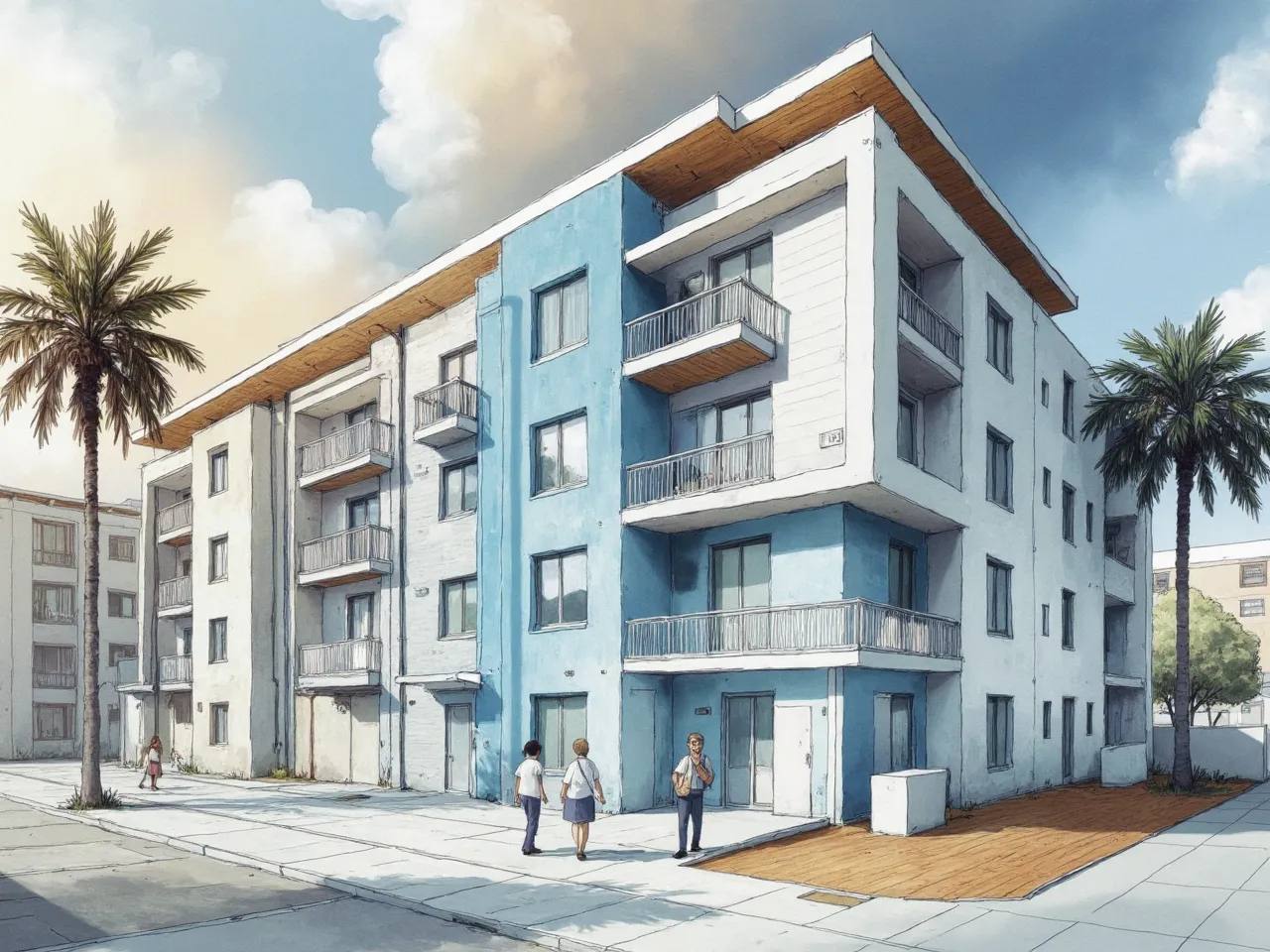
A current Alexander Goshen project in Tampa, called The Apartment Club, illustrates the obstacles developers face. The 67-unit building includes 26 workforce housing units reserved for essential workers such as teachers and first responders. The project also features 7,000 square feet of retail space reserved for local businesses.
The goal is to create a community hub that serves both residents and the surrounding neighborhood. Despite this, the project has encountered resistance at city hearings, where Alexander and his team repeatedly explain what workforce housing means and who it serves.
Another example is the Tomlinson Building in St. Petersburg, a 225 residential units, 14-story tower developed in partnership with the Pinellas County School Board. It is intended specifically for teachers and school staff who work full-time but struggle to find quality housing near their jobs. “These are people who spend hours every day providing a service to the community,” Alexander says. “When they come home, they should come back to something they can be proud of.”
How Affordable Housing Gets Financed
To make these projects feasible, Alexander Goshen relies on public-private partnerships. This often involves using tax credit programs, community development block grants, and disaster relief funds to subsidize construction costs and keep rents below market rates.
However, these funding sources have become less reliable. Federal programs have faced changes and uncertainty under the current administration, making it difficult to predict which funds will be available and when. “It’s all new,” Alexander says. “We don’t know what we don’t know right now.”
While some banks have launched new initiatives to support workforce housing, most institutional lenders remain cautious about ground-up development. Higher interest rates, construction costs, and extended timelines make these deals harder to justify, limiting the number of new affordable units that can move forward.
Impact on Renters and Communities
As a result, renters see fewer affordable options coming to market, even as demand grows. Essential workers are increasingly priced out of the communities they serve, leading to longer commutes and higher living expenses.
Cities face the challenge of balancing neighborhood concerns with the urgent need for housing. Alexander’s approach emphasizes community engagement, transparent hearings, and partnerships with local organizations to address misconceptions and build support. However, these steps add time and complexity to every project.
Meanwhile, luxury condo development in Florida continues at a brisk pace. “People of affluence have all they need,” Alexander says. “What’s missing is housing for the people who get up every day and go to work.”
What’s Next for Affordable Housing in Florida
The slowdown in affordable housing development is not due to a lack of interest from builders. Instead, high construction costs, unpredictable federal funding, and local resistance are the main factors holding projects back. Alexander remains optimistic that solutions are possible, but acknowledges that progress is slow and requires persistent effort. “We need housing. We need affordable housing,” he says. “I believe it’s going to work itself out – but it’s a process.”
Looking ahead, the path to more affordable housing in Florida will depend on stabilizing construction costs, securing reliable funding sources, and building greater public understanding of what these projects actually deliver. For now, the shortage of affordable options means more essential workers are forced to live farther from their jobs, straining both families and the communities that depend on them.
About the Expert: Miles Alexander III is the founder, principal, and managing partner of Alexander Goshen, a Fort Lauderdale-based development firm with offices in Atlanta and Las Colinas, Texas. The firm focuses on impact-driven mixed-use and multifamily projects, with a portfolio that includes approximately 2,600 units and a pipeline of 1,500 workforce and affordable housing units across Florida.
This article is based on information provided by the expert source cited above. It is intended for general informational purposes only and does not constitute legal, financial, or real estate advice. Readers should conduct their own research and consult qualified professionals before making any real estate or financial decisions.
Similar Articles
Explore similar articles from Our Team of Experts.

Perspectives, Real Estate Investment, Industry News, Commercial Real Estate, Market Analysis & Policy
After two years of volatility, a more stable interest rate environment is helping drive increased transaction activity in retail real estate, according to a senior capital markets expert. &#...