When someone inherits a property in Mississippi, the first instinct is often to figure it out among family. Decide who is in charge, split things up, and move forward. But according to Home ...

How Northwest Florida's Regional Coordination Model Is Winning Major Economic Development Projects

Written by:
Date:
27 Feb 2026
Share via Facebook

Share via Linkedin

Share via X

Copy to clipboard

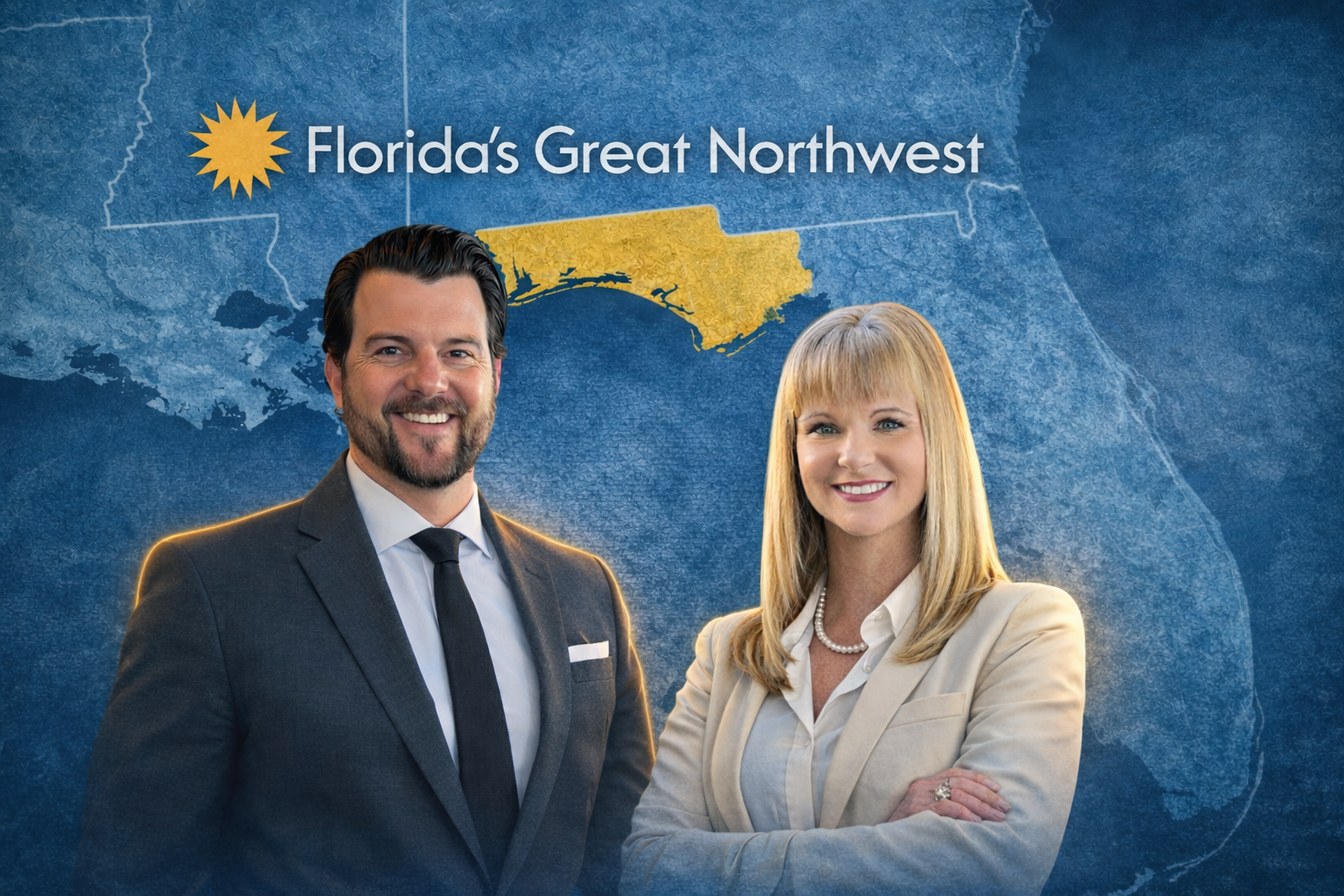
In a recent Beyond the Build podcast conversation, Jennifer Conoley reveals how Florida’s Great Northwest leverages military talent pipelines and strategic collaboration to attract aerospace and maritime investments
When Jennifer Conoley became President and CEO of Florida’s Great Northwest in March 2020, she took on an unusual challenge: coordinating economic development across 13 counties stretching from Pensacola to Tallahassee. Six years later, her “professional matchmaker” approach is delivering results that offer lessons for regions competing in today’s site selection environment.
In a conversation with Kelvin Enfinger Jr., Vice President of Greenhut Construction and immediate past chair of ABC Florida, Conoley outlined how her organization has generated over 1,500 announced jobs through direct leads since 2020, with significant aerospace, advanced manufacturing, and maritime projects in the pipeline.
The Regional Coordination Advantage
Rather than letting counties compete against each other, Florida’s Great Northwest packages regional opportunities and filters them to appropriate local economic development professionals. “I like to call us the professional matchmakers,” Conoley explains. “We’re able to identify these opportunities and then filter them down to our 13-county economic development professionals.”
This approach prevented internal competition while attracting Field International’s global headquarters from the United Kingdom to Pensacola and Point Blank Enterprises’ 300-job body armor manufacturing facility to Wakulla County. Most notably, Birdon announced plans for a potential 2,000-job maritime manufacturing expansion at the Port of Pensacola.
The Hidden Military Talent
One of Northwest Florida’s most compelling competitive advantages is quantifiable: six military bases within a two-and-a-half to three-hour radius generate approximately 5,200 military separations and retirements annually, with an average age of 38.
A University of West Florida study commissioned by Florida’s Great Northwest found that 47% want to stay in the region after military service, with another 19% undecided, making job opportunities a key retention factor. “This is such a high concentration when you look across the United States,” Conoley notes. “Companies feel more confident in selecting our region” based on quantifiable data rather than estimates.
Enfinger emphasized the broader applicability beyond aerospace: “Retired service members have a skill set that crosses over many industries. Businesses are beginning to see that as part of a way to fix what we’re facing in our industry.”
Site Readiness and Patient Capital
Conoley stressed that in site selection, evaluators look for ways to eliminate properties, not add them. “If you can present a site that is truly ready to go, then you’re going to be more competitive,” she explains.
The $1.5 billion Triumph Gulf Coast fund, created from Deepwater Horizon settlements and continuing to receive $80 million annually through 2033, provides unique leverage. While funds cannot go directly to companies, public-private partnerships using Triumph dollars have successfully attracted major industrial investments without requiring aggressive cash incentives.
Looking Forward
Despite recent momentum, Conoley warns against complacency. “You cannot take your foot off the gas pedal in this moment,” she cautions. Florida’s Great Northwest recently received a $4.7 million Triumph grant to enhance its regional strategy for the next 5, 10, and 15 years.
“Where I see Northwest Florida in the next 5 to 10 years is really being even more well known in that Gulf Coast corridor for both aerospace and maritime work,” Conoley states. “Keep your eye on Northwest Florida. The pipeline is full.”
For developers and investors evaluating markets, Northwest Florida’s combination of regional coordination, quantifiable military talent pipeline, available industrial land, and patient capital sources offers a compelling value proposition, particularly for aerospace, maritime, and advanced manufacturing projects.
About Beyond the Build Podcast
Beyond the Build is a commercial construction industry podcast hosted by Kelvin Enfinger Jr., Vice President of Greenhut Construction and immediate past chair of ABC Florida. The podcast explores the people, policies, and planning shaping the construction industry, regional communities, and economic development. Episodes are available on major podcast platforms and YouTube – here.
Disclosure: Individuals or companies mentioned may have a commercial relationship with KeyCrew.
Similar Articles
Explore similar articles from Our Team of Experts.