

Real estate transactions in Litchfield County, Connecticut, are increasingly falling apart during the inspection phase, not due to serious structural problems but because buyers overreact to...

Houston Buyers Now Watch Listings for Weeks Before Making Offers

Written by:
Date:
25 Feb 2026
Share via Facebook

Share via Linkedin

Share via X

Copy to clipboard

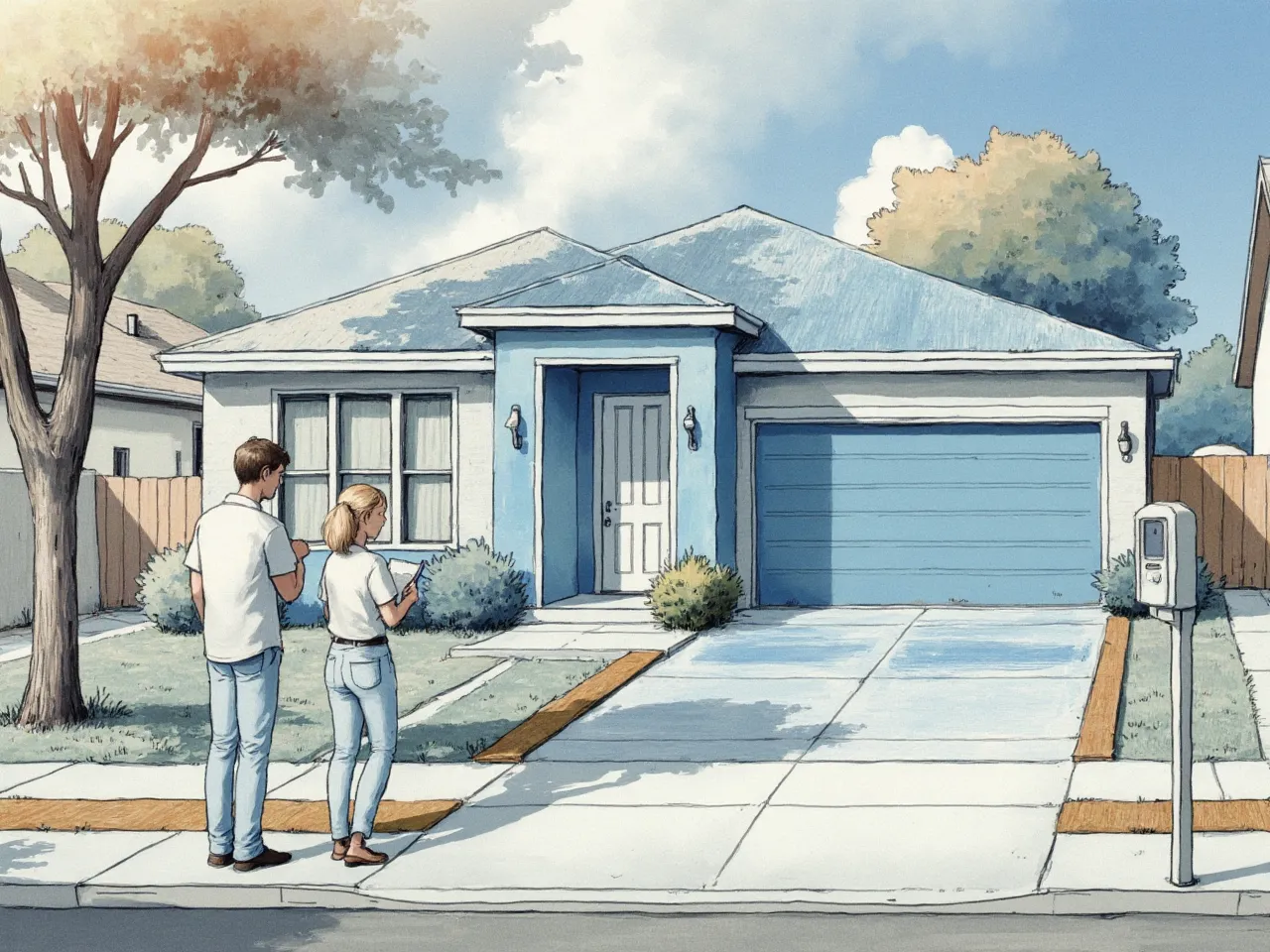
After years of rapid sales and bidding wars, Houston’s residential real estate market is defined by hesitation and longer listing periods. Buyers now monitor properties for weeks before acting, a behavior shift that is extending transaction timelines and creating new psychological hurdles for both sides of the deal.
From Bidding Wars to Waiting Games
Houston-area buyers, especially in the suburbs, are no longer rushing to make offers. Instead, they are tracking listings online — sometimes for six weeks or more — before scheduling showings or submitting bids, according to Anja Drewes Neidhardt, owner and broker at Anja Drewes Properties. This “wait and watch” approach marks a significant departure from the 2020-2022 market, when homes in areas like Sugar Land and Richmond often sold within two or three days, sometimes $50,000 to $60,000 above the asking price.
“They’re watching homes online and waiting to see what happens before they make a move,” Drewes says. She notes that buyers frequently attend open houses for properties that have lingered on the market, having tracked those listings from a distance instead of acting immediately.
Today, properties in the $350,000 to $500,000 range — historically the most active segment of Houston’s suburban market — are experiencing the longest days on market. Drewes reports that these homes now sit for 60 to 90 days, compared to just a few days during the pandemic boom. In contrast, luxury properties above $1 million continue to sell more quickly, as higher-end buyers are less affected by interest rates and are often ready to act.
Longer Listing Periods
The extended days on market are creating a feedback loop of doubt among buyers. When a property has been listed for 80 or 90 days, many buyers assume there is something wrong with the home — even when there are no material issues. This perception leads them to delay making offers, further lengthening the listing period and reinforcing their hesitation.
Drewes recalls a recent example: a buyer toured a home that had been on the market for 90 days and expressed genuine interest, but decided to wait, reasoning that a property listed for so long must not be in high demand. The next day, the home went under contract to another buyer. “She liked it, but seeing it on the market for 90 days made her pause. Then it was gone the next day,” Drewes says.
This pattern illustrates how buyers, conditioned by years of scarcity and fast sales, are misreading what is now a normal market pace. Many still equate long days on the market with distress or hidden problems, causing them to pass over homes that actually meet their needs.
Drewes spends considerable time explaining to clients that a 60- to 90-day listing period is not a red flag. “They see a home that’s been on the market for 83 days and ask what’s wrong with it. I have to explain there’s nothing wrong — it’s just the way the market is now,” she says.
Sellers Face Reality
Sellers, too, are struggling to adjust to the new pace. Many remember the pandemic-era frenzy when homes sold above asking price within days, and they resist pricing their properties realistically. Drewes sees sellers frequently overprice homes based on outdated comparables, expecting immediate offers and quick closings.
“The market really changed, and if you overprice your home, it’s going to sit,” she says. Sellers are often impatient with the 60-day listing periods that are now typical, expecting the rapid results they saw just a couple of years ago.
This pricing disconnect only increases friction. Overpriced homes linger on the market, reinforcing buyer doubts about why the listing hasn’t sold. Properties that could have sold within 30 to 45 days at a realistic price end up sitting for 90 days or more, feeding the cycle of hesitation among buyers.
The adjustment has been abrupt. Drewes notes that the market began slowing in August of the previous year, giving buyers and sellers little time to recalibrate expectations formed during several years of strong seller leverage and record-fast sales.
Looking Forward
With expectations recalibrated on both sides of the transaction, Houston’s housing market is positioned for a steadier, more predictable year ahead. The volatility of the past few cycles has largely worked its way through the system. What remains is a market defined less by urgency and more by informed decision-making.
As sellers continue to price strategically from day one, homes that align with market realities are likely to move efficiently, even if they no longer sell overnight. At the same time, buyers who have adjusted to current mortgage rates and typical days on market are expected to act with greater clarity, reducing the hesitation that slowed activity over the past 18 months.
If this alignment continues, transaction volume could gradually strengthen — not through speculative spikes, but through consistent, confidence-driven movement. Houston is unlikely to return to the extremes of its pandemic-era boom, yet that moderation may prove to be an advantage. A more balanced environment creates space for negotiation, thoughtful pricing, and sustainable growth.
In the months ahead, the market’s trajectory will depend less on dramatic shifts and more on continued adaptation. With both buyers and sellers increasingly grounded in present conditions, Houston appears poised to trade volatility for stability and uncertainty for momentum.
Similar Articles
Explore similar articles from Our Team of Experts.

Perspectives, Commercial Real Estate, Market Analysis & Policy, Real Estate Investment, Residential Real Estate
A severe housing shortage along Oregon’s northern coast is forcing employers to take extraordinary measures to maintain operations, according to industry expert Rashelle Newmyer, who p...