
Land surveying, one of humanity’s oldest professions dating back to ancient Egypt, is poised for significant technological advancement. While aerial drones have already begun changing ...

Homeowners Skip Low-Cost Maintenance and Face Costly Repairs

Written by:
Date:
28 Feb 2026
Share via Facebook

Share via Linkedin

Share via X

Copy to clipboard

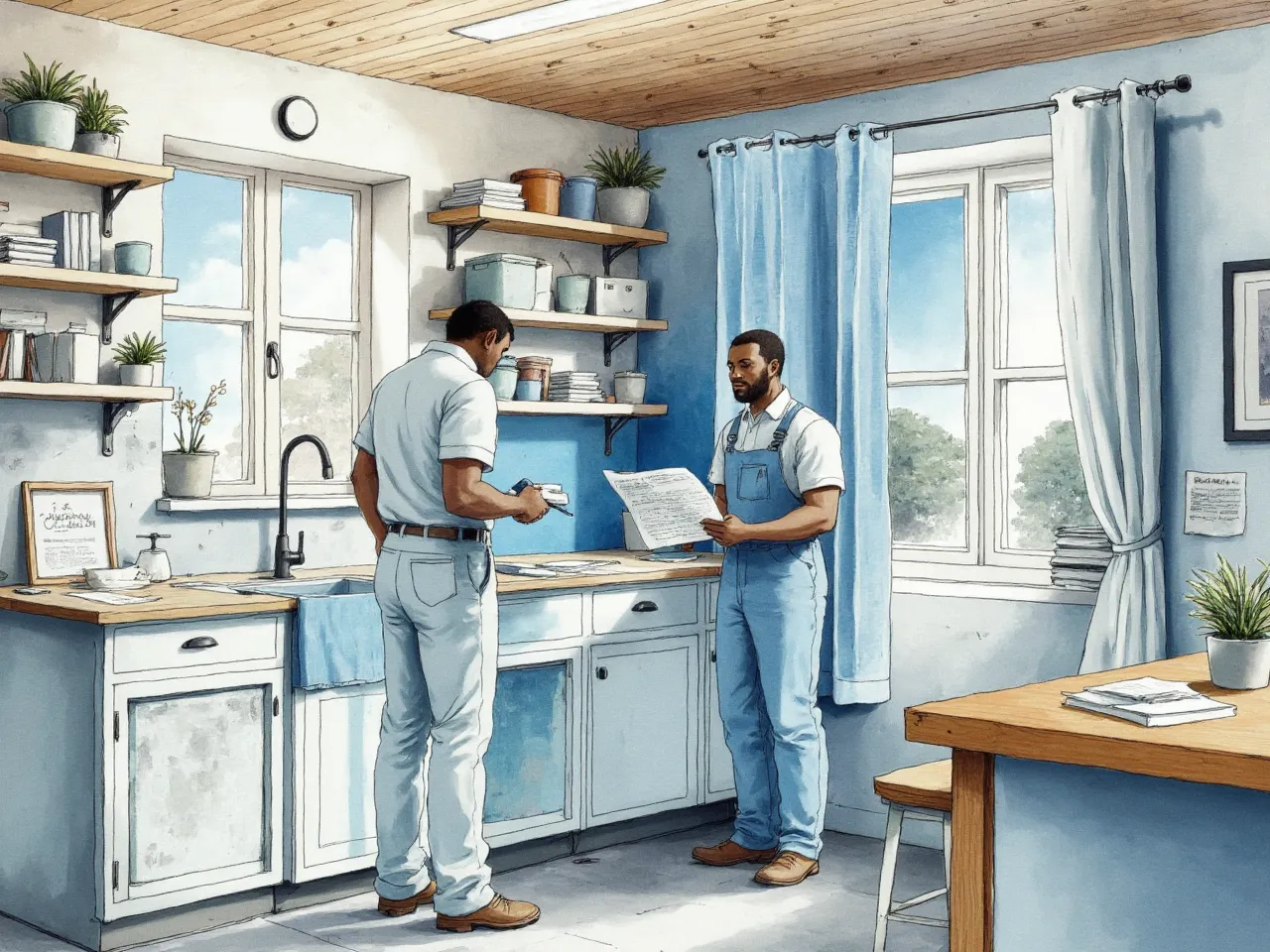
Many homeowners neglect basic preventative maintenance and wait until minor issues become expensive emergencies, according to Clem McDavid, founder and CEO of HomeMinder. Despite having access to information and tools, many homeowners avoid routine upkeep on their homes. McDavid says this pattern is worsening as practical maintenance skills decline across generations.
McDavid argues that the core problem is not a lack of knowledge but a disconnect between short-term effort and long-term consequences. He says homeowners routinely skip simple tasks that cost $50 or less, only to face repairs running into the thousands when problems escalate. “A lot of what you do with your house is preventative maintenance,” McDavid explains. “Taking 30 minutes of your day to do something that might cost you $50 is worth it, because you’re avoiding the $5,000 or $10,000 problem that might occur down the road if you don’t take care of it.”
The Decline of Basic Home Maintenance Skills
One of the main drivers of this behavior, McDavid says, is a widening generational gap in home repair knowledge. As fewer people learn basic skills, homeowners become increasingly dependent on outside service providers and less able to spot issues early.
“Generation by generation, we get further away from actually knowing how to use a wrench,” McDavid notes. This loss of hands-on experience leaves many homeowners uncertain about their home’s condition, so they delay action until obvious damage appears.
This shift has real consequences for homeowners and the contractor ecosystem. Without basic diagnostic ability, homeowners call for help only when problems become urgent. This leads to higher emergency repair costs and less predictable work for service providers, as crisis calls replace routine jobs.
Why Preventive Maintenance Differs From Insurance
While preventive maintenance and insurance both involve spending now to avoid bigger losses later, McDavid says the comparison only goes so far. Insurance is mandatory for mortgaged homes and enforced by lenders, while maintenance is voluntary and carries no immediate penalty for neglect.
“It’s very similar to insurance, where people don’t like writing the check, but when you need it, you’re glad you did,” McDavid says. Unlike insurance, which provides a clear benefit when coverage begins, preventative maintenance requires homeowners to act on the possibility of future risk. That risk is less tangible and harder to prioritize.
McDavid argues that this dynamic creates what he describes as a market failure. Even when it’s financially rational to spend a little now to avoid a big expense later, most homeowners don’t do it. Longstanding habits compound the problem: people focus on visible tasks like mowing the lawn or paying the mortgage, but ignore less obvious maintenance that prevents costly failures.
“The process of owning a home hasn’t really changed,” McDavid says. “Most people know they need to cut the grass and pay the mortgage, and maybe find a service provider, but that’s the extent of it.”
Why Home Maintenance Technology Has Limited Adoption
Despite interest in home management tools, McDavid says getting homeowners to use them consistently has been harder than expected. The main barrier is not the technology itself but the effort required to enter and track home data, even when apps simplify the process.
“People generally want to be organized, but even just inputting the data is still work,” McDavid says. “You’re having to sit down and input it, even if it’s just with your thumbs, onto your phone.”
This suggests that the obstacle isn’t a lack of information or organization, but rather a lack of motivation. Homeowners understand the benefits, but without immediate payoff, they rarely act. The problem is more about how society views homeownership responsibilities than about technology or access to information.
McDavid points out that most people remain comfortable with a reactive approach until a major issue forces a change. The real estate industry, he says, has not created a sense of urgency around preventative maintenance or found ways to make it feel rewarding in the short term.
HomeMinder’s Shift Toward Service Partnerships
To address this challenge, HomeMinder is shifting its strategy. Instead of relying on homeowners to input and manage their own data, the company is partnering with concierge services and home-watch companies to handle this work on behalf of clients. These intermediaries already have relationships with homeowners and access to their properties, making it easier to establish and maintain preventive maintenance schedules.
“We know that homeowners love this product,” McDavid says. “But where we are falling short is the actual input of all this.” By outsourcing the setup to trusted professionals, HomeMinder aims to remove the biggest barrier to adoption and ensure that maintenance tasks are tracked and completed before they become emergencies.
This approach acknowledges that changing homeowner behavior is difficult, and that intermediaries may be necessary to bridge the gap between good intentions and real action. It remains uncertain whether this strategy can scale or overcome deeper cultural resistance to routine maintenance. But the move highlights a broader lesson for the proptech industry: direct-to-consumer models may not be effective in categories where the main hurdle is behavior change rather than technology or awareness.
Rethinking Responsibility in Homeownership
The reluctance of homeowners to perform simple, preventative tasks is not just a personal quirk, but a widespread challenge with real financial consequences. As home maintenance knowledge continues to decline across generations, and as technology alone fails to drive meaningful change, the industry may need to rethink how it frames and supports responsible homeownership.
By experimenting with partnerships and service-driven models, companies like HomeMinder are testing whether it’s possible to make preventative maintenance as routine and unavoidable as paying for insurance. The outcome may influence the future of home services and how homeowners approach long-term property care.
Similar Articles
Explore similar articles from Our Team of Experts.