

Workforce housing developers continue to face strong resistance from existing residents who often misunderstand what modern affordable housing projects actually provide, according to Miles A...

Indiantown Halts New Development as Water System Reaches Capacity, Despite Strong Developer Interest

Written by:
Date:
26 Feb 2026
Share via Facebook

Share via Linkedin

Share via X

Copy to clipboard

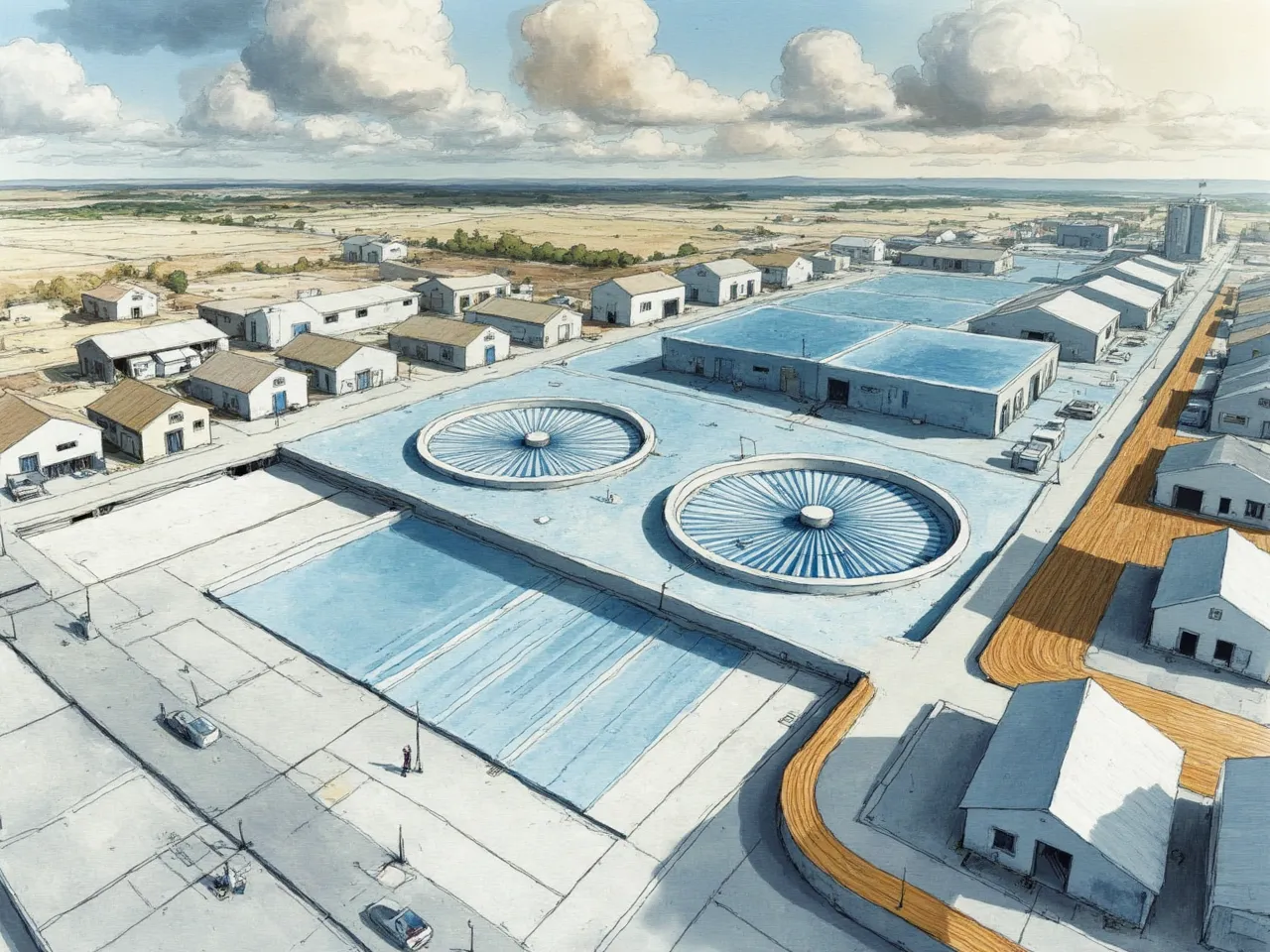
Indiantown has halted new development after determining its aging water system has reached full capacity, even as residential builders propose projects that could significantly expand the community. The situation highlights the gap between development demand and utility capacity in Florida’s inland markets.
The Village of Indiantown stopped approving new projects in 2023 after an engineering review found that its 50-year-old water system had reached full capacity. According to Village Manager Taryn Kryzda, this decision came despite strong interest from developers and a major residential proposal that could add 2,488 homes to a community of just 6,500 residents.
“We cannot approve any more development because we do not have water capacity,” Kryzda says. Although the village secured funding to rebuild its wastewater plant, Kryzda says the primary issue is the water system. Wastewater capacity is sufficient, but the water system cannot reliably serve additional homes.
Indiantown’s moratorium illustrates how outdated utility infrastructure has become a major obstacle to growth in smaller Florida municipalities, including those in high-demand corridors. The village sits near State Road 710, Interstate 95, and the Florida Turnpike, with access to rail lines and the Port of Palm Beach. This location has drawn interest from residential and industrial developers. However, the water system, purchased from a private operator in 2020, was not maintained to support growth and now limits further expansion.
Water System Limits New Growth
Kryzda says village officials knew the water infrastructure was old when they purchased it, but only learned the full extent of its limitations after a detailed review in 2023. The analysis found that adding any more homes would overwhelm the system, threatening service for both current and future residents.
Unlike the wastewater plant, which is being replaced with state funds due to age and outdated technology, the water system cannot support more users. “If we don’t approve another rooftop, we need that water plant,” Kryzda says, emphasizing the need for reliability and modern technology. “We owe it to the existing residents as well as the new residents coming in.”
To address these issues, the village has secured over $73 million in state funding for utility upgrades, including $22.5 million from the governor’s office in 2025. About $52 million is earmarked for the wastewater plant, leaving the village to seek additional funds for water system expansion. Kryzda estimates the new water plant will cost more than the funds currently available.
Managing Development During Infrastructure Upgrades
To keep developers engaged during the infrastructure upgrade, Indiantown has created a queuing system using development agreements. Kryzda says these agreements allow developers to continue project planning and permitting, with water capacity allocated at the site plan approval stage based on the number of units proposed.
“What we’ve done is, so that we don’t stop folks, we’re working on a development agreement,” Kryzda says. “At site plan approval, depending on how many units your project requires, we’ll put you in the queue.”
This system is designed to align with the typical development timeline and the expected completion of the new water plant, which Kryzda projects for late 2026. Most residential projects require 18 to 24 months from site plan approval to construction. Developers who move forward now may avoid delays if the plant is completed on schedule.
“Projects don’t happen overnight,” Kryzda says. “If our plant is up and running by the end of next year, most developers will still be in the planning or early construction phase.”
However, this approach carries risk. If the water plant is delayed, queued projects will face extended timelines and higher carrying costs. If developers lose confidence in the village’s ability to deliver infrastructure on schedule, developers may shift projects to nearby jurisdictions with available capacity.
Developer Response to the Moratorium
Some property owners who bought land expecting quick approvals have decided to sell rather than wait for water capacity. Kryzda says the uncertainty and cost of holding undeveloped land are prompting some to exit the market.
“We’ve had individuals buy property with the intention of developing, but because of the water situation, they’ve decided not to wait a couple of years,” she says. “They’re looking to unload those properties in some cases.”
One prospective buyer abandoned a $3 million land purchase after deciding that a two-year wait for water made the deal uneconomical. Kryzda points to this case as evidence that Indiantown faces a disadvantage compared to municipalities with available utility capacity.
Developers continue to submit pre-application inquiries, but most projects are still in early review and unlikely to move forward until water capacity is secured. The uncertainty is slowing the pace of new proposals, even though Indiantown’s location and regulatory environment remain attractive.
Infrastructure as a Requirement for Economic Growth
Indiantown’s experience shows that in high-growth markets, infrastructure planning must come before development approvals. Kryzda says the village is now treating utility capacity as a requirement for economic development, noting that without water, efforts to attract commercial and industrial users will stall.
“We know we need [the water plant] for economic development,” Kryzda says. The lack of commercial options in Indiantown is evident: its retail base is limited to Tractor Supply, Ace Hardware, and dollar stores, with fast food as the main dining choice. “What I hear folks want—you’ve got to drive 25 miles to get a decent meal, to get a steak, or for retail,” she adds.
Historically, the absence of housing has discouraged commercial development. Kryzda believes that new residential projects could help diversify the tax base, but only if infrastructure can support additional growth.
Financial Constraints and Broader Trends
Indiantown’s reliance on state funding for utilities reflects the financial reality facing many small municipalities. With a population of about 6,500 and a limited tax base, much of which is tied to a single industrial storage facility, the village has limited flexibility to fund major improvements independently. Kryzda says diversifying revenue sources is essential to stabilize property tax collections, but this depends on being able to approve new projects.
The challenges facing Indiantown may signal a broader trend in Florida’s inland growth markets, where developer interest outpaces municipalities’ ability to upgrade aging utility systems. Indiantown’s queuing system provides one way to manage development during this transition. Still, its success depends on the timely completion of the new water plant and the village’s ability to maintain developer confidence.
Looking Ahead: Infrastructure Will Determine Future Growth
Indiantown’s situation illustrates a shift in how growth is managed in smaller Florida communities. Where location and demand once guaranteed development, today the limiting factor is often the capacity and reliability of basic services, particularly water. For Indiantown, and for similar municipalities across the state, the future of growth will depend not just on attracting interest but on having the infrastructure to support it.
If Indiantown delivers its new water plant on schedule and keeps developers engaged, it could unlock a new wave of residential and commercial growth, diversify its tax base, and provide more amenities for residents. If delays persist or funding falls short, the village risks losing momentum to neighboring communities better positioned to support expansion. In Florida’s fast-growing inland markets, the ability to deliver infrastructure may prove as important as location in determining which communities thrive.
Similar Articles
Explore similar articles from Our Team of Experts.