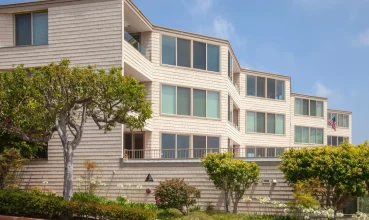

“San Francisco appears have bounced off the bottom and is starting to come back,” says Brad Lagomarsino, Vice Chair of Multi-Family Investments at Colliers in San Francisco. Afte...

Panama Real Estate Sees Surge in Buyers Seeking Investor Visas

Written by:
Date:
22 Feb 2026
Share via Facebook

Share via Linkedin

Share via X

Copy to clipboard


Investor visa qualifications are now a major factor in property purchases in Panama. This trend has created a buyer segment that operates outside traditional real estate norms, says Jeffrey Barton, Managing Director of Punta Pacifica Realty.
Panama’s real estate market is seeing more buyers motivated by securing legal residency than by rental income or long-term appreciation. Barton estimates that about 25% of his firm’s buyers now purchase properties solely to gain residency rights, a sharp rise in the past 18 months.
“We’ve had a major uptick of people who are buying properties just to get that residency,” Barton says. This marks a departure from previous years, when most buyers focused on investment income, lifestyle upgrades, or future retirement plans.
Residency Motivates a New Buyer Segment
The increase in residency-motivated buyers reflects geopolitical uncertainty among high-net-worth individuals seeking a backup plan. Barton describes these clients as pursuing a “Plan B” strategy to ensure they can relocate if necessary. Approximately 60-70% of these buyers are from North America, mainly the U.S. and Canada. There is additional demand from Europe, South America, and an increasing number from Asia, including China.
Barton notes that Panamanian residency appeals due to its flexibility and security. For many, holding a second or third residency is not for immediate relocation but to have residency in Panama ready if they choose or need to move quickly. This motivation has little to do with local market conditions and much more to do with global risk management.
Residency-focused buyers care less about price per square meter or rental income. Their main concern is meeting the minimum investment and timeline requirements for Panama’s investor visa programs. If a property qualifies for residency, these buyers are often willing to pay a premium, making their decision process different from that of other buyers.
Purchasing Early: Planning for the Future
Another trend Barton identifies is a growing number of buyers acquiring property years before they plan to use it. Many are motivated by the desire to lock in current prices, anticipating that prices may not move until 2027 or 2028 and preferring to secure today’s rates. “We’re seeing people that are buying immediately, not because they want to move in tomorrow, or even in six months, but they’re starting to think ahead,” Barton says.
This strategy further distinguishes residency-driven buyers from traditional investors. They purchase inventory without concern for short-term market trends. Their demand does not follow local economic cycles or rental performance. These buyers focus on future flexibility and asset diversification rather than immediate use.
Market Impact of Residency-Driven Buyers
Barton estimates his current buyer base is roughly 25-30% primary-residence buyers, 25% residency-driven buyers, and the remainder split between traditional investors and second-home purchasers. The residency-motivated group is a new force in Panama’s market, one that was virtually absent five years ago.
This shift explains why some market segments sell quickly even as others show oversupply. Although overall data may suggest excess inventory, properties qualifying for investor visas often sell fast. Residency-focused buyers drive this demand rather than traditional investment metrics.
Properties meeting investor visa requirements can sell at a premium. Residency-focused buyers pay less attention to comparable resale prices, prioritizing legal eligibility over short-term returns. Developers now highlight visa-eligible properties as a key selling point.
Long-Term Effects on Panama’s Real Estate Market
Barton sees the residency-driven segment as a lasting feature of Panama’s real estate landscape. As long as geopolitical uncertainty remains high and wealthy individuals continue to seek geographic diversification, demand for residency-linked property purchases is likely to persist.
For developers and brokers, the ability to offer clear investor visa eligibility may be as important as location or amenities. The rise of the residency-focused buyer has introduced a new layer of demand, one that operates on different priorities and is less tied to local economic cycles or rental trends.
As this segment grows, Panama’s real estate market is likely to diverge from traditional patterns. Visa-eligible properties attract a distinct and resilient group of buyers.
Similar Articles
Explore similar articles from Our Team of Experts.

Perspectives, Residential Real Estate, Commercial Real Estate, Market Analysis & Policy, Real Estate Investment
A veteran DC-area real estate expert is challenging the way institutional investors view the DMV market, particularly their outdated perceptions of Arlington and other close-in suburbs. R...