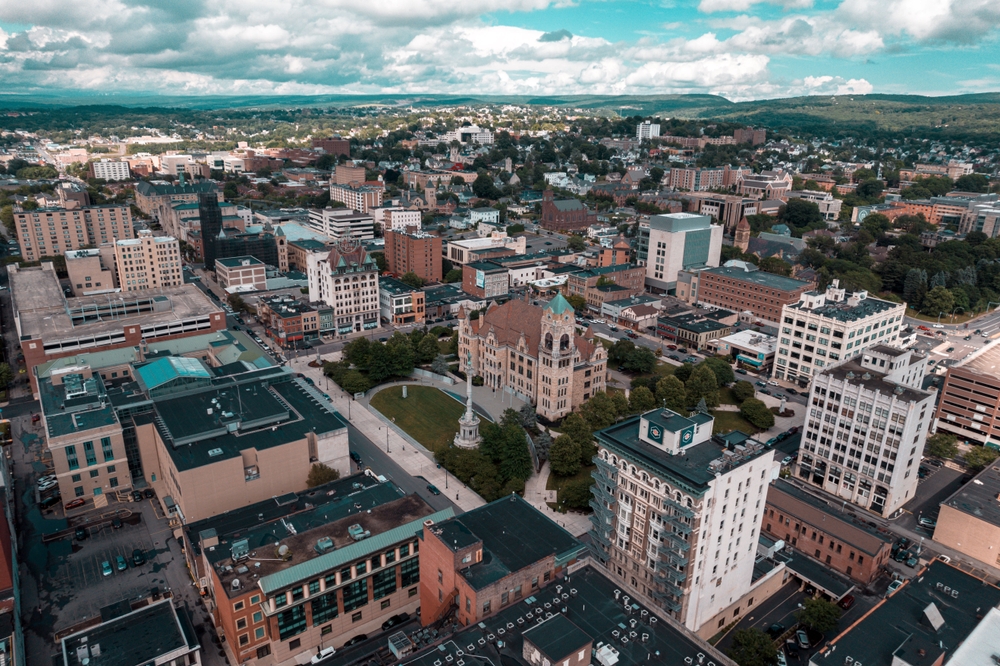
After several years of rapid sales and bidding wars, Scranton’s real estate market has entered a new phase. While interest rates still dominate headlines, local agents say the most significant change is that buyers have learned they no longer need to rush. Instead, they’re taking their time, negotiating harder, and forcing sellers to adjust their expectations.
Jillian Kemmerer, owner and associate broker at Luxe Homes Real Estate in Scranton, has seen the shift firsthand. “Buyers are understanding that they can tap the brakes,” she says. “They can ask for more things as far as negotiations and terms.” Deals that once moved at breakneck speed now unfold more slowly, with buyers and sellers on more equal footing.
Where the Market Stands
The days of pandemic-fueled frenzy are over. In 2021 and 2022, homes often sold within days, frequently above asking price and with few or no contingencies. Today, that urgency has faded. Properties that might have sparked bidding wars two years ago now sit on the market longer, especially if they’re priced too high or need work.
Kemmerer sees this new reality daily: listings that are even slightly overpriced tend to linger, while buyers visit multiple homes before making a decision. When offers do come in, they’re more likely to include requests for inspection repairs, closing cost credits, or flexible timelines. “Everyone needs to work together to get the deal to close,” Kemmerer says, describing a market where negotiation has replaced one-sided sprints.
Why the Shift Happened
Two main factors have changed how buyers and sellers approach the market. First, interest rates have climbed above 6%, making mortgages more expensive and shrinking the pool of eager buyers. While rates remain reasonable by historical standards, they have curbed some of the urgency that fueled the last few years.
Second, many sellers are still holding onto expectations set during the boom. Instead of pricing homes based on current market conditions, some list at 2021 levels, hoping for fast, high-priced sales. But buyers are no longer willing to pay any price, especially if a home needs repairs or updates. “Sellers are still kind of adjusting to the idea that they need to list their property at the right price to get it to sell quickly,” Kemmerer says. Homes that are priced realistically still attract offers, but overpriced properties are being passed over.
Slower Pace, Deliberate Decisions
The pace of transactions has slowed across Scranton. In 2021, buyers often made offers within 48 hours of a showing. Now, it’s common for buyers to take a week or longer to decide. Closings, which used to take about 30 days, now frequently take up to 45 days as lenders require more documentation and buyers negotiate inspection items.
This slower pace allows both sides more time to think and prepare, but it also requires patience. Sellers must be ready to address issues that come up during inspections, while buyers can afford to be selective, knowing that homes are less likely to disappear overnight.
For those looking to buy in Scranton now, the market offers more choice and leverage than it has in years. Buyers should take the time to tour several properties and compare options before making an offer. Inspection repairs and seller concessions are increasingly common, and homes that have been on the market for more than two weeks without offers often have room to negotiate price.
Kemmerer advises buyers not to feel pressured to make immediate decisions. Instead, use the extra time to evaluate homes carefully and negotiate terms that work in your favor. “You can ask for more now than you could two years ago,” she notes.
What Sellers Need to Know
Sellers must adjust to a market where buyers hold more power. Pricing a home accurately from the start is critical. Overpricing leads to longer days on market, which signals to buyers that something may be wrong with the property. Kemmerer recommends addressing obvious issues before listing, whether by making repairs or offering credits. Flexibility on closing timelines also appeals to today’s buyers, who appreciate sellers willing to work with them.
Sellers who respond to these new realities — by pricing competitively and accommodating reasonable requests — are still closing deals. Holding out for a “pandemic premium” is no longer a winning strategy.
Investor Insights
For investors, Scranton’s market still offers opportunities, especially in multi-family properties. Duplexes and triplexes priced for realistic rental income are moving quickly. Kemmerer suggests ensuring that utilities are separately metered, allowing tenants to pay their own bills. With rising utility costs, this setup helps protect landlord profits and makes properties more attractive to prospective renters.
Investors should remain focused on the numbers rather than emotion. Cash flow, maintenance costs, and long-term tenant demand matter more than short-term price appreciation in today’s environment.
A More Balanced Market
Scranton’s real estate market has not crashed, but it has become more balanced. Buyers now have negotiating power and time to make decisions, while sellers are learning that flexibility and realistic pricing are essential for a successful sale. “If you wait for the perfect market, so does everybody else,” Kemmerer says. The best time to buy or sell is when it fits your own goals and circumstances—not when the headlines say it’s ideal.
Looking ahead, this new balance is likely to persist as long as interest rates remain elevated and buyers continue to prioritize value and condition over speed. For both buyers and sellers, patience, preparation, and a willingness to negotiate are the keys to success in Scranton’s changing market.
About the Expert: Jillian Kemmerer is the owner, associate broker, and realtor at Luxe Homes Real Estate LLC in Scranton, Pennsylvania. She specializes in working with investors and manages over 400 rental properties through her property management company.
This article is based on information provided by the expert source cited above. It is intended for general informational purposes only and does not constitute legal, financial, or real estate advice. Readers should conduct their own research and consult qualified professionals before making any real estate or financial decisions.
Florida’s Gulf Coast real estate market is entering 2026 with a noticeable uptick in buyer activity and changing preferences, as recent hurricanes and rising insurance costs reshape what b...
You might be drawn in by a stylish kitchen or an attractive price, but subtle warning signs can turn your dream home into a costly mistake. Desiree Rejeili, a Northern Virginia real estate a...
Imagine you’re house hunting on Long Island. Instead of clicking through hundreds of listings and squinting at blurry photos, you type: “Show me the kitchens on every active list...
After several years of rapid sales and bidding wars, Scranton’s real estate market has entered a new phase. While interest rates still dominate headlines, local agents say the most signifi...
Multi-family properties can offer a faster, more accessible path to homeownership than single-family homes. Still, most buyers are unaware of this option, according to Tameeka Williams, a re...
Walk into an open house in San Marino or Pasadena today, and you’ll likely find not a crowd, but a handful of serious buyers ready to make an immediate offer. In California’s San Gabriel...