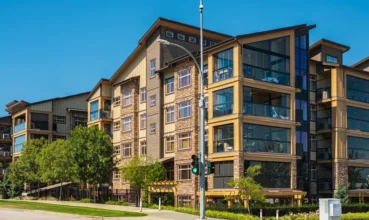

The commercial real estate capital markets in the Northeast are experiencing a notable shift as institutional investors increasingly turn their attention back to retail properties in the tri...

Tampa Bay's New Construction Market Gains Momentum as Buyers Return

Written by:
Date:
03 Feb 2026
Share via Facebook

Share via Linkedin

Share via X

Copy to clipboard


After several uncertain years, Tampa Bay’s residential market is regaining strength as both buyers and sellers reenter the market. In Wesley Chapel and neighboring Pasco County communities, new construction is meeting the demand of a diverse group of homebuyers seeking affordability and modern amenities.
Market Activity Picks Up in Early 2026
The start of 2026 has brought an apparent increase in market activity across Tampa Bay. Whitney Lohr, Team Leader at Florida Living Group with Berkshire Hathaway HomeServices, reports that both buyers and sellers are now acting after a long period of hesitation.
“As we begin January 2026, the market is definitely taking off,” Lohr says. “Sellers who need to move are finally listing. I listed two homes yesterday and have two more coming next week.”
This burst of activity stands in contrast to 2025, when many waited for interest rates to fall or prices to drop further. “A lot of people spent last year waiting for rates to change or for prices to crash,” Lohr adds. “Now, both buyers and sellers who have been on the sidelines are ready to move forward.”
Builder Incentives Make New Homes More Attainable
In Wesley Chapel and the wider Pasco County area, new construction builders are using aggressive pricing and incentives to maintain sales momentum. These strategies are helping to address affordability concerns and draw buyers back into the market.
Lohr notes that major builders, such as DR Horton, are reducing prices on new homes — sometimes by $40,000 to $50,000 on townhouses — making new construction more competitive with resale options. “They’re lowering the price and shifting incentives to make the sales price more attractive,” she says.
Beyond price reductions, builders are offering substantial financing incentives. “We’re seeing permanent rate buydowns — sometimes as low as 3.99% or 4.25% — and $20,000 to $30,000 in closing cost assistance,” Lohr explains. “Those numbers make a real impact for buyers, whether it’s lowering their interest rate or reducing the cash needed at closing.”
These incentives are opening doors for buyers who previously thought homeownership was out of reach. Lohr shares a recent example of a client who purchased a new build in Spring Hill thanks to a permanent rate buydown, despite believing homeownership was unattainable just months earlier.
Strategic Communities Draw the Most Interest
Within Wesley Chapel and Pasco County, certain developments stand out for their strong performance. Master-planned communities with a variety of builders and amenities are drawing the most attention from buyers.
Two Rivers, a master-planned community with 11 builders, is seeing particularly high demand. “There’s a lot of buzz around Two Rivers,” Lohr says. “They offer a range of home sizes and price points, so there’s something for nearly every buyer.”
Angeline, another prominent development, features a significant lagoon amenity and is attracting buyers interested in resort-style living. According to Lohr, these amenities remain a powerful draw for new-construction buyers.
Communities targeting buyers aged 55 and older are also performing well. Many empty nesters are downsizing but want low-maintenance homes in neighborhoods that offer activities and social opportunities. “People who have been in their homes for a while are looking to downsize, but they want things to do, they’re not fully retired, but they want a new community and easier living,” Lohr explains.
Relocation to Florida Remains Strong During Winter
Despite reports that Florida’s migration boom has slowed, Wesley Chapel continues to attract out-of-state buyers, especially during the winter months. The seasonal influx is driven by harsh weather in northern states.
“This time of year — January through March — we see more buyers from out of state, especially when it snows up North,” Lohr says. She recently worked with two buyers from the Northeast who decided to move after hearing about another impending snowstorm. “They want to put their snow shovels down and move to Florida.”
However, relocating buyers are finding that their dollars do not stretch as far as in past years. “Some expect to buy a house for $300,000, but at that price point, homes are smaller and on smaller lots,” Lohr explains. The affordability gap is prompting buyers to adjust their expectations or consider locations farther from the metro core.
First-Time Buyers Face Affordability Challenges
With mortgage rates in the 6-7% range and median new-construction prices around $400,000, first-time buyers face significant financial barriers. However, creative financing and builder incentives are helping some to enter the market.
“Affordability is definitely an issue,” Lohr says. “We’re getting creative, looking at new construction, negotiating for seller-paid rate buydowns or closing costs, and managing first-time buyers’ expectations about what’s possible.”
Lohr stresses the importance of having honest conversations about the full cost of homeownership. “I never want someone to buy a home they can’t afford. We go through everything, the mortgage, insurance, taxes, utilities, even repairs, so buyers know exactly what to expect.”
Insurance Rates Show Improvement
While Florida’s insurance market has been a source of concern, Lohr reports that rates in her area are improving. “Our insurance rates are going down. Many people don’t realize you can call your insurance company and ask for a better rate, some are as low as $1,200 a year now, not $5,000.”
This reduction in insurance costs is making homeownership more manageable for both local and relocating buyers.
Negotiation Power Returns to Buyers
After years where sellers had the upper hand, the current market has shifted in favor of buyers. Lohr notes that her clients have been able to negotiate more in the past two to three years than at any time in recent memory.
“A few years ago, you couldn’t ask for anything, you were paying well above asking price,” she says. “Now, buyers can negotiate for inspection repairs, closing cost contributions, and price reductions. If a buyer wants something, we can ask for it and often get it.”
At the same time, buyers are more selective. “They want homes in great condition or an excellent deal. If a house is overpriced or needs work, buyers just aren’t interested, they’re not even making offers.”
What to Expect as 2026 Progresses
As 2026 unfolds, Lohr sees opportunity for buyers who act decisively. “Now’s the time to look at single-family homes before more buyers return or before interest rates drop,” she advises.
Success in Tampa Bay’s new construction market depends on understanding available incentives and financing options, and setting realistic expectations about price and features. Builders and buyers who are flexible and well-informed are best positioned to take advantage of current conditions.
Inventory is higher than in recent years, giving buyers more choice. Builders are more willing to negotiate on both price and terms, resulting in a more balanced market than during the recent boom.
Looking ahead, Tampa Bay’s new construction sector is set for continued activity as long as buyers remain focused on value and prepared to act quickly. With improved insurance rates, creative financing options, and a wider range of inventory, the market offers real opportunities for those who understand its dynamics and are ready to navigate the evolving landscape.
Similar Articles
Explore similar articles from Our Team of Experts.