
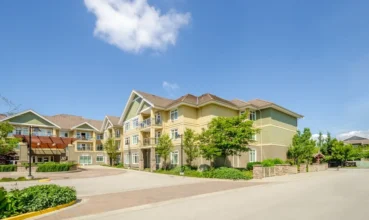
A growing number of Canadian homeowners over 55 are making a choice that would have seemed counterintuitive a generation ago: selling the family home and renting an apartment instead of buyi...

Bergen County’s Manhattan Proximity Sets a Price Floor

Written by:
Date:
01 Feb 2026
Share via Facebook

Share via Linkedin

Share via X

Copy to clipboard


Bergen County, New Jersey, stands apart from other suburban markets, maintaining strong home prices despite broader affordability pressures. The key factor is its unmatched proximity to Manhattan, which creates demand that neighboring regions cannot match. According to Paula Clark, a 30-year real estate veteran and team leader at The Paula Clark Group, this geographic advantage forms a “moat” around Bergen County’s housing market, keeping prices high even as interest rates and inventory fluctuate.
“People who want to be in Bergen County usually need access to the city,” Clark says. “You’re not going to get more value than being close to New York City, because you’re no more than an hour from most places in Bergen County to Manhattan. That keeps the prices up, and buyers are still paying.”
Proximity Premium Drives Market Performance
Clark reports that Bergen County homes have appreciated 13% year-over-year, with sale prices running six to fifteen percent above asking. This stands in sharp contrast to many suburban areas, where buyers are pushing back against rising costs and homes are sitting on the market longer.
The difference, Clark explains, is that Bergen County offers something buyers cannot find elsewhere: direct, reliable access to Manhattan. “This is the most expensive and highly educated demographic in New Jersey. We’re close to Manhattan. Buyers and sellers are sophisticated, and more people flock to Bergen County than any other county because of the location,” she says.
Rather than competing on affordability or amenities, Bergen County’s market is anchored by a structural advantage. Proximity to Manhattan is not replicated in neighboring counties, which keeps demand steady even as other markets cool.
Why Nearby Markets Can’t Match Bergen County’s Appeal
Clark notes that buyers often explore less expensive alternatives, such as Pennsylvania or other New Jersey counties, but ultimately return to Bergen County because of the commute. “In Pennsylvania, you can get more for your money, but it’s far from the city,” Clark explains. “Taxes may not be as high, but Bergen County’s location can’t be beat.”
Even Hudson County, which borders Manhattan, draws few Bergen buyers. According to Clark, the higher property taxes in Hudson offset any perceived advantage in proximity. This highlights how buyers evaluate the full cost of living—including taxes, commute time, and access to amenities—rather than just the listing price.
Clark adds that the buyer pool in Bergen County is both resilient and self-selecting. Many residents grew up in the area and are accustomed to the tax structure and overall cost of living. Despite being one of the most expensive counties in New Jersey, Clark says, “people are still moving here.”
Implications for Institutional Investors
For institutional investors considering where to deploy capital in residential real estate, Bergen County’s market presents a clear case for defensibility. The persistent demand from buyers seeking Manhattan access creates a price floor that is less susceptible to national trends or economic downturns. When broader market conditions weaken, the unique constraint of proximity continues to support home values.
Clark emphasizes that location remains the driving factor for both individual buyers and larger investors. Bergen County’s combination of access to Manhattan, strong school systems, and established neighborhoods forms a barrier that nearby markets cannot easily breach.
Clark’s team at The Paula Clark Group, a nine-person operation within Keller Williams, focuses on northern Bergen County. Their infrastructure includes a Director of Operations, a listing coordinator, a transaction coordinator, and a marketing director—all roles designed to serve buyers making complex decisions about proximity and value.
Understanding Structural vs. Cyclical Market Forces
Clark argues that success in Bergen County’s market requires recognizing the difference between structural and cyclical factors. While many suburban areas rely on amenities or short-term trends, Bergen County’s pricing is fundamentally anchored by geography. “We are pretty much top in our market, top 1% nationwide,” Clark notes, pointing to their ability to navigate a market where buyers continually pay a premium for location.
As institutional investors look to suburban markets for long-term opportunities, Clark’s experience suggests that proximity to major employment centers like Manhattan creates more durable pricing power than typical suburban features. Whether other markets with similar geographic advantages will see the same resilience depends on how investors weigh structural location benefits against broader economic cycles.
In a period when many suburban markets are under pressure, Bergen County’s geographic edge continues to set it apart, supporting both home prices and buyer demand in ways that ordinary amenities or affordability cannot match.
Similar Articles
Explore similar articles from Our Team of Experts.