
The trend toward delayed homeownership could have serious societal implications beyond just housing markets, according to Kent Keirsey, Co-Founder of Acre Homes, who points to research showi...

Rising Insurance Costs Disrupt Florida Luxury Real Estate Deals

Written by:
Date:
06 Feb 2026
Share via Facebook

Share via Linkedin

Share via X

Copy to clipboard

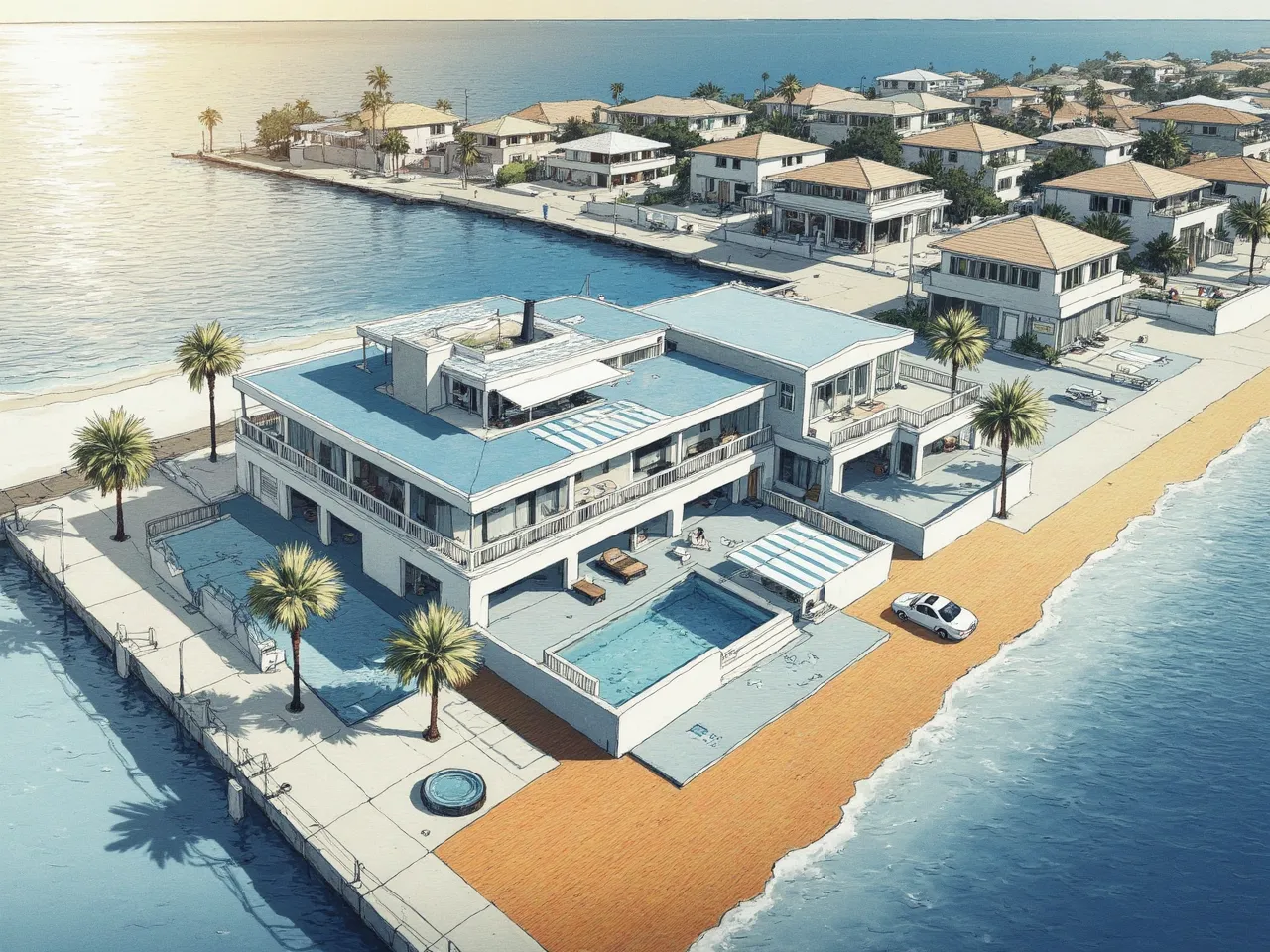
Florida’s luxury real estate market is facing a new obstacle that is disrupting deals even after contracts are signed: skyrocketing insurance costs. According to Brian Fairweather, Global Real Estate Advisor at ONE Sotheby’s International Realty, insurance premiums are now derailing sales that would have closed smoothly in previous years, especially for waterfront properties in South Florida.
Deals Collapse Over Insurance Costs
Insurance is no longer a routine closing detail but a decisive factor that can break a deal. Fairweather recently handled a transaction that illustrates just how sharply this issue is affecting the market. A seasoned investor put an $8 to $9 million Palm Beach waterfront home under contract, a property of about 2,500 square feet, with all parties expecting a straightforward closing.
The turning point came when the insurance quote arrived: $100,000 per year.
Faced with this annual cost, the buyer, who already owned several properties, reconsidered the investment. For a home he planned to visit only occasionally, the insurance expense outweighed the benefits. He canceled the purchase and opted to rent when in Palm Beach, choosing to invest his capital elsewhere.
Fairweather notes that this scenario is becoming increasingly common. “I’ve had deals in Palm Beach fall out during the inspection period based on insurance quotes and how expensive insurance has gotten,” he says. In multiple recent transactions, buyers have walked away after discovering insurance premiums that render ownership economics untenable.
Insurance Woes Concentrated in High-Risk Areas
The spike in insurance costs is not uniform across Florida. The most severe impacts are concentrated in areas with high hurricane risk, particularly along the west coast, in cities such as Naples and Tampa. Fairweather reports that Naples has seen insurance become “extremely hard and extremely expensive to write” after a series of damaging storms.
In these markets, the consequences extend beyond high premiums. Fairweather says some clients have suffered significant property losses only to find that insurance payouts fell far short of actual damages. “I know colleagues who work in the Naples market who had clients who lost their house, and the insurance companies paid them pennies on what was owed,” he says.
This reality has created a secondary-market dynamic: homes in high-risk zones are increasingly challenging to sell, regardless of their quality, location, or condition. Unlike price or contractual terms, insurance costs are dictated by external factors such as hurricane risk, building age, and construction standards. Sellers and agents cannot negotiate these costs away, making them a rigid barrier to closing.
Buyers Seek Alternatives
To navigate the challenge, some affluent buyers are pursuing alternative strategies. Fairweather has seen clients consider self-insuring, opting to forgo traditional coverage and take on the risk themselves. Others are seeking bulk insurance policies that cover multiple properties, hoping to secure better rates by bundling their assets.
However, these options are only viable for buyers with significant resources and large property portfolios. For most buyers, especially those purchasing a single waterfront home, insurance remains a fixed and substantial expense. Without the ability to spread risk or negotiate lower rates, many are forced to reconsider or abandon purchases entirely.
A Cost That Can’t Be Negotiated
Unlike other deal terms, insurance costs are set by factors outside the control of buyers, sellers, and agents. Premiums are based on hurricane exposure, property age, construction materials, and the financial health of insurance carriers. Fairweather emphasizes that insurance costs are not a temporary inconvenience but a structural challenge that is fundamentally altering the economics of Florida’s luxury real estate.
“Insurance in Florida has been tough with the hurricanes that have come through,” Fairweather says. When premiums reach six figures, they can single-handedly undermine the appeal of even the most desirable properties. This new reality is forcing buyers to reassess the value of ownership, especially for vacation or part-time residences that may be used infrequently.
Adapting to the New Market Reality
In response, Fairweather’s team at ONE Sotheby’s International Realty now addresses insurance costs at the very start of the buying process. “We make sure to tell them up front,” he explains. By providing insurance estimates early and integrating them into the overall marketing and due diligence process, his team aims to prevent late-stage surprises that can kill deals.
This proactive approach includes regular, data-driven updates for sellers on property showings and buyer interest, as well as upfront discussions about the total cost of ownership, including insurance. The firm’s connection to the wider Sotheby’s network provides additional resources and market intelligence, helping clients navigate an increasingly complex landscape.
What Happens Next?
The future of Florida’s luxury real estate market, especially along the waterfront, will depend heavily on the direction of the insurance market. If premiums remain high or continue to rise, transaction volume is likely to stay suppressed, and properties in the most vulnerable areas may see further declines in liquidity and value. On the other hand, any stabilization or improvement in insurance availability could unlock pent-up demand and restore some momentum to stalled markets.
For now, insurance is no longer just another line item on the closing statement. It is a decisive factor that can end a deal, regardless of a buyer’s motivation or a property’s appeal. Until insurance costs become manageable and predictable, sellers and agents must adjust their strategies — and expectations — to a market where even well-qualified buyers can walk away over a single, non-negotiable expense.
Similar Articles
Explore similar articles from Our Team of Experts.