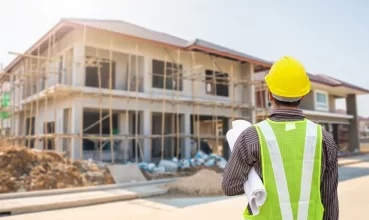

High fire-zone insurance costs are creating a significant affordability challenge in suburban Los Angeles markets, with some homeowners in Santa Clarita, California, paying up to $9,000 annu...

Why Local Planning Is the Real Roadblock in AI Data Center Development

Written by:
Date:
29 Jan 2026
Share via Facebook

Share via Linkedin

Share via X

Copy to clipboard


The surge in AI data center development is often framed as a race to secure capital, power, and advanced technology. But according to George Teodorescu, COO of InfraPartners, these factors no longer determine which projects get built. Instead, the most significant constraint is local planning and developers’ engagement with the communities where they plan to develop.
Teodorescu says the industry is facing a reality check: no amount of funding or technical expertise can override local environmental regulations, zoning restrictions, or community opposition. “You can have all the money in the world, but if you’re in a country with a habitat next to your data center that is protected, that money solves other problems; it won’t solve that problem,” he explains.
Today’s challenges are rooted in the practicalities of regulatory compliance and public sentiment. Projects are increasingly delayed or derailed by environmental reviews, required zoning changes, and resident concerns. These issues require time, sustained engagement, and a willingness to address local priorities—qualities that can’t be substituted with capital alone.
The Time Investment No One Can Avoid
Teodorescu warns that treating local planning and community relations as minor hurdles is a costly mistake. He stresses that developers must dedicate real time and effort to these processes. “You need to put time and effort into it. You cannot snap your fingers at a lot of these projects. You can accelerate them, but you can’t do them overnight. There’s simply a lot that goes into these projects,” he says.
Developers who attempt to shortcut these steps or minimize community input often encounter longer delays than if they had invested upfront. Environmental assessments, zoning hearings, and public consultations can add years to a project if poorly managed or treated as afterthoughts. Teodorescu puts it plainly: “If you skip steps, if you try to be the one that’s going to go from zero to 100, you’re going to lose eventually, because there are things that just have to be done that take time.”
A Long-Term Business Advantage
Beyond avoiding delays, Teodorescu argues that strong community relations have long-term business benefits. Projects that work collaboratively with local stakeholders face fewer unexpected obstacles, enjoy smoother permitting for future expansion, and gain better access to local resources and labor. “You have to work with your neighbors. You’re going to live with them for a while as well. So it actually behooves you to do the right thing, but it will help the project and give it a much better chance of success,” he says.
Teodorescu sees this as a sign of the industry maturing. The primary challenge is no longer technology or funding, but the ability to navigate local realities and build trust with the communities hosting these massive facilities.
Where Money and Technology Fall Short
Teodorescu believes the next competitive edge will belong to operators who excel at local engagement and regulatory navigation, not just those who bring the most capital or the latest hardware. Successful projects will be those that start by working with planning boards, understanding local restrictions early, and building genuine partnerships with communities.
He outlines five critical factors for project success: planning, land, power, client, and capital. “When you have answers or strong drafts of answers on those and an idea where you’re headed, it can arm a project and put you ahead of the majority of projects, frankly, because there’s a lot of noise in this space where there are not clean answers for more than one of those five,” Teodorescu says.
Looking Ahead
Whether other operators will adopt this more deliberate approach may depend on how many high-profile projects are stalled by local opposition or regulatory complications. As the AI data center boom continues, the projects that move forward will be those that treat local planning and community engagement as core business priorities, not just checkboxes. The industry is learning that in today’s environment, money and technology are necessary, but not sufficient, for success.
Similar Articles
Explore similar articles from Our Team of Experts.