
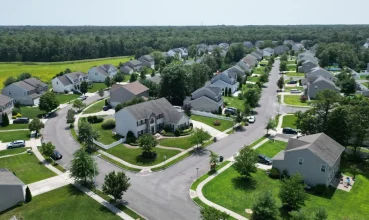
For years, real estate observers in the Philadelphia metro region described South Jersey as undervalued – a suburban stretch with beach access and lower taxes that hadn’t caught up t...

How Florida's Insurance Crisis Is Rewriting Property Selection Rules

Written by:
Date:
25 Jan 2026
Share via Facebook

Share via Linkedin

Share via X

Copy to clipboard


Insurance in Florida’s coastal real estate markets has shifted from a closing formality to a critical factor that determines which homes buyers will even consider. Soaring homeowners’ insurance premiums, rising flood insurance costs, and the increasing use of self-insurance by affluent buyers are now reshaping how coastal properties are evaluated, priced, and marketed.
“If you’ve got a property, it either needs to have storm protection – every opening needs storm shutters, accordion shutters, or impact windows and doors,” says Lori Davis, a realtor with Dale Sorensen Real Estate in Vero Beach with two decades of experience. “If you don’t have that, your insurance is probably going to be double what it normally would be. So we absolutely look at that with every transaction.”
The premium gap between protected and unprotected homes has grown so wide that storm protection is now a baseline requirement for many buyers, not an upgrade or optional feature. In prime coastal markets, properties without these protections are often excluded from buyers’ search lists before a showing is even scheduled.
The Pre-Showing Insurance Filter
The effects of rising insurance costs are direct and immediate. Davis explains that buyers increasingly insist on skipping any home without impact windows and doors, especially those who want to avoid manually deploying shutters or panels. “There are some people who say, I don’t want to do it, so we’re not even showing them things that don’t already have impact windows and doors throughout the house,” Davis says. “That is 100% part of every transaction, the insurance conversation.”
This new filter has changed how agents and buyers approach the market. Properties lacking storm protection often fail to make the shortlist, regardless of price. Sellers face a clear decision: invest in upgrades or accept that their home will appeal to a much smaller pool of buyers.
The Flood Insurance Calculus
Flood insurance adds another layer of complexity. The National Flood Insurance Program has raised rates in many coastal communities, and properties in higher-risk flood zones now face annual premiums that can reach tens of thousands of dollars. “Flood has started to come into play because the National Flood Insurance Program, even though they are starting to increase their rates and what it costs to insure in certain coastal communities,” Davis explains. “The Barrier Island especially – if you’re on the river, that side tends to be the flood side.”
Davis now checks a property’s flood zone before scheduling showings. The difference in insurance costs between an X zone (lower risk) and an AE zone (higher risk) is significant enough to deter buyers or force a reassessment of a property’s value. For many coastal homes, flood zone status is as important as square footage or location.
The Self-Insurance Trend Among Cash Buyers
A growing number of affluent buyers are choosing to self-insure, skipping flood or wind coverage altogether. Davis says this is not a reckless move, but a calculated financial decision by buyers who can afford to cover potential losses themselves. “Many people just self-insure,” she says. “They’re just saying, I’ll take the risk. I’m not going to pay an insurance company. If we flood, we flood, and then we’ll pay for our own repairs.”
Buyers who self-insure typically have the reserves to handle major repairs, or they see the total cost of insurance premiums over several years as greater than the likely cost of self-funded repairs. Some have also had negative experiences with claims and prefer to control the repair process themselves.
The Financing Constraint
However, self-insurance is only available to cash buyers. Mortgage lenders require insurance as a condition of the loan, making it mandatory for any financed purchase. “If you’re financing, it’s an absolute – you have to have it,” Davis says.
This requirement has reinforced the dominance of all-cash deals in premium coastal areas. Davis estimates that 80 to 90 percent of her Vero Beach transactions close with cash. The ability to self-insure is a key advantage for these buyers, along with the usual benefits of speed and negotiating power.
Financed buyers, on the other hand, must factor insurance premiums into their monthly costs from the beginning. Homes in high-risk zones or without storm protection can quickly become unaffordable once insurance is factored in. For many, these costs are the deciding factor in whether a property is even viable.
The Outlook for Buyers and Sellers
Whether insurance costs keep rising or eventually level off will play a significant role in shaping who can buy along Florida’s coast. If premiums continue to climb, more of the market will be out of reach for buyers who need financing, leaving cash buyers – often willing to self-insure – as the primary players.
For sellers, storm protection and a favorable flood zone status are now essential for attracting a broad buyer pool. Properties that lack these features risk being sidelined or facing steep discounts. Buyers, meanwhile, must weigh not only the price of a home but the ongoing costs and risks that come with insuring it.
This insurance-driven reality has redefined what makes a property marketable in Florida’s coastal regions. In today’s environment, the conversation about insurance is no longer a footnote at closing – it’s the starting point for every serious buyer and seller.
Similar Articles
Explore similar articles from Our Team of Experts.