
West Palm Beach’s ultra-luxury waterfront real estate market is experiencing its strongest momentum in more than a decade, with veteran agents reporting record-setting sales and heightened...

Palm Beach County’s Market Recovery Offers Early Signs for U.S. Real Estate

Written by:
Date:
16 Jan 2026
Share via Facebook

Share via Linkedin

Share via X

Copy to clipboard


Palm Beach County’s residential real estate market is showing measurable signs of recovery, providing an early preview of trends that may soon reach other parts of the country. After several years of pandemic-fueled volatility, followed by a slowdown driven by higher interest rates, local data now indicate Florida’s housing sector is emerging from its slump ahead of national averages.
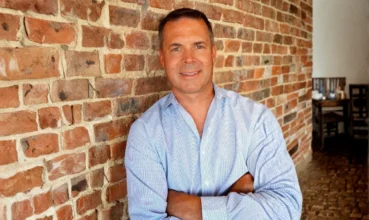
Jeff Lichtenstein, founder and president of Echo Fine Properties, has tracked these shifts for over two decades. His brokerage, with 120 agents, provides insight into ground-level market shifts often missed by national statistics. He describes Palm Beach County’s evolution from a seasonal destination to a year-round home for affluent buyers and remote professionals—a change that has permanently raised the region’s profile.
From Pandemic Boom to Market Correction
The pandemic triggered a wave of buyers from across the U.S. seeking fewer restrictions and more space. “Florida was the hot spot during the pandemic, where there was so much movement,” Lichtenstein says. “There were all sorts of movements that we know happened, especially in South Florida.”
This migration drove home prices up dramatically, in some cases by 30% or more. But when the Federal Reserve raised interest rates to fight inflation, mortgage rates spiked from 3–4% to over 6%, freezing many would-be sellers who were reluctant to give up low-rate loans. The local market entered a prolonged correction, with activity slowing and prices retreating from their peaks.
Recent data, however, indicates that this adjustment period may be ending. Sales activity and pending contracts are both rising, suggesting that Palm Beach County is stabilizing ahead of many other major markets.
Concrete Signs of Recovery
Lichtenstein points to clear evidence of renewed momentum. “In Palm Beach County, we saw a 21% jump in sales activity from this November to last November. Condo activity went up as well, 17%.”
Pending sales—a leading indicator that reflects contracts signed but not yet closed—are up 15–20%. “Our industry makes a huge miscalculation because they look at what the sales are,” Lichtenstein says. “You really should be looking at what’s going on today in the pending world. Echo Fine Properties has a South Florida real estate statistics page that is updated monthly.”
This matters because closed sales reflect decisions made 30 to 60 days earlier, while pending sales capture current buyer sentiment and market direction.
Affordability Reset Drives Renewed Demand
Several factors are contributing to the renewed activity. Mortgage rates have eased from their recent highs, dropping from around 7% to closer to 6%. While these rates remain well above pandemic-era lows, buyers are no longer waiting for a return to 3–4% mortgages.
“Buyers got burned a couple times where their hand was slapped,” Lichtenstein says, referring to the volatility of mortgage rates even as the Federal Reserve shifted its policy stance. “They’re moving faster now and have kind of accepted that rates are not going to get back to 3–4%.”
At the same time, inflation has made real estate look relatively more affordable. “Everything else has been going up,” Lichtenstein observes. “Insurance costs, food costs at restaurants, clothing—all have gone up. But real estate has gone down a little bit.”
He estimates that, after factoring in 4% annual inflation and modest price declines, real estate values in Palm Beach County have effectively declined by about 5% in purchasing power terms. This creates a window of value for buyers who are willing to act before prices and competition rebound.
Condo Market Stabilizes After Regulatory Upheaval
The condominium segment, which struggled in recent years, now presents some of the county’s best opportunities. Following the 2021 Surfside building collapse, Florida passed new laws requiring structural inspections, reserve studies, and safety upgrades for condo buildings. The uncertainty surrounding these regulations led many buyers to avoid condos, causing sales to drop 15–20% compared with single-family homes and townhomes, which saw smaller declines or held steady.
Lichtenstein notes that most buildings have now completed the required inspections and established proper reserves, removing much of the uncertainty that had weighed on the market. “All that work now has really been completed,” he says. “That chaos that was going on in the condo field over the last four years is now moving into a calming stage.”
The result is a segment with more available inventory, less competition, and more transparent pricing. Buyers who were previously hesitant due to regulatory risk are returning, and sellers are adjusting expectations to meet the new reality.
Structural Shifts Underpin Long-Term Demand
While cyclical factors explain much of the recent volatility, Palm Beach County’s fundamentals support continued long-term demand. The population has nearly tripled since 1980, growing from 576,000 to over 1.6 million. This growth has brought new infrastructure, amenities, and social networks that make it easier for newcomers to settle. “There’s more of a baseline of relatives and friends to draw from,” Lichtenstein says. “That move gets to become an easier and easier move.”
The rise of remote work has further reduced barriers, allowing more professionals to relocate without sacrificing career opportunities.
However, easy development is no longer possible. “East of I-95 and east of the Turnpike, everything is built out at this point,” Lichtenstein observes. New construction has shifted to western Palm Beach County and adjacent areas, often 30 minutes or more from the coast. This geographic constraint limits future supply and underpins price stability for existing homes.
Balanced Market Dynamics Benefit Buyers and Sellers
Today’s market is more balanced than at any point in the past three years. Inventory shortages that characterized 2022 and early 2023 have eased, giving buyers more options. At the same time, sellers have become more realistic about pricing, especially those motivated by life changes.
“The must seller—the person where there’s a divorce situation, there’s a death, the person’s moved—they need to sell the house. That person can’t wait any longer,” Lichtenstein explains. “There are enough must sellers that buyers and sellers are meeting each other in the middle.”
This environment particularly benefits resale properties. Individual sellers are more likely to accept market-driven prices, whereas new-construction developers have less flexibility due to higher replacement costs and coordinated pricing strategies.
Outlook: Palm Beach County Leads the Recovery
For investors and homebuyers considering Palm Beach County, Lichtenstein believes the current market offers a rare window of opportunity. Depressed pricing, regulatory clarity in the condo sector, and rising sales activity all suggest the market may have reached its bottom.
“I think we’re at a bottom right now in terms of prices, and I think we’re probably 5% under market because of that inflation that’s happened when you mix inflation and some price drops,” he says.
Palm Beach County’s recovery appears to be starting ahead of other major markets—a trend that could give early buyers an advantage as renewed activity spreads nationally. With inventory available, motivated sellers, and improving buyer sentiment, the region is positioned to lead the next phase of real estate growth.
As the rest of the country continues to adjust to higher interest rates and changing economic conditions, Palm Beach County’s experience offers a template for what a measured, data-driven recovery can look like. For buyers, sellers, and investors, the lesson is clear: the window for value in Florida real estate may be closing sooner than most expect.
Similar Articles
Explore similar articles from Our Team of Experts.