South Carolina’s Upstate has become one of the Southeast’s fastest-growing regions, fueled by population inflows, job creation, and expanding manufacturing investment. Yet despite this growth, large tracts of land purchased by builders often remain undeveloped for years. This apparent contradiction — strong growth alongside delayed construction — reflects a deliberate shift in how builders approach expansion in fast-moving markets.
In the past, developers often moved quickly from land acquisition to construction. Today, builders in the Upstate are more likely to secure land well in advance and wait for the right financial conditions before breaking ground. Rising interest rates, higher development costs, and limited availability of prime parcels have made timing more critical than speed. By controlling land early and delaying construction, builders reduce risk while positioning themselves to respond quickly as demand evolves.
This strategy is especially visible in regions like the Upstate, where long-term growth prospects remain strong but short-term conditions fluctuate. Understanding why builders are holding land helps explain why development timelines have lengthened — and why future housing supply may arrive in waves rather than at a steady pace.
Holding as a Strategy
This shift toward longer development timelines is something Maggie Steck sees regularly in her work across the Upstate. As a broker with Freedom Commercial LLC, Steck specializes in land transactions involving national builders, regional developers, and private landowners. In today’s market, she says, acquiring land is often just the first step in a much longer process.
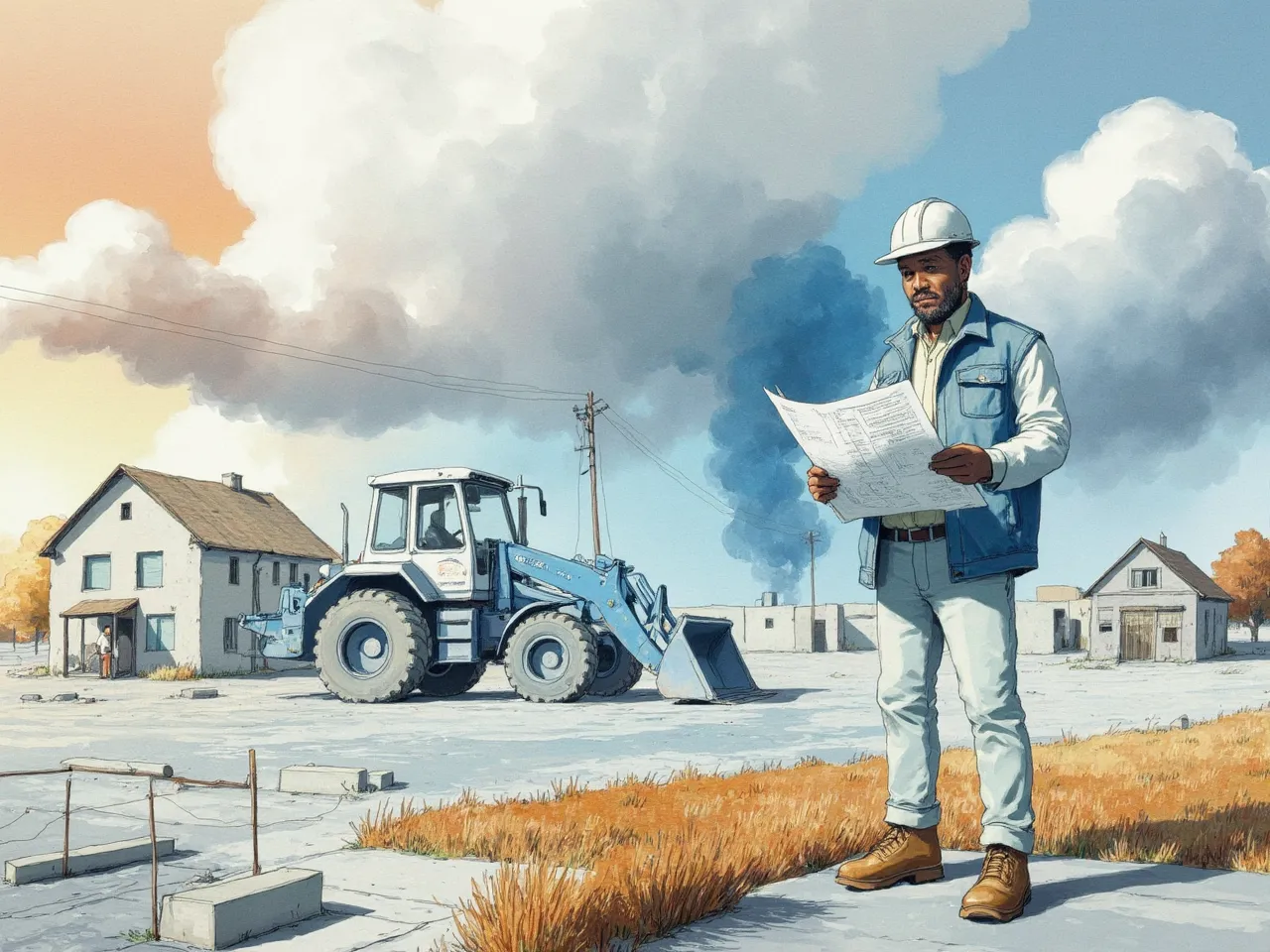
Builders are buying land now because developable parcels around Greenville and the broader Upstate are becoming harder to find. Securing property allows them to lock in future development sites, even if they have no immediate plans to build. Rather than competing for land later — when prices may be higher or inventory more limited — they establish control early and wait for more favorable conditions.
Interest rates are one of the biggest factors influencing this timing. When mortgage rates rose above 7%, fewer buyers could qualify for new homes, reducing demand. Launching a new development under those conditions carries significant risk, especially given the scale of upfront investment required.
Development costs further reinforce the need for caution. Turning raw land into buildable lots requires clearing, infrastructure installation, permitting, and environmental compliance—all before a single home is sold. Steck explains, “It’s very expensive to develop. Something could happen in the economy, so it’s a big risk.” If demand weakens during construction, builders could be left with substantial sunk costs and slow sales.
Holding land gives builders flexibility. They can monitor interest rates, buyer activity, and construction costs, then move forward when conditions support profitable development. In the meantime, the land itself may increase in value, allowing builders to strengthen their position without committing to immediate construction.
Land Deals in the Upstate
In the Upstate, large land transactions reflect the region’s mix of rapid growth and limited developable supply. Many of the most desirable parcels are still held by families, farmers, or long-term owners, so brokers must actively identify opportunities rather than relying on publicly listed inventory. Steck’s work at Freedom Commercial LLC often begins with direct outreach to landowners or research into parcels positioned near expanding infrastructure, employment centers, or existing residential growth.
Once a property is brought to market, interest from builders is common, but closing a deal can take considerable time. The Upstate’s terrain varies significantly, and factors such as soil conditions, road access, utility availability, and zoning restrictions can determine whether land is financially viable for residential development. Builders must also evaluate how nearby growth — such as new manufacturing facilities, population inflows, or highway expansion — will affect future demand.
Even after identifying a promising site, builders conduct extensive due diligence before committing. This includes environmental and engineering studies, zoning and entitlement reviews, and detailed financial modeling based on projected home prices and construction costs. If the numbers no longer work under current market conditions, builders may delay or withdraw entirely, leaving the property to be remarketed.
Steck is currently representing multiple parcels, including an 86-acre listing and a separate 40-acre development site, both involving established builders. Activity remains steady, but timelines are measured in years rather than months. In the Upstate, this slower pace reflects careful planning in a region where growth is expected to continue, but where timing can determine whether a project succeeds or struggles.
Implications for Sellers and Investors
For landowners in the Upstate, patience is essential. Builders and developers are cautious, and deals can take months or even years to complete. However, the eventual payoff can be substantial. Steck, for instance, routinely negotiates a 10% commission on land sales due to the size and complexity of these transactions.
Investors considering land purchases should be prepared for a long-term hold. The Upstate’s population and economic growth will likely increase demand for developable parcels, but carrying costs, such as property taxes, must be factored in. Those willing to wait may see significant appreciation as available land becomes scarcer.
For homebuyers, these dynamics mean that new neighborhoods will continue to appear, but not as rapidly as population growth might suggest. Builders are not slow – they are waiting for conditions that support profitable projects. When the timing is right, development can proceed quickly.
The Bottom Line
In the Upstate, land ownership has become a way for builders to prepare for future demand rather than respond only to current conditions. By securing parcels years in advance, they position themselves to move quickly when financing becomes more affordable, construction costs stabilize, or buyer activity strengthens.
This approach also suggests how the region’s next phase of growth may unfold. Instead of a constant stream of new construction, development is more likely to occur in waves, as projects move forward when market conditions align. For landowners, this reinforces the value of well-located property. For buyers and local communities, it helps explain why new neighborhoods can appear suddenly after long periods of inactivity.
As Steck’s experience shows, the timeline from land acquisition to construction has lengthened — but the underlying expectation of growth remains. The land being held today represents much of the Upstate’s future housing supply, waiting for the right moment to take shape.
About Maggie Steck: Maggie Steck is a broker with Freedom Commercial LLC, specializing in land sales across Upstate South Carolina. She works with national builders, local developers, and private landowners to identify and close land deals in one of the Southeast’s fastest-growing regions.
This article provides insights into real estate trends in Upstate South Carolina. It is intended for informational purposes only and does not constitute legal, financial, or investment advice. Readers should consult qualified professionals for guidance specific to their situation.
Construction lenders appraise progress by visiting a job site and checking visible milestones: foundation poured, framing complete, roof on. That system breaks down when 60 to 80 percent of ...
Imagine you find the perfect condo in Boca Raton. The price fits your budget, and the location is ideal. Then you receive the insurance quote: $8,000 a year. Suddenly, your monthly housing c...
Sarasota’s luxury real estate market has shifted dramatically from its pandemic-era frenzy. Properties that once sparked bidding wars and sold within days are now sitting on the market for...
Finding land in Pinal County and envisioning a new subdivision, data center, or solar farm is only the beginning. Many first-time developers expect a simple process: submit plans, get approv...
Major self-storage operators are scaling back years of aggressive online rental-rate tactics in response to mounting regulatory scrutiny and legal challenges, according to Tom de Jong, Execu...
“When interest rates rise and markets falter, that’s when real expertise matters,” says Joel Miller, Managing Partner at Wall Street Capital Partners and host of the Mornin...