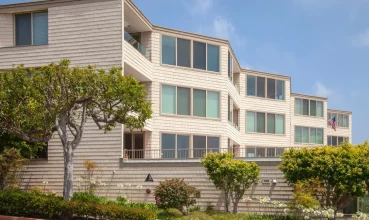

“When the blood is in the street, that’s the time to buy,” recalls Yuval Shram, Founder and CEO of Tay Investments, describing his entry into real estate during the 2008 fi...

Kansas City’s Reliable Development Market Draws National Investors with Strategic Incentives

Written by:
Date:
22 Dec 2025
Share via Facebook

Share via Linkedin

Share via X

Copy to clipboard


While coastal real estate markets experience dramatic swings in pricing and investor sentiment, Kansas City has emerged as a model of stability, offering a combination of steady fundamentals and substantial financial incentives that keep development projects viable even during periods of economic uncertainty.
Chris Sally, owner and broker at Iconic Development LLC, has spent more than 20 years working in Kansas City’s development sector. From his early role as Downtown Development Director under Mayor Kay Barnes to his current focus on historic redevelopment projects in the River Market district, Sally has witnessed firsthand how Kansas City’s unique approach to public-private partnerships and layered incentives has quietly attracted both local and national attention—even as larger metropolitan areas face volatility.
Building on Public-Private Partnerships
Kansas City’s development climate is shaped by a competitive relationship between Kansas and Missouri, which meet at the state line dividing the metropolitan area. This rivalry has fostered a range of incentive programs designed to attract development and retain jobs on both sides of the border.
“Kansas City has pretty amazing public-private partnerships,” Sally says. “We have a state line that runs right through the middle of our metropolitan area, so there’s always competition for employees and real estate projects on both sides. You’ve got conventional property tax abatements, redirection of economic activity taxes, and other tools.”
Developers can access multiple layers of incentives for a single project. In neighborhoods like the River Market, Sally’s projects benefit from overlapping programs: National Historic District status, Planned Industrial Expansion Authority tax abatements that can last up to 25 years, and Tax Increment Financing (TIF) plans. This combination reduces costs and creates a more predictable investment environment.
The Historic Tax Credit Strategy
Sally has built a specialty around small-scale historic redevelopment, targeting projects between $1.5 million and $3 million. His primary tool is Missouri’s small project landmark tax credit program, which provides up to $279,000 in state tax credits per qualifying project.
“In Missouri, we have something called a small project where you get up to $279,000 of state tax credits,” Sally explains. “When you put that in, divided by 25%, you’re looking at about $1.1 million.” This allows him to purchase properties for $600,000 to $900,000 and invest another $1.1 million in improvements—without competing for limited state allocations.
Federal historic tax credits provide an additional 25% return on qualified expenses, further strengthening the financial case. This structure creates a significant cushion, enabling projects that might otherwise struggle to secure conventional financing or justify the risk.
A current example is the Sidons building, the oldest structure in downtown Kansas City’s loop. The city had slated the building for demolition after a roof collapse in 2021. Still, Sally acquired it at a third of the original asking price and secured $100,000 in emergency repair funds from the city. “We’re making a tenant announcement in January,” he says, underscoring the market viability created by combining incentives and creative dealmaking.
Market Fundamentals and Managing Risk
Sally’s approach is rooted in caution and realistic expectations. He avoids speculative assumptions about future exit values, focusing instead on acquisition prices and financial structures that provide flexibility.
“You can’t believe your own pro forma unless you’re dealing with a triple net lease of a triple A client,” he says. “If somebody tells you they know what an exit cap rate is going to be in year five, let alone year 20, you’re in the wrong business.”
Rather than chasing maximum returns, Sally selects projects where the purchase price and incentive stack allow him to weather market shifts. The focus is on reducing operating expenses and securing additional revenue streams, not just pursuing the highest theoretical profit.
Construction and Labor Market Shifts
Recent economic changes have affected Kansas City’s construction landscape. Tariffs and supply chain disruptions have driven up costs, but Sally notes a possible turning point: “Because of the slowdown and high construction costs, there are a lot of people in the labor market who are starting to get hungry. I see prices may start coming down because there are a lot of people looking for work.”
Historic renovation is particularly labor-intensive, requiring specialized skills and more hours than new construction. While this increases complexity and cost, Sally sees a marketing upside. Restored historic buildings offer unique appeal in a market where authenticity and character can justify premium pricing and attract tenants seeking distinction.
Institutional Interest and Changing Perceptions
Kansas City’s image as “flyover country” is fading as national developers recognize the market’s stability and attractive incentive structures. “We really have been exposed to larger national developers that are now putting their equity here in Kansas City,” Sally says. “Once they do one project here, they end up doing six.”
Population and affordability are key draws. With 1.7 million residents spread across a less dense area than peer cities like Nashville, Kansas City offers lower costs and fewer dramatic price swings. This predictability appeals to investors looking for steady income and manageable risk, rather than the boom-and-bust cycles seen in faster-growing metros.
Looking Ahead: World Cup and Policy Stability
The 2026 World Cup, set to bring international attention and visitors to Kansas City, is expected to boost interest and investment further. “That’s going to put a lot of eyes on our city,” Sally says, anticipating increased scrutiny from both institutional and individual investors.
Local policy has remained consistent, reinforcing the city’s reputation for stability. Kansas City’s affordable housing trust fund, which provides $2-5 million grants for housing developers, supports new construction and renovation without the regulatory unpredictability found in many larger cities. This steady approach contrasts with the frequent policy changes and shifting incentives that complicate development in coastal markets.
Advice for Institutional Investors
For institutional fund managers considering Kansas City, Sally underscores the importance of local expertise and thorough due diligence—especially regarding entitlements and neighborhood politics.
“I personally know there’s probably three or four neighborhoods with powerful neighborhood associations that I would not do a development deal in, because even though it could be perfect for the neighborhood, they’ve had a history of fighting any type of change.”
Sally’s recommendation: “Have great local consultants and make sure that the entitlements, the zonings, all of the approvals are wrapped up before infusing any debt.” This approach minimizes risk and avoids costly delays, especially for investors unfamiliar with the nuances of Kansas City’s approval processes.
The Stability Advantage
Kansas City’s most valuable asset, according to Sally, is its stable economic climate. “You don’t have any of the big swings up and down. You’re not Phoenix, you’re not Florida – you don’t have the meteoric highs and lows. It is a very stable economy, and the metrics prove it.”
This consistency, combined with sophisticated incentive structures and growing national recognition, positions Kansas City as a practical alternative for investors seeking reliable returns without the volatility common in primary coastal markets. For developers who understand how to utilize local incentives and navigate the city’s regulatory landscape, Kansas City offers an environment well-suited to sustainable, profitable development.
As the city prepares for the visibility and opportunity brought by the World Cup and maintains a steady policy hand, Kansas City is increasingly seen by institutional investors as a market where careful planning and local knowledge can yield dependable, long-term gains.
Similar Articles
Explore similar articles from Our Team of Experts.