
The commercial real estate legal landscape is undergoing significant change as market conditions create new challenges and opportunities for investors, developers, and legal practitioners. F...

From Dyslexia to Real Estate Success: How Norman Bobrow Built a 45-Year Tenant-Only Brokerage Empire

Written by:
Date:
29 Dec 2025
Share via Facebook

Share via Linkedin

Share via X

Copy to clipboard

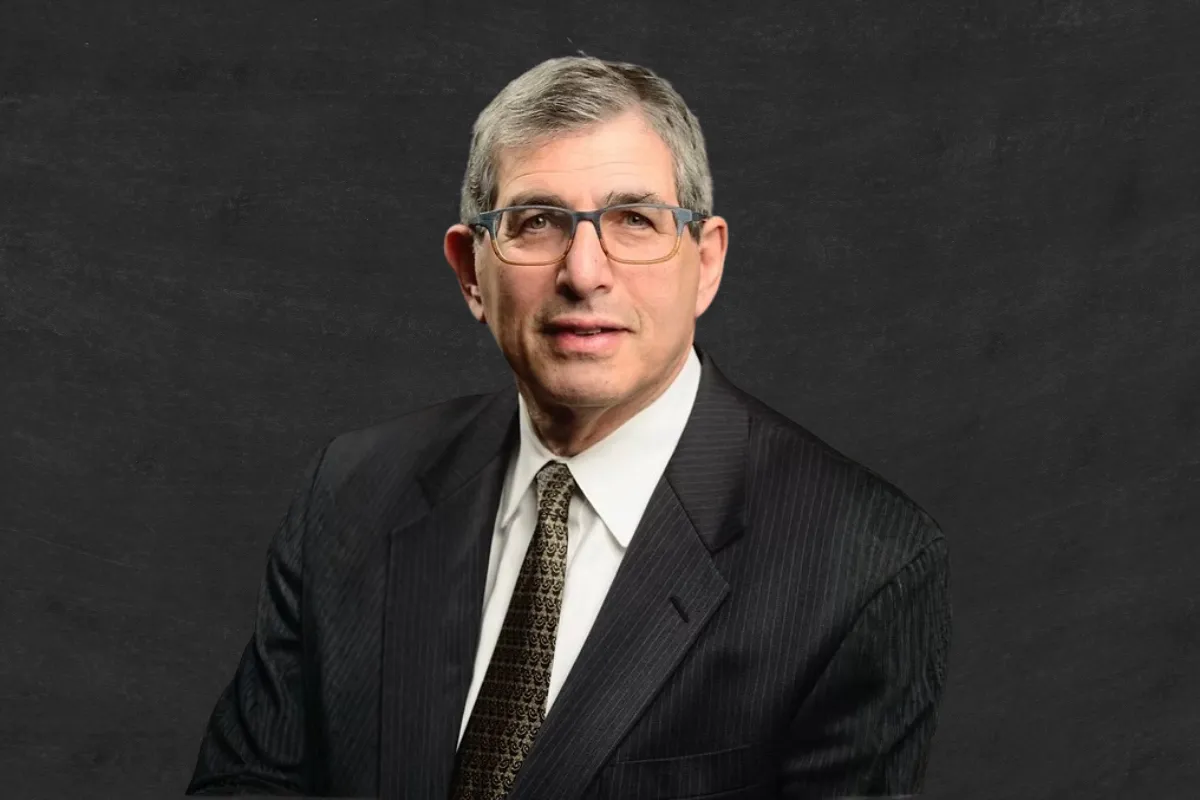
New York City’s commercial real estate market processes about 50 million square feet of lease transactions each year, a scale unmatched in other U.S. cities. Norman Bobrow, founder of Norman Bobrow & Co., has spent 45 years building a brokerage business that stands out by following a strict rule: represent only tenants, never landlords.
“I can’t represent trying to get the tenant the best deal and the landlord the best deal,” Bobrow says. “So I decided to choose representing the tenant, and the landlord pays the commission. If you go straight to the landlord without a broker, he’s still paying a commission to his agent. You get no protection.”
A Journey Shaped by Adversity
Bobrow’s route into real estate was not predetermined, despite his family’s third-generation working in the industry. He struggled with dyslexia as a child, unable to read until eighth grade, and attended specialized schools and was tutored three days a week. “My parents changed the will because they thought I was going to starve to death, but they did change it back to the original,” he recalls.
This adversity became a source of motivation. After finishing college in three years by attending night classes, Bobrow began a career in development, working for family members and later for Centex Corporation on projects such as the Winston Towers in New Jersey. He quickly learned that development requires significant capital and carries substantial risk.
“You can buy a deal that looks great today, but by the time you finish with permits, construction, and architectural drawings, one or two years may have passed. If you hit a recession, you can’t sell or rent what you’ve built,” he says.
After being excluded from equity participation when a developer refinanced and withdrew millions, Bobrow switched to brokerage. “I found that was my chemistry. I was tremendously driven, so I didn’t mind knocking on doors.”
The Tenant-Only Philosophy
When Bobrow launched his firm 45 years ago, he deliberately chose to represent only tenants—a rare stance in commercial brokerage. Many firms work with both landlords and tenants, but Bobrow saw this as a conflict of interest.
“The tenant is a one-time deal. They don’t come back for another 10 years. The broker doesn’t have an obligation to them. He’s got 14 spaces in the building and continuous money coming in from the landlord,” he explains.
This approach has paid off. Bobrow’s firm handles about 250 leases annually, representing banks, law firms, accounting firms, family businesses, IT companies, hedge funds, and real estate companies. Among his clients is JSP Capital, a major multifamily residential firm for which Bobrow has completed three transactions.
“We just did one for JSP Capital. They’re one of the largest multifamily syndicators in the country, probably working on 75 to 100 deals at any time, but they don’t know the New York office market,” Bobrow says.
Market Evolution and Current Conditions
The commercial leasing environment has changed dramatically since Bobrow began. After 9/11, building security tightened, making cold-calling and in-person visits more difficult. Today, brokers rely on email campaigns to reach tenants, but Bobrow stresses the need for professional representation.
“A tenant thinks he can do this himself, but he can’t. He doesn’t know the competition; maybe next door, there’s no mortgage, and rent is $10 less per foot. He doesn’t know if his building is in foreclosure, re and that even if he signs a lease, he could be evicted,” Bobrow says.
Modern commercial leases are complex, involving escalations, loss factors, efficiency ratios, lease terms, work letters, concession packages, free rent, and financial analysis. “Everything a landlord is looking at—the first line item is financials. Who am I making a deal with? Will I get the rent I’m negotiating?” Bobrow explains.
COVID’s Lasting Impact
The pandemic had a significant impact on commercial brokerage and the broader market. “When COVID came, it shrunk the broker count by about 300. Maybe there are only 700 commercial brokers now,” Bobrow says. The reduction in competition coincided with a wave of tenant defaults that put landlords under severe financial pressure.
Tenants stopped paying rent. Landlords had principal vacancies,” he says. “There’s a building on Madison Avenue that lost 25% of its tenants. The owner defaulted on the mortgage but was strong enough to work out payments and recover.”
Current Market Dynamics
As 2025 approaches, Bobrow sees several notable trends. Top locations—Midtown, the Plaza District, Madison Avenue, Fifth Avenue, and Grand Central—are experiencing renewed demand and rising rents, notably as improved Long Island Rail Road access boosts Grand Central’s appeal.
“Certain areas have definitely increased in price, and people are willing to pay,” Bobrow says. He notes that some companies view high-end office rents—$150, $300, or $110 per square foot—as minor expenses compared to their profits.
However, the market is clearly split. Class B and C properties face slow leasing and must offer larger concession packages. Some landlords have walked away from buildings or sold at steep discounts after failing to cover mortgage payments due to high vacancy.
“The problem is that a landlord has to pay his mortgage, and those payments are steep. If you have 30% vacancy, you’re not making your payments,” Bobrow says.
Supply Constraints and Conversions
Conversions to residential use are also affecting office supply. “Several buildings have turned residential. On Madison, Third, and even Park Avenue, tenants have been asked to leave so buildings can be emptied for conversion or major office redevelopment. That squeezes supply,” he says.
Despite reduced inventory, large deals still happen. Bobrow points to the potential for Larry Silverstein’s final building to house American Express as a single tenant. “Even with questions about city leadership, if you need a million square feet, you’re not going to move out of Manhattan. Not everyone will relocate,” he says.
Looking Ahead to 2026
Looking to 2026, Bobrow expects transaction volume to remain high regardless of rent direction. Fifty million square feet are becoming available. Whether rents go up or down, we’re always busy,” he says.
He attributes this to the size and turnover of New York’s office market: with 500 million square feet and average 10-year lease terms, annual churn is inevitable. “There’s enough business for everyone. You need an office like ours, where on a Friday, the top brokers are still working,” Bobrow says.
The keys to success, he adds, have not changed: “Who’s hungry, how much you want to make, how hard you want to work. And are you enjoying what you do?”
Beyond Business
Bobrow’s experience with dyslexia drives his philanthropy. “Because I was dyslexic, I see those people who have problems,” he says. He serves on the school board and donates to 50 to 60 charities each year.
“This is the time you have the chance to help other people,” Bobrow says, stressing the importance of giving back as success grows.
After 45 years, Bobrow’s tenant-only approach has proven both ethical and commercially effective. His firm’s longevity shows that in a relationship-driven, complex market, clear principles provide lasting advantage. As the market continues to shift through 2026, Bobrow’s focus remains on serving tenants’ interests without conflict and outworking the competition.
Similar Articles
Explore similar articles from Our Team of Experts.