
In South Jersey, the real estate market is moving at two distinct speeds. Homes priced under $400,000 in towns like Cherry Hill and Collingswood often attract multiple offers within days. In...

In Jacksonville, the Best Mortgage Rate Comes With a New Home

Written by:
Date:
17 Dec 2025
Share via Facebook

Share via Linkedin

Share via X

Copy to clipboard

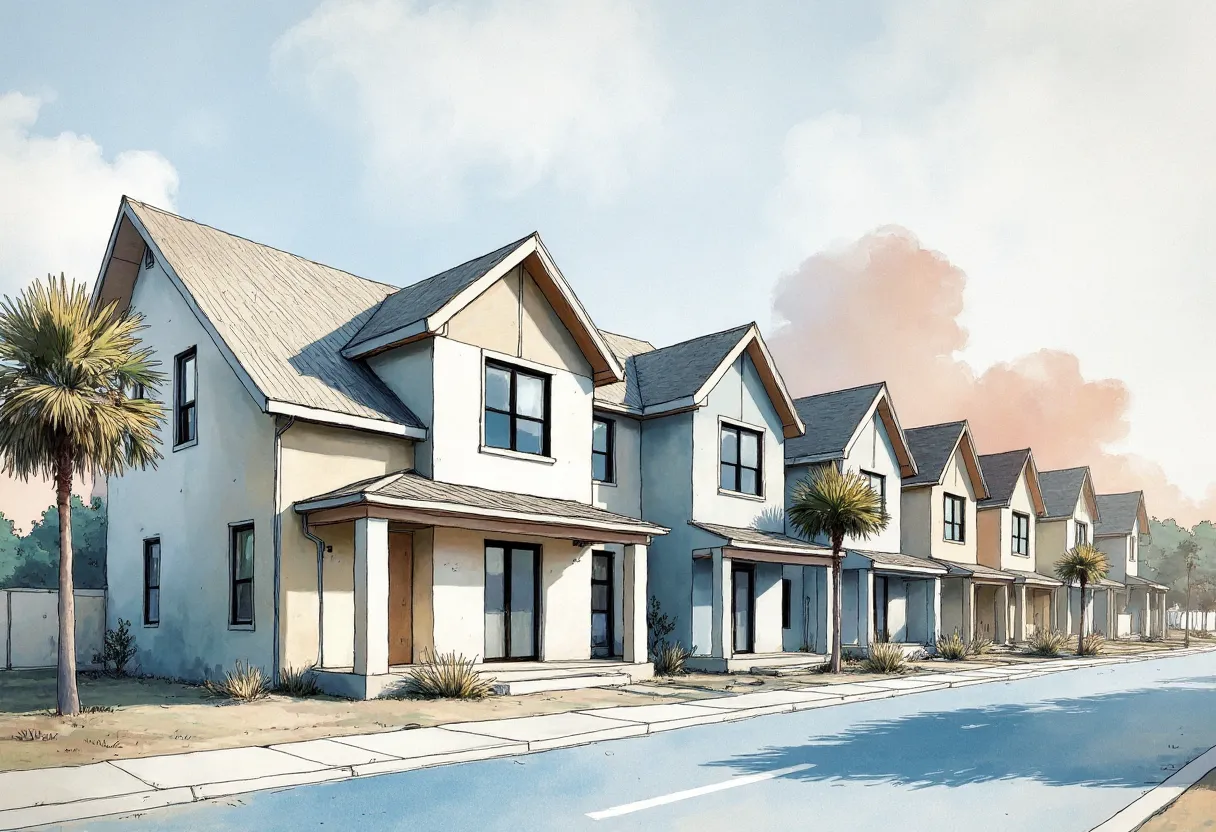
Builder-offered rate buydowns are drawing buyers away from resale homes in Jacksonville, creating a market split where financing terms, not home quality, determine buyer decisions, according to Jan Rice, a licensed realtor with Momentum Realty Jacksonville.
A Growing Divide in Mortgage Rates
Jacksonville’s residential market is seeing a pronounced gap in financing options. While national mortgage rates remain near 7 percent, new construction builders are consistently offering rates as low as 3.99 percent through their preferred lenders. Rice says this gap is changing buyer behavior and the competitive balance between resale and new construction.
“What that does is push most buyers to want to buy new construction instead,” Rice says. “Builders are providing a much lower interest rate than the national rate.”
This financing difference isn’t just a marketing tactic. Builders in Jacksonville are partnering with lenders to offer below-market rates, often alongside other incentives that make new homes more attractive than resale properties. The result is a market where financing terms outweigh many traditional factors in buyer choice.
How Lower Rates Increase Purchasing Power
The impact of these builder incentives is significant. Rice explains that a buyer who qualifies for a $300,000 home at a 7 percent interest rate could qualify for a $350,000 home at 3.99 percent, for the same monthly payment—a roughly 16 percent boost in purchasing power.
Rice illustrates the calculation: “If we’re looking at a resale home at $300,000 with a 7% rate and compare that to a new construction home with a 3.99% rate, the buyer can now afford up to $350,000 instead of $300,000.”
This increase in affordability is driving buyers toward new construction, even when they might otherwise have preferred resale homes. Builders are also reducing barriers to entry with low deposits. “All my buyers this year have bought under market price, with all closing costs covered, repairs included, and deposits as low as $495,” Rice says.
The $495 deposit is a sharp contrast to traditional down payment requirements and highlights how aggressively builders are courting buyers in a high-rate environment.
Buyers Prioritize Financing Over Home Features
Buyers are responding to these incentives by shifting their focus away from resale inventory. Rather than competing for existing homes with higher financing costs, buyers are opting for new construction where the overall cost is lower.
“A lot of buyers are using their options very cautiously. So that pushes most buyers to say, ‘I’ll just get this new construction home instead, because I know I can get a 3.99 interest rate and qualify for a higher budget,’” Rice explains.
This trend is not limited to first-time or budget-constrained buyers. Rice notes that even buyers who can qualify for resale homes at higher rates are choosing new builds because the financing terms are more favorable. The result is a bifurcated market: buyers who might have preferred resale homes in the past are now choosing new construction primarily for the interest rate advantage.
Resale Inventory Faces Pressure
The financing gap is having a direct impact on Jacksonville’s resale inventory, which is already elevated. As more buyers are drawn to new construction, resale homes are sitting on the market longer and require deeper price cuts to attract interest.
Rice sees this in local transaction data: “Buyers feel like they’re getting a break in their monthly mortgage payments.”
Resale sellers are unable to match the financing incentives offered by builders. While builders can buy down rates through their lending partners, individual homeowners lack the resources to compete on financing. This forces resale properties to compete mainly on price, which is driving prices downward in many segments.
Builders are also increasing agent compensation to move inventory. “Compensation for buying agents has doubled. That shows what kind of market we’re in,” Rice says. Builders are using a mix of financing incentives, higher agent commissions, and full coverage of closing costs to attract buyers—levers unavailable to most resale sellers.
First-Time Buyers Choose New Construction
For first-time homebuyers, the advantage of new construction financing is especially pronounced. Instead of stretching to qualify for a resale home at a higher rate, many are choosing new builds where the financing structure allows them to afford more for the same monthly payment.
This could reshape the role of resale homes as the traditional entry point for first-time buyers. If builders maintain their financing advantages, the resale market may increasingly cater to move-up buyers and investors, while first-time buyers gravitate to new construction.
State down payment assistance programs are amplifying this effect. “The down payment program for Florida residents has been amazing. Many families I’ve assisted this year have bought homes with no money out of pocket by closing,” Rice says.
The combination of builder rate buydowns and state assistance is enabling many buyers, especially first-timers, to bypass the resale market entirely.
Market Outlook: Will the Divide Persist?
Whether this financing-driven split will continue depends on how long builders maintain their rate buydown programs and how resale sellers respond. Rice expects the dynamic to remain: “I think interest rates are going to stay about where they are, and it’s going to force homeowners to adjust their list price.”
If builders continue to offer below-market rates, the financing gap may become a permanent feature of Jacksonville’s housing market. Resale sellers may have to accept lower prices to compete or wait longer for their homes to sell.
Momentum Realty Jacksonville is advising clients to focus on the total cost of ownership—factoring in both price and available financing incentives—rather than just the sticker price or interest rate alone. This approach is helping buyers and sellers navigate a market where traditional assumptions about home value are being upended by new financing realities.
A New Way Buyers Evaluate Homes
The larger question for Jacksonville is whether this financing-driven shift is a short-term response to high rates or a lasting change in how buyers assess housing options. Rice’s experience suggests the latter: buyers are increasingly making decisions based on the full cost equation, not just home features or location.
For now, the market is defined by a clear divide: new construction with builder-backed low rates and incentives is outpacing resale inventory, which must rely on price cuts to stay competitive. As long as builders can offer rates far below the national average and cover closing costs, buyers will continue to favor new homes—reshaping Jacksonville’s market for the foreseeable future.
Similar Articles
Explore similar articles from Our Team of Experts.