

Wellington, Florida, occupies a unique position in American real estate. Known as the equestrian capital of the United States, this Palm Beach County community draws horse owners, competitor...

Philadelphia’s Real Estate Market Holds Steady Amid National Slowdown

Written by:
Date:
18 Dec 2025
Share via Facebook

Share via Linkedin

Share via X

Copy to clipboard

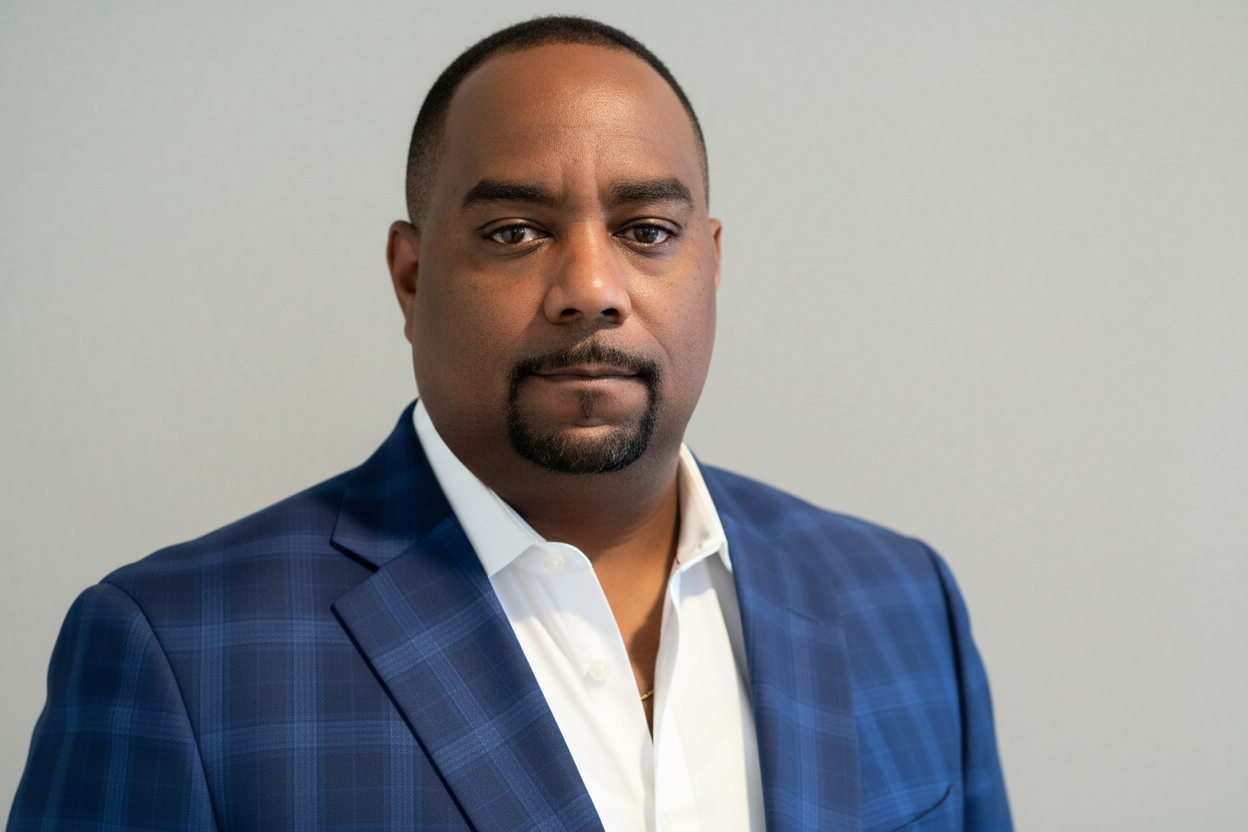
Philadelphia’s commercial real estate market is outperforming many major U.S. cities, thanks to structural advantages and strategic positioning that have helped it maintain stability despite national economic headwinds. Carlo Batts, Principal & CEO of The Reduxx Group, draws on decades of appraisal work across all property types to explain why Philadelphia’s fundamentals remain strong as other markets struggle.
Banking Background Shapes Market Perspective
Batts entered real estate appraisal through a specialized apprenticeship at Wilmington Trust, an experience that shaped his approach to property valuation well beyond standard industry practices. “To be a great real estate appraiser, you have to view it from the eyes of the bank, the developer, the broker, the property manager,” Batts says. “You also have to think like the architect and develop an opinion of value based on all those factors.”
This multifaceted perspective proved critical when Batts founded The Reduxx Group in 2011, after M&T Bank acquired Wilmington Trust. His banking background offered him a unique understanding of deal flow, client service models, and the key factors that drive successful real estate transactions.
Office Market: Limited Downside Due to Historic Undersupply
Philadelphia’s office sector has seen rising vacancy rates, with a 28% increase since 2019. However, Batts notes that the city’s office market is fundamentally different from those of larger urban centers now facing severe distress. “Philadelphia never was a primary office market, even before the pandemic, which is kind of a saving grace,” he says. “The buildings that are now vacant are a finite amount as compared to other cities across the country.”
Batts challenges the popular narrative that large-scale office-to-residential conversions will reshape Philadelphia’s downtown. While some pre-1970s buildings with brick masonry construction can be converted to apartments, most properties built from the 1970s onward were designed for office use and are cost-prohibitive to repurpose. As a result, only a handful of core office buildings are likely to be repurposed, while the rest will stabilize as traditional office properties as surrounding neighborhoods continue to develop.
Multifamily Development Slows as Market Nears Saturation
Philadelphia’s multifamily sector, which has enjoyed strong occupancy rates, is now entering a cooling phase. Construction starts have declined 55% year-over-year, signaling a pause in new development after several years of rapid growth. Batts sees this as a healthy adjustment. “I think we’re at a point where we’re going to need multifamily to cool off on the development side a little bit once this round is over,” he says.
Absorption periods for new apartments are getting longer, and lenders are requiring developers to put more equity into deals. Despite these challenges, Batts believes well-located projects can still succeed, especially given the city’s unique geographic and economic advantages.
Geographic Positioning Remains a Key Advantage
Philadelphia’s location in the heart of the Northeast Corridor provides a significant long-term benefit. The city is within two hours of major economic hubs like New York, Washington, D.C., and Boston, granting access to what Batts estimates is “60 to 70% of the US population.”
This proximity is especially valuable for small businesses and franchise owners. “The opportunity in Philadelphia is really for the small entrepreneur,” Batts says. “If you can sell, you can come here and sell between DC and New York and Boston and be there within pretty much two hours.” This logistical advantage continues to attract new business activity to the region, supporting long-term demand for commercial and residential space.
Retail: Strength in Established Neighborhoods
While national retail faces uncertainty, Philadelphia’s established neighborhood retail corridors remain resilient. Batts divides the city’s retail market into distinct zones, each with unique characteristics and cap rate profiles. Core Philadelphia—“river to river, South Street to Girard Street”—is the strongest area for retail real estate, generally trading at cap rates between four and six percent. “Anything within that box generally is just solid real estate,” Batts says.
Emerging neighborhoods like Fishtown and Northern Liberties have become new centers of economic activity, attracting younger residents. However, established areas such as South Philadelphia, Bella Vista, and Graduate Hospital benefit from older, well-educated populations with higher incomes, providing a stable base for retail tenants. University City stands out for its strong infrastructure, with multiple trolley and subway lines connecting universities and City Hall, making it particularly attractive for retailers and service providers.
Market Fundamentals vs. Capital Costs
Rising interest rates and tighter lending standards have increased financing costs across the real estate market. Batts emphasizes that these changes have not fundamentally undermined property values in Philadelphia. “I don’t think that distressed transactions have repriced the market,” he says. “Cap rates are more of a fundamental challenge of the lending dynamics now, as compared to actually what’s happening in the market.”
In other words, property prices are adjusting mainly in response to higher capital costs, not because of a drop in demand or deteriorating property performance. Philadelphia’s core market fundamentals—steady demand, limited new supply, and strong neighborhood economies—remain intact even as the cost of borrowing rises.
Undervalued Opportunity: First and Second-Ring Suburbs
Batts sees significant potential in Philadelphia’s first and second-ring suburbs—areas that have been largely overlooked in recent development cycles but are well-positioned for future growth. “You’ve got the city footprint, and then you have the first ring suburbs, and then the second ring suburbs of Philadelphia, which are pretty much still part of the city,” he explains. These areas benefit from regional rail access and existing infrastructure that can support new housing and commercial projects.
Communities such as Upper Darby, Glenside, Cherry Hill, and Pennsauken are examples of suburban areas with strong redevelopment potential. Batts points to Ardmore as a model for successful revitalization, suggesting that similar strategies could be applied to other nearby suburbs.
Looking Ahead: Keys to Future Growth
Philadelphia’s real estate market is positioned to weather current economic challenges better than many peer cities, thanks to its geographic advantages, diverse economy anchored by universities and research centers, and the limited number of distressed assets. For investors and developers, understanding the city’s layered geography is critical—from the stable downtown core to emerging neighborhoods attracting younger residents, and the suburban rings where infrastructure is in place but development has lagged.
Batts believes the foundation for future growth is already in place. “All the pieces are pretty much in line and right for future growth and future demand and vertical growth,” he says. The main requirement now is increased support from local government to make Philadelphia more attractive for business and development—a shift he sees beginning to take hold.
For real estate professionals looking for opportunities in a major market with stable fundamentals and reasonable pricing, Philadelphia offers a clear example of how geographic location, infrastructure, and careful market analysis can create resilience even during periods of national uncertainty.
Similar Articles
Explore similar articles from Our Team of Experts.


Master Mind Realty's Kevin Burgos on Building a Strategic Real Estate Presence in Medellín, Colombia
Real estate runs in Kevin Burgos’s blood. As the son of Colombian immigrants in the United States, he witnessed firsthand how the industry could create opportunities when his father be...