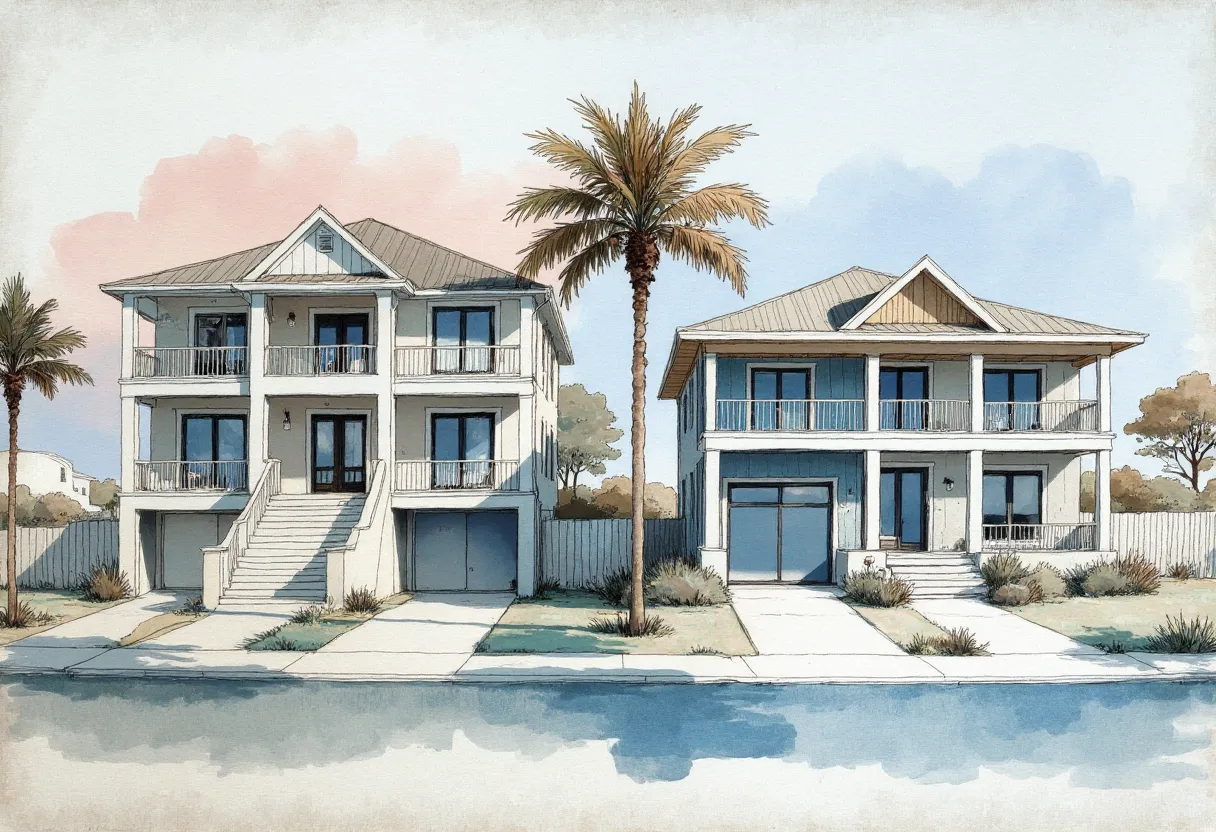
Along Florida’s Scenic Highway 30A – a stretch of coastal communities in the Panhandle – a clear divide has emerged between beachfront resale homes and newly built properties farther inland. Older homes closest to the water are increasingly sitting on the market, often after multiple price cuts and limited showings. By contrast, new construction just inland continues to sell at a steady pace, in some cases commanding prices that rival or exceed nearby resales.
Randy Rintala of Berkshire Hathaway HomeServices Beach Properties of Florida, a veteran new-construction agent on the Emerald Coast, has watched the gap widen over the past year. He says the shift goes beyond finishes or floor plans and reflects a broader change in buyer priorities.
“New construction has been steady,” Rintala says. “But when you talk to agents who focus on resales near the beach, they’ll tell you that side of the market has slowed.”
Part of the hesitation stems from heightened scrutiny of coastal properties following the 2021 Surfside condominium collapse in South Florida. Since then, buyers have grown more cautious about aging structures near the water, rising insurance costs, and the long-term impact of salt air, storms, and maintenance requirements. The result is a market in which transparency, predictable costs, and newer construction standards carry more weight than proximity to the shoreline alone.
Resale Properties Are Struggling
The biggest drag on resale homes isn’t location alone – it’s how sellers are pricing and positioning them.
Most resale homes along 30A sold during the pandemic’s housing surge, when buyers paid record prices and modeled returns on unusually strong rental income. As those owners now look to sell, many are anchoring their asking prices to what they paid rather than to current market conditions.
“There are a lot of overpriced homes out there, and they’re not well taken care of,” Rintala says. “The beach crushes a home. Salt air, humidity – you’ve got to be prepared for maintenance.”
Carrying costs on existing homes have risen faster than many owners expected. Homes that once booked consistently are now sitting vacant longer, while deferred maintenance has accumulated. Buyers arrive prepared, reviewing income statements, requesting maintenance records, and testing occupancy assumptions.
New Construction Is Moving
In contrast, new construction offers predictability and transparency. Buyers know what they’re getting – warranties, up-to-date systems, and no unexpected repairs. In master-planned communities like Watersound Origins, they’re also buying into a broader vision: town centers, parks, schools, and amenities that older scattered neighborhoods often lack.
“We’re building a city, not just a community,” Rintala says. “That’s something people can see and believe in.”
Builders often have established relationships with lenders, streamlining the financing process. Pricing for new homes is based on current construction costs, not on previous sale prices, so buyers see numbers that reflect today’s market conditions.
Despite a slower overall market, Rintala’s builders have closed hundreds of new construction sales over the past year, with demand holding steady even as resale inventory grows.
A Real Example
The difference between new and resale is clear in recent sales data. Last month, a resale home near the beach was listed at $1.2 million. After six weeks on the market and limited interest, it remained unsold. The owner had paid $950,000 in 2021, expecting continued appreciation, but rental income had dropped 40% since the purchase, and the property needed a new roof.
Meanwhile, a new construction home a mile inland, priced at $1.1 million, went under contract in just two weeks. The buyer, relocating from Atlanta, valued the home warranty, low-maintenance exterior, and the presence of a grocery store and town center under development in the community.
“People moving from big markets understand master-planned communities,” Rintala says. “They’ve seen it work in the suburbs. They know what they’re getting.”
What Buyers and Sellers Should Do Now
For buyers, it’s a mistake to assume new construction is always more expensive. In many cases, prices are comparable to resales, with the added appeal of a brand-new home, modern systems, and fewer immediate maintenance concerns. Buyers should also ask what incentives builders are offering directly to purchasers, such as closing-cost credits, interest-rate buy-downs, or flexible timelines to complete a sale.
Sellers of resale homes need to be realistic about both condition and pricing, regardless of whether the home was used as a rental or a primary residence. A pre-listing inspection, a willingness to address deferred maintenance, or concessions such as covering closing costs can make a meaningful difference. Homes priced based on past purchase prices rather than current market conditions are far more likely to sit.
For buyers choosing between new and resale, the long-term ownership picture matters. New construction often offers more predictable costs through warranties and updated building standards. Resale homes near the beach can still make sense for personal use or second-home living, but only when the price reflects the real cost of ownership, including maintenance, insurance, and exposure to coastal wear.
The Bottom Line
On Florida’s 30A, the widening gap between new construction and resale homes is about more than just age or design. It comes down to transparency, realistic pricing, and the community features buyers want heading into 2025.
For buyers, that means doing due diligence on both the numbers and the neighborhood. For sellers, it means facing current market realities, not past expectations. And for anyone following the market, it’s a reminder: in real estate, accurate numbers and honest assessments win out – every time.
This article provides insights into real estate trends along Florida’s 30A corridor. It does not constitute legal, financial, or investment advice. Consult qualified professionals for decisions specific to your situation.
Major real estate companies are increasingly restricting access to their proprietary databases. Data ownership now outweighs transaction volume or brand recognition as the primary source of ...
Jared White, Managing Partner at Quadrum Global, argues that traditional market data often lags behind the real opportunities in emerging real estate markets. Instead, he points to a more nu...
Finding land in Pinal County and envisioning a new subdivision, data center, or solar farm is only the beginning. Many first-time developers expect a simple process: submit plans, get approv...
Affluent families are changing how they buy luxury real estate in the Florida Keys, focusing on properties that serve as shared family assets rather than individual investments to be passed ...
Las Vegas looks like a short-term rental goldmine on paper. Millions of visitors, a 24/7 entertainment economy, no state income tax. But investors who show up expecting to buy a property and...
Lenders across Long Island are now treating accessory dwelling units, including basement apartments and mother-daughter setups, as income-generating assets rather than liabilities. According...