“New York hasn’t become particularly affordable now that we’ve essentially outlawed short-term rentals,” according to Bram Gallagher, Director of Economics & Fore...

Short-Term Rental Bubble Bursts, Skewing Florida Foreclosure Numbers

Written by:
Date:
03 Dec 2025
Share via Facebook

Share via Linkedin

Share via X

Copy to clipboard

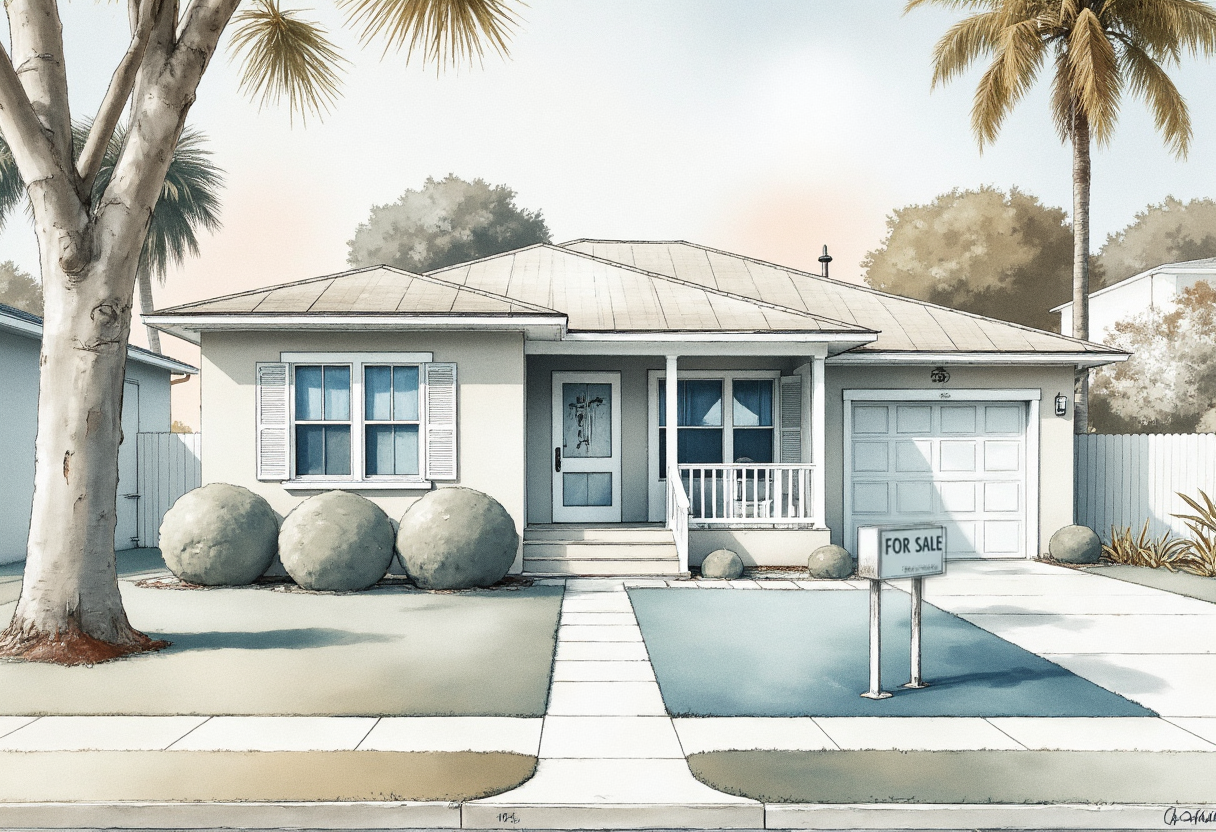
Tampa Bay is making headlines as a leading foreclosure market nationally, but according to St. Petersburg realtor Joshua Neitz, the data tells a misleading story. The foreclosure surge isn’t evidence of a broad housing crisis – it’s the collapse of a specific investor class that over-leveraged on short-term rental properties during the pandemic boom.
Neitz notes that Tampa Bay is drawing national attention for topping foreclosure rankings. He explains that much of this activity stems from buyers who purchased short-term rentals during the 2021–2024 boom, many of whom entered the Airbnb market without fully understanding how it operates.
The Short-Term Rental Speculation Bubble
According to Neitz, who has maintained his own investment portfolio for over a decade, the foreclosure concentration stems from inexperienced investors who entered the short-term rental market without understanding its fundamentals. These buyers, attracted by pandemic-era vacation rental income, made purchases based on unsustainable assumptions about demand and pricing.
The rapid influx of investors into the short-term rental market has led to a sharp slowdown in vacation rental demand, leaving many owners in a difficult position. As returns weakened and supply surged, numerous investors found themselves holding properties whose financial performance never fully aligned with their expectations. Neitz says this group now represents the bulk of those facing negative equity.
The financial logic that once attracted these buyers has collapsed. Rental income has fallen at the same time that operating and ownership costs have climbed, pushing many units into negative cash flow. According to Neitz, it is now significantly cheaper to rent than to own, erasing the assumptions that initially justified these purchases.
Who’s Actually Struggling vs. Who’s Fine
Neitz stresses that the current foreclosure pressure is largely limited to this narrow group of short-term rental investors rather than affecting the wider homeowner base. He notes that most people who purchased traditional homes after 2020 are in a strong equity position and owe far less than their properties are now worth.
This distinction is crucial for understanding market dynamics. Owner-occupants who purchased before the pandemic peak remain in strong equity positions. Even traditional rental property investors who understood the fundamentals are weathering the current environment, though returns have compressed.
Neitz says the financials for single-family rentals and duplexes have tightened significantly, with most of those properties only managing to operate at roughly break-even. Still, he draws a clear line between these thin-margin long-term rentals and the far more precarious situations faced by investors who bought heavily into the short-term rental market.
The Narrative Problem
Neitz argues that the spike in foreclosures tied to Airbnb investors has created an exaggerated impression of market instability. He says this narrow pocket of distress is being misread as a sign of broad trouble, even though the wider housing market remains stable.
He maintains that sensational headlines about rising defaults overlook the real dynamics at play. In his view, the surge is confined to a segment that expanded too quickly and became oversaturated, leaving traditional homeowners largely unaffected.
This mischaracterization has implications for market perception and policy responses. If policymakers and market participants interpret the foreclosure data as evidence of broad housing distress, they may implement solutions that don’t address the actual problem or may create unintended consequences for stable market segments.
Market Implications
Neitz’s analysis suggests that the current foreclosure wave represents a sector-specific correction rather than systemic market failure. The short-term rental speculation that drove much of the 2021-2024 investment activity was built on unsustainable assumptions about vacation rental demand and pricing.
As this sector corrects, it may create opportunities for more experienced investors who understand the fundamentals. However, Neitz cautions that even traditional rental investments face challenging economics in the current environment, with most properties operating at break-even levels.
The Path Forward
Neitz’s company, NextHome Gulf Coast, has adapted to help clients navigate the distinction between distressed short-term rental properties and stable investment opportunities. The firm focuses on identifying properties with realistic rental income potential and helping investors understand the true cost structure of ownership in the current environment.
Whether the short-term rental sector stabilizes or continues correcting will likely determine how long Tampa Bay maintains its foreclosure leadership position. But according to Neitz, the broader housing market’s health shouldn’t be judged by the struggles of a specific investor class that over-leveraged on unsustainable business models.
Similar Articles
Explore similar articles from Our Team of Experts.