The Florida Keys residential market is experiencing a phenomenon that could alter the competitive landscape in early 2025, according to Margie Casey, Associate Broker at Florida Keys Real Es...

The Next Chapter of Pre-Fab: How A New Strategy Is Evolving Prefabricated Construction

Written by:
Date:
18 Nov 2025
Share via Facebook

Share via Linkedin

Share via X

Copy to clipboard

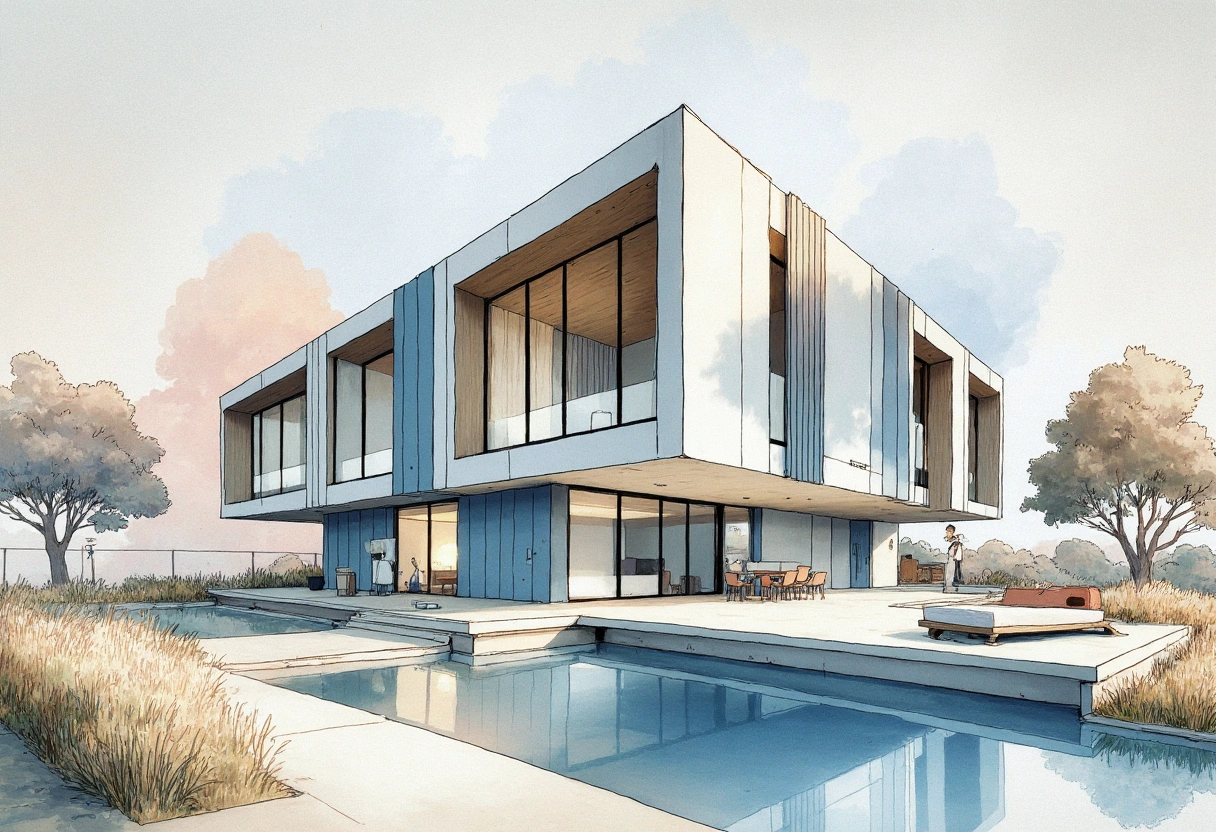
Construction innovation company Juno, which first made waves with its mass-timber, kit-of-parts apartment system, is entering the next stage of its evolution as an owner’s-rep and prefab strategy partner, according to Co-Founder and Chief Operating Officer Jen Canchola. In a recent interview, Canchola detailed how the company’s recent pivot led to a complete overhaul of its business model, enabling Juno to help developers make projects work that previously failed to meet financial targets.
From Challenge to Clarity
“Company Juno, as I like to call it, unfortunately ran out of money last June. But my business partner and I, Emily, decided we weren’t done,” said Canchola, who has a background in ground-up development. “They had the right idea. The model just wasn’t quite right.”
Juno’s initial model centered on a kit of 33 prefabricated components – from mass-timber structures to bathroom pods and kitchen modules. But even with a compelling design and a strong underlying concept, the approach ultimately struggled to reach financial viability. “We actually got the [first] building built right. We built it, and it worked. We had some delays, and it cost a little bit more than it should have, but that was [just] project one,” Canchola said.
But even with a compelling design and a successful first project, the fully integrated model didn’t pencil. Co-Founder Emily, drawing on her experience at Katerra, brought the key insight that trying to own so many pieces of the supply chain created structural financial risk – ultimately making the original approach unsustainable.
The Listening Tour and Pivot
After acquiring Juno’s assets and intellectual property post-bankruptcy, Canchola and her partner conducted a series of in-depth conversations with industry stakeholders to understand what developers needed most. “You start to pull the thread of the number of stakeholders in ground-up development. And there’s a lot to listen to,” Canchola said.
These discussions made it clear that Juno needed a new market position. Instead of acting as a direct contractor or manufacturer, Juno now works as an owner’s representative, helping developers integrate prefabrication into their projects during the earliest stages.
“That insight led us to Juno Technology,” Canchola explained. “We realized the market we serve now is really owners-representation work – helping developers evaluating deals make them pencil, and integrating prefabrication into their projects from the start.”
Strategic Market Position
Juno’s revised role centers on engaging with developers during the pre-development phase, when decisions about prefabrication have the greatest impact on cost and feasibility.
“[We now focus on] getting into that pre-development phase and making changes there – preventing problems rather than solving them—and really pushing those timely decisions,” Canchola said. Doing so requires close coordination among designers, contractors, suppliers, and manufacturers to ensure early alignment.
Juno’s main value for clients is overcoming the inertia of traditional construction practices. “It’s hard for developers to do things the same way, like we’ve done it for 50 years,” Canchola noted.
Proven Results
Juno’s new approach has already delivered measurable results. On a recent project in East Palo Alto, initial construction estimates were nearly 40 percent over budget. By acting as an owner’s representative and integrating prefabrication strategies early, Juno is targeting a 25 percent cost reduction while keeping the original project scope intact.
“At the end of the day, if it doesn’t pencil, you’re not building it. We’re here to make sure you can reach that goal,” Canchola said.
Instead of relying on traditional value engineering – often synonymous with cutting features late in the process – Juno uses what Canchola calls “target value design.” “I don’t even use the term ‘value engineering’ anymore,” she said. “It’s a bad word in my world. You should always know what your target is from the start.”
Future Growth
Juno is now expanding outside California, with projects in Fort Myers, Florida, scheduled to break ground in February. “We are very excited to build in Florida,” Canchola said.
The company’s growth plan is to replicate its owner representation model in new markets while adjusting to local rules and conditions. “Every jurisdiction is different, and so you have a new set of rules of engagement every single time, and it’s understanding those and being able to navigate those. And I think that’s what we do really well,” Canchola said.
This expansion will test whether Juno’s refined approach can be applied beyond California, and whether strategic prefabrication can consistently make housing projects viable in diverse markets.
Similar Articles
Explore similar articles from Our Team of Experts.