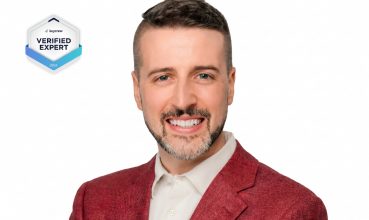

Courtney Poulos doesn’t shy away from controversy. The ACME Real Estate founder has launched The Clean Close, a podcast tackling issues most real estate professionals avoid discussing ...

Breaking the Property Management Mold: How One Landlord Built the Company She Wished Existed

Written by:
Date:
12 Nov 2025
Share via Facebook

Share via Linkedin

Share via X

Copy to clipboard


For 14 years, Liat Arama managed properties the traditional way. She hired property management companies, paid their percentage-based fees, and watched as her investment properties became someone else’s profit center. The lack of control frustrated her. The misaligned incentives bothered her. And eventually, she decided to do something about it.
Today, Liat is the CEO and Co-Founder of Keasy, a Washington State-based property management company that charges flat fees instead of percentages, gives landlords unprecedented control over their properties, and uses AI to create efficiencies that traditional property managers have no incentive to pursue.
Her approach is drawing attention for all the right reasons, and pushback for some interesting ones.
The Problem Most Property Managers Won’t Admit
Liat speaks bluntly about what she sees as fundamental flaws in traditional property management. “The thing that bothered me most when I was using property management is the lack of control,” she explains. Property managers made decisions about rent amounts, lease terms, and repairs without meaningful landlord input. Landlords received monthly statements showing fees deducted and bottom lines that rarely matched projections.
The bigger issue, according to Liat, is the incentive structure itself. The main conflicts of interest stem from lease-up fees, typically one month’s rent, and maintenance markups. “Nobody has an incentive to be more efficient,” Liat says. “The landlord is not involved because somebody else runs their business for them. That somebody else, why would they be efficient? They get paid for errors, they get paid for mistakes.”
Property management companies aren’t evil – they just lack the incentive, technical capability, or financial resources to drive real change. PMCs were built for an analog, face-to-face, high-touch world. Back when marketing a unit meant manual work, meeting in person, or talking on the phone with landlords, tenants, and vendors. Rent collection was done with checks or cash, and success was measured by how well you knew every unit, tenant, and owner. This legacy model requires full-time employees, boots on the ground, and can only support a radius of one to three miles, resulting in bloated P&Ls, high costs, and ultimately high fees to landlords.
Building a Different Model
Keasy’s flat-fee structure delivers about 70% savings compared to traditional percentage-based fees. The company offers modular services, allowing landlords to choose which additional services they want, from lease-ups to inspections to full maintenance management.
Landlords can bring their own vendors or use Keasy’s network. They can handle certain tasks themselves or delegate everything. The flexibility is intentional. “We’re the only ones who are offering to bring your own vendor,” Liat explains. “Most landlords have their own little network. They know Joe the Plumber, and they know they like Joe.”
This approach solves a conflict of interest that most property managers prefer not to discuss. Traditional property managers often have financial relationships with vendors, receiving kickbacks or marking up services. Keasy eliminates this by allowing landlords to use their existing vendor relationships while Keasy manages the process.
The flat-fee model changes everything about how the business operates. Every maintenance request costs Keasy time and money, so the company is motivated to help landlords prevent problems. Vacancies hurt revenue, so keeping good tenants becomes a priority. The landlord’s goals and the property manager’s goals finally align.
Technology as a Means, Not an End
Keasy leverages AI and automation extensively, but Liat is careful about how she frames this. “Our goal is a hyper efficient property management company,” she says. Technology enables efficiency, but the customer does not care about the technology itself.
“My customers couldn’t care less about technology,” Liat explains. “They care, hey, will I get my rent paid every month? Will you make sure my building doesn’t go up in flames? Will you do it efficiently for me, in a cost effective manner?”
The company operates on a principle Liat calls “manage by exception.” Everything that can be automated gets automated. When something requires human judgment, the AI flags it and the team handles it. The goal is to anticipate landlord needs and communicate proactively rather than making landlords log into a dashboard to find information.
“If you as a customer of ours are using a dashboard, we have failed,” Liat states. The company customizes communication to each landlord’s preferences, sending updates about rent collection, maintenance issues, or other concerns based on individual thresholds and preferred channels.
Keasy has built specialized AI tools for specific functions. Cody, their compliance bot, has been trained on all the rules and regulations for every city where Keasy operates in Washington State. Sam handles maintenance requests. Lisa manages lease-ups. Each bot has its own email address and handles communications like a human team member, just without the human overhead.
The Skepticism That Comes With Disruption
When Keasy tells landlords about its pricing model, the most common response is skepticism. “This is too good to be true, your pricing, your model, doesn’t make sense, doesn’t compute,” Liat says, describing typical reactions.
Some of this skepticism is reasonable. When an entire industry operates one way and a new entrant offers 70% savings, caution makes sense. But Liat sees the reaction as revealing something deeper about the industry. Landlords have been conditioned to accept percentage-based fees and markup-driven costs as the natural price of property management, without questioning whether that cost is justified.
“We need to open people’s minds to the option,” Liat explains. Many landlords start by giving Keasy one property as a test. Within three months, most move their entire portfolio. The comparison Liat uses most frequently is Uber. “You will never contact taxi stations after you’ve already used Uber. That’s basically the same thing.”
When the Industry Pushes Back
Recently, Keasy attempted to sponsor a local association event. The organization denied the sponsorship. Keasy is still trying to understand exactly why, but Liat can’t help wondering if the organizers have financial interests in traditional property management companies.
Rather than compete on service quality, some in the industry appear to be trying to keep Keasy out of the conversation entirely.
Liat sees this as validation. “This is like the hotel owner associations and taxi station unions pushing back on Airbnb and Uber back in 2008. Okay, so now game on.”
A Model Built by a Landlord for Landlords
What makes Keasy’s approach credible is that it was built by someone who experienced the problems firsthand. Liat and Guy – her husband and co-founder of Keasy – started as landlords managing their own portfolio of 150+ units. They built Keasy first for themselves, then expanded when other investors asked them to manage additional properties.
“I experienced the problem as a client and I started a company to solve it,” Liat says. “I don’t think a non-landlord could have started that.”
She is frank about the trade-offs in Keasy’s model. Landlords get more control, but that means making more decisions. Keasy presents options and recommendations, but landlords must provide input on significant choices. Some landlords love this level of involvement. Others prefer to hand over keys and never think about their properties again – and Keasy can handle that approach just as well. Unlike legacy property management companies locked into a single operating model, Keasy accommodates both hands-on and hands-off landlords, giving each the level of control and involvement they want.
“Some landlords think it’s over their skill to decide for themselves,” Liat notes. She sometimes has to tell people that if they are capable enough to become a landlord, they are capable of making property management decisions.
Looking Ahead
Liat sees the property management industry at an inflection point. In five years, she believes percentage-based fees will look as outdated as calling a taxi dispatcher. Landlords will expect transparency, control, and efficiency as standard features rather than premium offerings.
Traditional property managers who refuse to adapt will struggle. Those who figure out how to truly align with landlord interests will survive. “The world’s most hyper efficient property management,” is how Liat describes Keasy’s positioning. “We use technology to do it, but technology is a means. It’s not the end.”
Keasy is currently focused on Washington State but has plans to expand to other markets within the next 12 months. The company is also exploring a white-label model where traditional property managers could use Keasy’s platform as their back office, allowing them to maintain client relationships while outsourcing operations.
Whether or not Keasy becomes the dominant player in property management, Liat has already proven something important: the industry’s standard business model is not the only option. Flat fees are possible. Transparency is achievable. And landlord control does not have to come at the expense of professional management.
The question now is how long it will take the rest of the industry to catch up.
About Liat Arama
Liat Arama is the CEO and Co-Founder of Keasy. With 14 years of property management experience and a background managing a personal portfolio of 150+ units, Liat built Keasy to solve the fundamental conflicts of interest she experienced as a landlord. She advocates for greater transparency, aligned incentives, and landlord empowerment in an industry traditionally resistant to change.
Disclosure: Individuals or companies mentioned may have a commercial relationship with KeyCrew.
Similar Articles
Explore similar articles from Our Team of Experts.