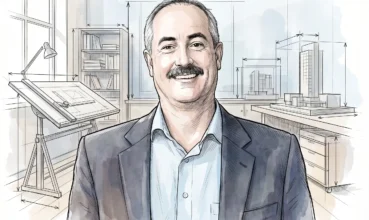
The move from professional athletics to real estate might seem like an unusual career shift, but for Joseph Lamielle, it was a logical next step. After competing at golf’s highest levels, ...

Reimagining Homeownership as Acre Homes Bridges the Gap Between Renting and Buying

Written by:
Date:
14 Oct 2025
Share via Facebook

Share via Linkedin

Share via X

Copy to clipboard


The American dream of homeownership now faces significant obstacles. In the 1970s, the average home price was just under twice the median income. Today, that ratio has risen to around six times annual income, making homeownership difficult not only for first-time buyers but also for dual-income professionals and even doctors.
Kent Keirsey, co-founder of Acre Homes, experienced this challenge firsthand when he transitioned from Army Ranger to Stanford-educated attorney in California’s Bay Area. Despite earning three times his military salary, he found that his $750,000 VA loan approval was insufficient to buy a home in the region.
“I went on Zillow and plugged in $750,000, and there were zero homes available,” Keirsey recalls. “It hit me like a ton of bricks. I would have to get two of these loans and stack them on top of each other to afford a house.”
This realization led Keirsey to help create Acre Homes, a platform designed to address what he views as a core product innovation problem in homeownership.
A New Model for Modern Living
Acre Homes offers a straightforward solution: provide residents with the benefits of homeownership without debt or the hurdle of a large down payment. The company buys homes in growing Southeast markets and partners with qualified residents, who contribute 5% through a “value share.”
This value share allows residents to receive up to half of the home’s appreciation and gives them an option to buy at the end of a three-year term. Residents benefit from appreciation whether or not they choose to exercise the purchase option.
“We have tons of quotes on our website from residents talking about how it was a no-brainer when they ran the numbers,” Keirsey explains. “If you’re going to be in a home for three to five years, it’s designed to be a better financial outcome for you.”
The model addresses how Americans live and work today. Career mobility has increased, with more frequent job changes necessary for advancement. This mobility often conflicts with traditional homeownership’s expectation of long-term commitment and the high transaction costs of buying and selling.
Aligning Incentives
Unlike traditional rent-to-own models, Acre’s approach aligns incentives from the start. Residents have a stake in the property through their value share contribution, which also serves as recourse against property damage. This creates a mindset similar to leasing a car.
“All of us have stories of treating a rental car very poorly, but we also have stories of getting in the back of a friend’s leased car and trying to open a bag of chips, and they’re like, ‘Hey, no, I’m leasing this car. You can’t mess this up because I need to get maximum trade-in value,'” Keirsey notes. “We really do see that behavior change with our residents.”
For investors, the model offers attractive risk-adjusted returns. Acre targets 7% net returns with mid-teens internal rates of return over the fund’s life. The company concentrates on markets with steady home price appreciation, especially in the Southeast, where high-wage jobs are migrating to growing communities.
The resident profile has defied initial expectations. While Acre originally targeted “mobile millennials” who value on-demand services, most residents are over 50, with two-thirds being previous homeowners who understand the obligations of ownership but want greater flexibility.
Institutional Interest and Market Position
Acre has attracted notable venture capital investment, particularly in an environment where most funding is directed toward artificial intelligence. The company currently manages around 40 homes and has operated since 2022, providing enough history to show round-trip performance on properties.
“We’re not boxing anybody out of homeownership,” Keirsey emphasizes. “We’re actually partnering with great American families that want to buy a home and share in the appreciation but want more flexibility.”
This approach helps address concerns among institutional investors about being perceived as pushing families out of homeownership opportunities.
Lessons in Product Development
Acre’s evolution has highlighted important lessons in product-market fit. The company initially focused on minimizing monthly payments, but residents soon wanted options to increase their ownership stake after moving in.
This led to Acre’s “boost” product, which allows residents to pay amounts similar to mortgage payments while receiving half the appreciation and avoiding transaction costs and qualification barriers.
The company maintains strict guidelines to ensure all products offer better financial outcomes than traditional 30-year fixed mortgages under reasonable assumptions. This discipline drives innovation in value creation rather than relying on higher fees from consumers.
Market Dynamics and Future Outlook
Acre’s model addresses several converging trends reshaping American housing. In addition to affordability challenges, consumers now expect more seamless experiences. While technology has transformed transportation and food delivery, housing transactions remain slow and stressful.
The company also acknowledges the broader social benefits of homeownership. Research shows homeowners are more likely to vote, invest in their communities, and maintain their properties. Homeowners tend to live longer, healthier, and more satisfying lives.
“There’s real value in owning your home and having a sense of ownership in where you live, so you can put down roots and invest in your community,” Keirsey notes. “As people are pushed away from homeownership, because the mortgage product hasn’t evolved, we’re really putting that sense of having roots in your community at risk.”
Looking Forward
With nearly 50 homes under management and growing interest from institutions, Acre represents a new approach to homeownership. Rather than accepting that homeownership must become increasingly exclusive, the company has created a model delivering ownership benefits with modern flexibility.
For real estate professionals and investors, Acre’s success suggests new opportunities for innovative models that bridge traditional categories. By focusing on value creation and aligning incentives for all stakeholders, the company demonstrates how product innovation can address persistent market challenges.
As housing affordability continues to pressure American families, solutions like Acre’s may prove essential for preserving the economic and social benefits of homeownership for future generations.
Similar Articles
Explore similar articles from Our Team of Experts.