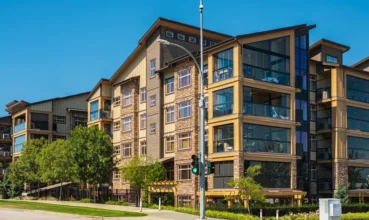

While national headlines focus on affordability challenges and rate-locked sellers, Cincinnati is telling a different story. For agents working the market daily, the city offers a combinatio...

Los Angeles Multifamily Market Confronts Forced Sales Amid Mounting Loan Maturities

Written by:
Date:
19 Sep 2025
Share via Facebook

Share via Linkedin

Share via X

Copy to clipboard


The Los Angeles multifamily market is undergoing a significant shift as years of loan extensions give way to a wave of forced sales, opening opportunities for well-capitalized buyers while pressuring overleveraged owners. After three years of banks extending loan terms to avoid distressed scenarios, lenders are now increasingly demanding repayment, fundamentally altering the market landscape.
“The market as a whole from the past three years is frothier than ever right now,” says Anna Kampling, First Vice President at CBRE and specialist in institutional and middle-market multifamily transactions. “I think people are starting to really need to sell. Prior to this year, banks were just extending, extending, extending, and now they’re like, ‘I actually need my money.'”
The Convergence of Selling Pressures
Multiple forces are driving increased selling across Los Angeles’ multifamily sector. Properties acquired between 2017 and 2019 on typical seven-to-ten-year fund cycles are reaching their exit windows as loans mature. This timing coincides with the aftereffects of the pandemic, including regulatory hurdles that have hindered owners’ business plans.
“A lot of the institutions were not able to execute their business plans,” Kampling explains, referencing the three-year rent and eviction moratorium during COVID-19, ongoing regulatory challenges, and the city’s mansion tax. “A lot of buildings are currently worth what owners paid for them seven to ten
years ago, in some cases less, as debt was cheaper, so cap rates were tighter. They just want to get it off the books and move on with their lives type situation.”
The numbers illustrate the mounting pressure. Kampling’s analysis shows $12.45 billion in loan maturities due in 2026, followed by $15.93 billion in 2027. Across all asset classes in Los Angeles from 2025 to 2030, total loan maturities reach $146.8 billion.
Shifting From Private Capital to Institutional Focus
Kampling’s own trajectory reflects broader market changes. After transitioning from fashion to tech and then into commercial real estate, she built her reputation at Colliers International, in the private capital and middle market space before joining CBRE to focus on larger institutional transactions.
Her approach to relationship-building highlights the importance of connections in the industry. A cold call to Donald Sterling became a pivotal moment, leading to introductions to Brookfield’s chairman and her first $67 million deal.
“I always say when people ask for advice about getting into commercial real estate, half jokingly, just get to know your local billionaire,” Kampling remarks. “The exposure they have and the people coming to them is mind-blowing.”
Now, Kampling focuses on deals from $50 million to $250 million, typically involving 50 to 350 units across Southern California, working primarily with institutions, funds, and REITs rather than the smaller private capital deals that marked her earlier career.
International Capital Steps In
Foreign investors are providing new sources of capital for properties. Japanese investors, in particular, have become active in Los Angeles, utilizing depreciation schedules that allow 100% depreciation within four years for buildings over 23 years old.
“Over the past year or so, the Japanese have started to come into the states,” Kampling observes. “They’re looking for main areas like LA, New York, San Francisco-type locations.” Korean pension funds and other international groups are also joining the market, alongside domestic sovereign wealth funds.
Affordable Housing as a Strategic Avenue
Amid the challenges, affordable housing programs are gaining traction as both an investment strategy and a mechanism to retain essential workers in Los Angeles. These programs help maintain naturally occurring affordable housing and offer tax benefits for sellers.
“The affordable space is getting bigger, which is great because it’s keeping that naturally occurring rent control so teachers, policemen, and hospital workers are all able to live where they work versus being pushed out by the rising costs of inflation,” Kampling says. Affordable housing deals also avoid Los Angeles’ 5.5% mansion tax on transactions over $10 million, providing relief for sellers already facing losses.
Leveraging Technology and Market Intelligence
Kampling has contributed to CBRE’s analytical capabilities by helping to develop internal loan maturity tracking software.
“When I came over to CBRE, I was like, ‘Do you have a loan tracking software? I need this,'” she recalls. The resulting system tracks two main drivers of institutional sales: loan maturities and fund lifecycle requirements, offering essential intelligence for identifying likely sellers.
While artificial intelligence tools are increasingly present in commercial real estate, Kampling notes that institutional transactions still rely heavily on relationships. “Our business on the institutional and fund side is so relationship-oriented that cold calling and AI tools can sometimes come across as spam,” she says.
Market Outlook and Opportunities
Despite the current headwinds, Kampling is optimistic about Los Angeles’ medium-term prospects. The city will host major global events, including the FIFA World Cup in 2026, the Super Bowl in 2027, and the Olympics in 2028.
“I feel like it’s an exciting time to be in LA,” she says. “I think it’ll be prime time in our city to hopefully get returns on your investments.”
The ongoing trend of distressed sales is expected to persist, particularly impacting smaller operators and syndicators rather than large institutions, except in the office sector where even major institutions are seeing losses.
Banks are increasingly repossessing assets, stabilising them, then quickly exiting, as they are not operators. This dynamic creates opportunities for buyers with capital to acquire assets from motivated sellers, especially as the wave of loan maturities continues through the decade.
For investors and industry professionals, the current landscape presents both challenges and opportunities. Overleveraged owners face tough decisions, but those with available capital may find appealing acquisition prospects as forced sales increase market liquidity after years of limited transaction volume.
The Evolution of Los Angeles’ Multifamily Market
The transformation underway in Los Angeles mirrors broader industry trends toward institutional consolidation and the ongoing impact of regulatory changes on investment returns. As loan maturities accelerate and distressed situations become more common, market participants must navigate an increasingly complex environment where relationship-building and data-driven intelligence are essential.
The next several years will test the adaptability of owners, lenders, and investors alike. Those who can identify distressed opportunities, leverage strong relationships, and navigate regulatory and tax complexities will be best positioned to benefit from the market’s evolution.
In the face of mounting loan maturities and regulatory pressures, Los Angeles’ multifamily market is entering a new phase, one defined by increased transaction activity, the entry of international capital, and a growing focus on affordable housing strategies. For those prepared to act, the coming years could offer significant opportunities amid the challenges.
Similar Articles
Explore similar articles from Our Team of Experts.