
A veteran New Jersey real estate expert argues that determining the right listing price has become increasingly complex, with seller expectations often working against their own interests in...

Home Buying Trends Show 80% Are No Longer Nuclear Families

Written by:
Date:
06 Oct 2025
Share via Facebook

Share via Linkedin

Share via X

Copy to clipboard

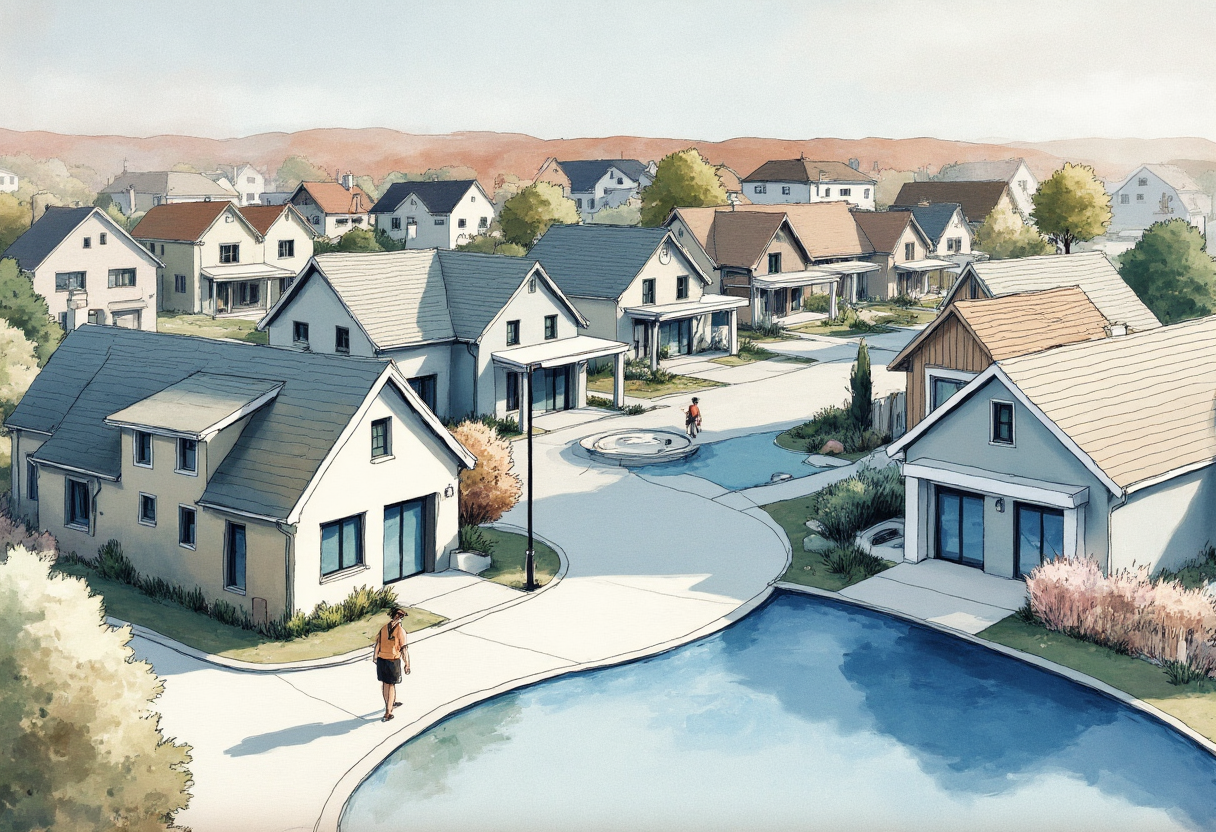
Suburban master-planned communities need a radical rethink to serve today’s diverse homebuyers, according to Mike Miller, Executive Vice President of Real Estate at Red Oak Development Group, who argues the industry remains stubbornly focused on outdated housing models.
“80% of the home buyer pool out there is actually not your traditional nuclear family,” Miller says, highlighting a dramatic shift in buyer demographics that many developers have been slow to recognize. “We’re still seeing your typical developers with standard front-load 40s, 50s, 60s lot sizes and call it a day. It’s very boring when our industry gets down to that.”
The Mismatch Between Product and People
Miller argues that the persistent focus on large single-family homes creates a significant disconnect between available housing and actual buyer needs. “We want to cater to the young single mother with one or two kids and provide cottage living product. We want to provide townhouse product for the young professional couple that wants to move to the suburbs but wants to be next to the mixed-use center,” he explains.
This mismatch extends to active adults as well. According to Miller, many empty nesters “want that front porch living and beautiful park space they can overlook” through alley-load products that enable a lock-and-leave lifestyle, quite different from the traditional large-lot suburban home.
Breaking the McMansion Mold
“We’ve got to break the mold of these 40s, 50s, 60-foot front-loaded lots and every house has a four-bedroom unit. It’s just not what today’s buyers want,” Miller asserts. He emphasizes that developing smaller, more diverse housing types doesn’t mean sacrificing quality.
“We’re not sacrificing quality, we’re just simply going down in square footage of the home size and lot size,” Miller explains. “There’s a lot of studies out there that I think are getting pushed to the side that are saying home buyers will sacrifice a smaller lot or smaller home in order to be able to purchase the American Dream.”
The Path Forward
Red Oak Development Group is putting this philosophy into practice across their communities, particularly in emerging submarkets around Austin. Miller says their approach involves extensive consumer research to validate new product types and educate builders who may be hesitant to deviate from traditional models.
“We need to start designing homes for a kind of changing world,” Miller argues. “Our residential strategy incorporates an array of housing types to meet those needs and today’s prismatic household compositions, not just adding them for variety, but adding them so it makes a more inclusive community for everyone.”
Similar Articles
Explore similar articles from Our Team of Experts.