
The Florida Panhandle real estate market is undergoing significant changes, shaped by military base reconstruction and evolving buyer expectations in a higher interest rate environment. As t...

W Land Development’s Collaborative Approach to Master-Planned Communities

Written by:
Date:
05 Aug 2025
Share via Facebook

Share via Linkedin

Share via X

Copy to clipboard

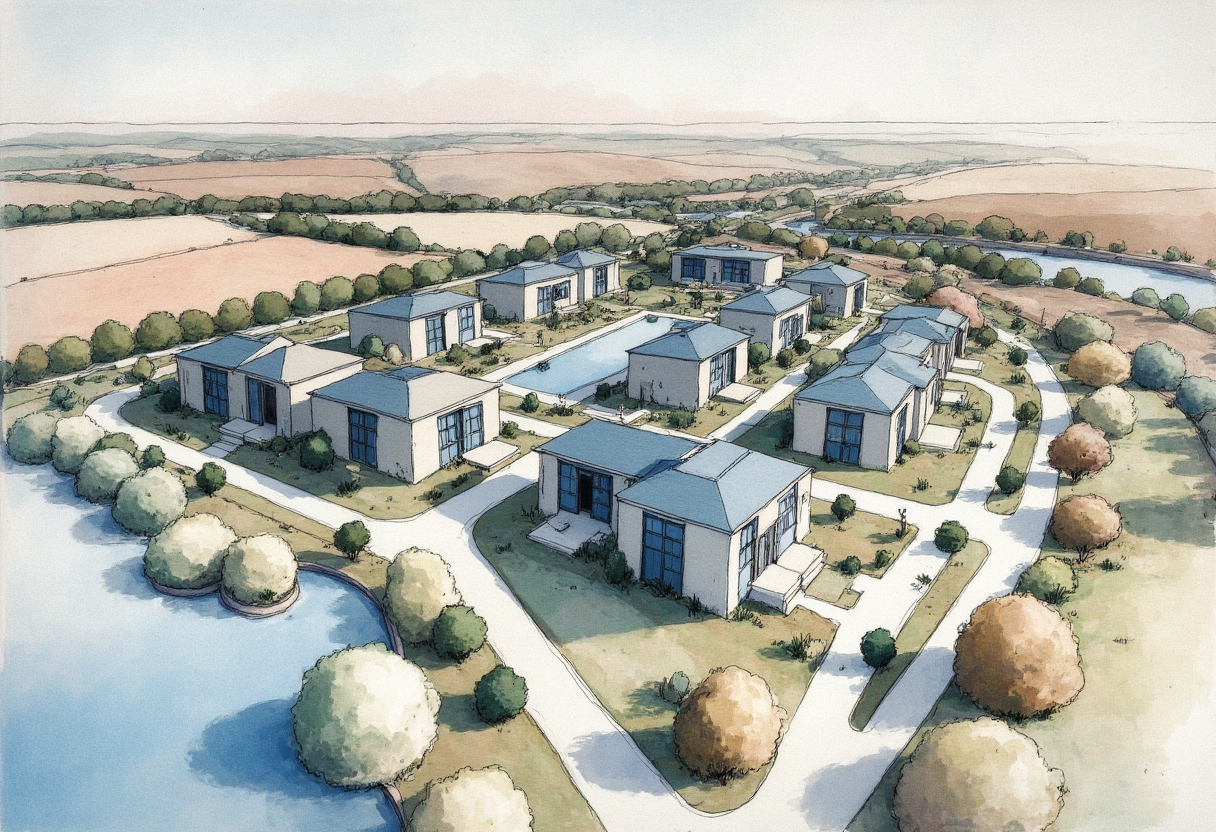
The master-planned community sector has changed notably over the past decade, driven by shifting demographics, evolving lifestyle preferences, and economic pressures. At the forefront of this change is W Land Development, where Lisa Clark brings four decades of industry experience to creating communities that emphasize partnership and long-term value.
Lisa Clark’s approach to development reflects broader shifts in how Americans think about homeownership and community living. Where previous generations aspired to large lots with white picket fences, today’s buyers increasingly seek quality over quantity, outdoor experiences over indoor square footage, and walkable communities over sprawling subdivisions.
A Partnership-Driven Development Philosophy
W Land Development’s strategy centers on what Clark describes as comprehensive partnership building. Rather than the traditional developer-centric approach, the company works collaboratively with municipalities, builders, consultants, and future residents from project inception.
“We do it with partnerships,” Clark explains. “Our first step when we started Preservation Creek was to close on the land and figure out what we wanted to do with our master plan. But we need to do this in conjunction with Alvin. That’s our partner.”
This collaborative approach was crucial in Alvin, Texas, where W Land is developing the 3,000-acre Preservation Creek community. The city had limited exposure to large-scale master-planned communities. Clark’s team conducted training sessions with city officials, introducing them to master-plan development from the ground up.
“We went in and did about three training courses. I took my entire consulting team, and we basically showed them how we create a master plan, why we create a master plan, and what the benefits are,” Clark notes. “We talked about mobility and circulation and schools, and how people can walk to and from retail and commercial.”
The investment paid off. After two years, all project documents were approved in June 2023, and the city has remained an active partner throughout development. This relationship extended beyond the immediate project, with W Land helping establish Alvin’s Austin Bayou District, a 17,000-acre development zone where Preservation Creek serves as the founding project.
Evolving Market Demands and Community Design
Clark’s experience provides insight into how buyer preferences have shifted. The most significant change involves lot sizes and maintenance expectations, driven by affordability and lifestyle preferences.
“Everybody’s dream was owning a home with a white picket fence and lots of land and big lots,” Clark observes. “The demand is still there, it’s just not as high. It’s switched to smaller lot sizes, either because they can’t afford it yet, or they’re like me and my husband, we want to lock and leave.”
This trend toward smaller lots doesn’t mean a compromise in quality. Buyers are investing in higher-quality homes on more manageable properties. At Preservation Creek, lot sizes typically range from 40-foot widths up to 60-foot widths initially, with larger lots introduced later as community value builds.
The shift reflects different life stages. Empty nesters seek low-maintenance properties, while younger buyers prioritize affordability and amenities over private yard space.
Outdoor Space as Community Differentiator
A major trend Clark identifies is rising demand for outdoor community spaces, accelerated by the pandemic. “People got tired of being locked up in houses,” she explains. “So it’s really nice to have all the outdoor space. We do find that outdoor space is in better demand than it’s ever been.”
This extends beyond traditional amenities to robust trail systems and nature areas. At Preservation Creek, W Land is developing a 250-acre regional park with lakes, nature trails, and recreational opportunities in partnership with Alvin.
“People are really looking for the outdoor experience, to be able to go out with your neighbors, meet at the recreation center or meet at a park area, hang out on a Friday night, let the kids play and just enjoy each other,” Clark notes.
This emphasis on outdoor space is a fundamental shift in development economics. Rather than maximize residential density, W Land preserves significant open space, viewing it as essential to long-term value and resident satisfaction.
Strategic Market Positioning
W Land’s target market reflects modern commuting and employment patterns. For example, many people endure long drives along Highway 288 and the Lake Jackson industrial area, not to mention the proximity to the Texas Medical Center, and Preservation Creek offers a convenient living option for these commuters.
“We’ve got a lot of industry down towards Lake Jackson, and there’s a lot of folks that live past our area, so they use that 288 corridor to travel to and from work,” Clark explains. “We’re offering an opportunity for them to live closer to work.”
This positioning addresses a common challenge: creating sufficient demand in emerging markets. By focusing on existing commuting and employment centers, W Land reduces risk while providing value to buyers seeking reduced travel time and costs.
The approach also serves existing Alvin residents looking to upgrade to newer homes within their established community, creating a diverse buyer base for long-term stability.
Urban Infill Trends and City Development
Beyond suburban communities, Clark observes significant urban trends, especially in Houston where she chairs the Houston Planning Commission. The city’s 30-day permit process has accelerated infill development, responding to residents who prefer urban living and minimal car dependency.
“What we’re seeing is demand for smaller infill, because people want to be right next door to where they work,” Clark notes. “Some folks don’t want to drive a car, so they want to live close to town, and we’re seeing that trend more and more, getting a little bit more dense inside the city.”
This urban trend complements suburban master-planned development, as different demographic segments seek different lifestyle solutions. The key is that successful developers must respond to diverse market segments rather than applying one-size-fits-all approaches.
Project Selection and Market Discipline
W Land’s approach to project selection reflects the importance of economic fundamentals. Clark describes passing on a 180-acre project south of Preservation Creek due to regulatory requirements that would have made lot costs prohibitively expensive.
“We look at whether we can provide future residents with a community they’re proud of, that they love to live in, where the quality is there and continues to grow, and their values grow,” Clark explains. “But you have to be able to be at a certain price per lot to be able to deliver it to a point where the builders can afford the lots, and ultimately, the resident can buy a home.”
This discipline reflects broader market realities where affordability constraints limit development options. Developers must balance quality aspirations with economic feasibility, requiring careful analysis of regulatory environments, infrastructure costs, and absorption rates.
Looking Forward: Community Launch and Market Response
As Preservation Creek approaches its market launch, with first lot deliveries scheduled before December and grand opening planned for spring 2026, the project represents a test case for W Land’s partnership-driven approach.
The community’s success will depend on execution of the outdoor-focused amenity program, effective partnership with local builders, and the market’s response to the balance between lot affordability and quality. Early indicators suggest strong builder interest, with model home construction beginning on schedule.
For the broader master-planned sector, Preservation Creek offers insights into evolving strategies that prioritize long-term community value over short-term density maximization. As trends continue favoring outdoor amenities and experiences, W Land’s approach may signal the future direction of suburban development.
The project also demonstrates the importance of municipal partnerships, particularly in smaller cities experiencing growth. By investing in collaborative relationships and knowledge transfer, developers can create more supportive regulatory environments while helping communities manage growth effectively.
As the master-planned community sector continues to change, W Land Development’s emphasis on partnership, outdoor amenities, and market discipline provides a framework for creating communities that serve both residents and broader regional development goals.
Similar Articles
Explore similar articles from Our Team of Experts.