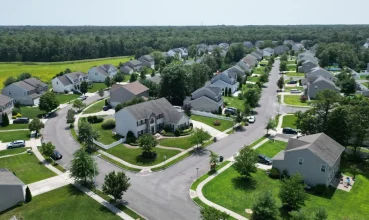

Starter homes in several Jersey Shore neighborhoods are now selling for 20 to 40% more than just a few years ago, as investors and first-time buyers target properties that were once overlook...

Forbes Global Properties CEO Says It’s Not Off Market But Controlled On-Market in Ultra-Luxury Marketing Shift

Written by:
Date:
12 Aug 2025
Share via Facebook

Share via Linkedin

Share via X

Copy to clipboard


The ultra-luxury real estate market is witnessing a fundamental shift in how properties are marketed, with increasing emphasis on controlled exposure rather than traditional public listings, according to one industry leader.
“We’ve had an offering that our clients just love. It’s called Private Office,” reveals Michael Jalbert, CEO of Forbes Global Properties. “Private Office properties really control how they’re exposed. It’s not off market, but controlled on-market requiring password protection, discretion.”
The Magazine Experience
This controlled approach extends to how properties are presented online. “If you go to portfolio.com you have much more of an ‘I am’ magazine experience than you will portal,” Jalbert explains. “You’ll see beautiful, full screen, high resolution pictures.”
The content strategy goes beyond just property features. “You’ll see great content that’s created by our team that writes beautiful stories about the geography, the broker, the property itself,” he notes. “This approach is supported by award-winning editors that work for us. They have a dozen writers that work for them around the world.”
Technology Freedom
Unlike many networks, Forbes Global Properties takes an unusual approach to technology. “What we include in our offering is not dictating the technology to members,” Jalbert says. “The members are free to use whatever technology helps drive their business.”
This flexibility stems from practical considerations. “Being a global community, it’s difficult to track a consistent technology that works in all geographies,” he explains. “Instead, they focus on ‘the strong content we create.'”
Measuring Impact
The effectiveness of this approach is measurable. According to Jalbert, Meltwater media studies comparing Forbes Global Properties against eight leading luxury brands have shown remarkable results. “The first time we did the measurement, our share of 100 points of voice came back at 67, the next closest was 12,” he reports.
The Network Effect
This marketing approach becomes particularly powerful when combined with global reach. “If you’re not part of the global network, despite being local experts, despite having decades of experience in your craft,” Jalbert notes, “you’re at a disadvantage when competing for listings.”
“When they’re talking to this one local expert and someone else who maybe has the same level of expertise, or maybe not even quite so much, but they’re part of a global network, and they can tell a story about how they get eyeballs around the world to take a look at that property listing… that’s a gap that we really serve,” he explains.
Looking Forward
The future of ultra-luxury marketing appears to be evolving rapidly. Jalbert hints at upcoming developments: “We would continue as we evolved into Private Office 2.0,” suggesting that controlled exposure and sophisticated content strategies will become increasingly important in the luxury real estate market.
This evolution reflects a broader trend in luxury real estate marketing, away from mass exposure and toward carefully curated, highly targeted presentation of properties to qualified buyers.
Similar Articles
Explore similar articles from Our Team of Experts.