
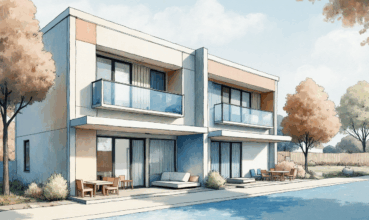
At Killian Pacific’s Jack Straw development, Director of Development Cassidy Bolger is overseeing a new pilot program that dedicates two ground-floor, two-story townhome units for in-home ...

'You Can't Build Any More Mobile Home Parks,' Industry Leader Warns of Disappearing Affordable Housing Stock

Written by:
Date:
25 Jul 2025
Share via Facebook

Share via Linkedin

Share via X

Copy to clipboard

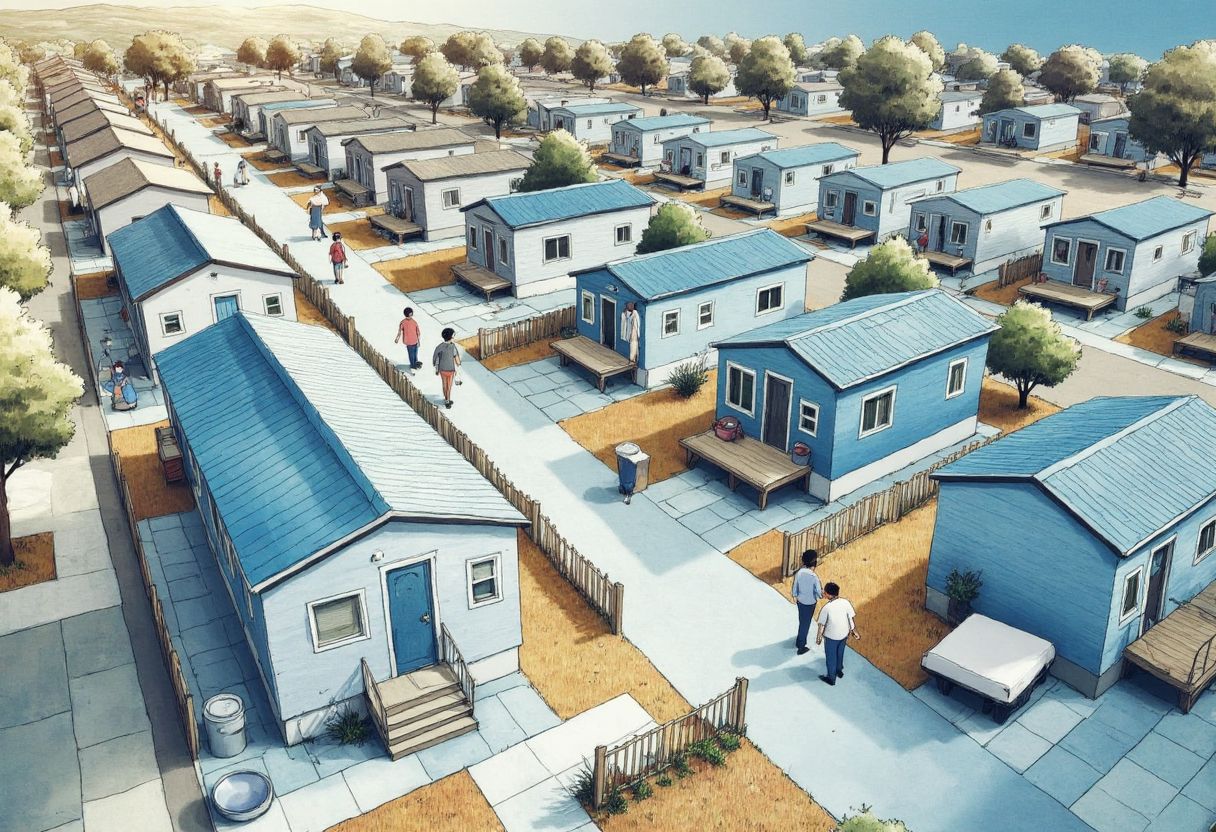
A concerning trend is emerging in affordable housing: manufactured home communities are disappearing, and according to one industry expert, they can’t be replaced.
“You can’t build any more mobile home parks, it’s truly something that’s diminishing in supply,” says Michael Anise, CEO of FG Communities. “Our value of the portfolio increases every day, because it’s something that’s diminishing in supply, but ever so increasing in demand.”
The Supply-Demand Disconnect
Anise points to a fundamental market imbalance driving the crisis. “There is no shortage of demand for affordable housing anywhere you look in the country today,” he says. “This is by far the most affordable housing option that folks can get into that’s not subsidized by the government.”
The result? “We have extremely high demand waiting lists in our communities, and the demand is just overwhelming,” Anise reports.
The Development Pressure
The situation is particularly acute because well-located communities face constant pressure from developers. “Unfortunately, you have a lot of community owners that don’t really care about what happens to the tenants, and they’ll sell to a developer that want to kick everybody out to build something else,” Anise explains.
This dynamic has sparked what Anise describes as a race to preserve existing communities. “That’s why we’re pretty aggressive in the aggregation and acquisition phase right now, to make sure that we’re preserving these communities,” he says.
A Mission-Driven Approach
FG Communities, which Anise co-founded in 2022, has acquired about 50 properties with over 2,000 home sites, focusing on communities in major metropolitan areas in the Southeast.
“Our mission is to preserve and improve affordable housing,” Anise emphasizes. “The preservation part is key, and that’s why we’re aggregating these communities, to make sure that we’re preserving them from other types of buyers that want to unfortunately turn it into something else and lose that affordable option for folks.”
The company’s approach appears to be resonating with longtime community owners. “Most of our communities we buy from mom and pops that have had these communities for a long time,” Anise says. “Some of them have even inherited these communities from their parents, and they don’t want to sell it to just anybody, they care about their tenants.”
Similar Articles
Explore similar articles from Our Team of Experts.
Real Estate Investment, Commercial Real Estate, Market Analysis & Policy, Perspectives, Industry News
The idea that regional banks have pulled back entirely from commercial real estate lending oversimplifies the reality, according to Stephen Haase, Director of Capital Markets at Greysteel. W...