
A property that sits outside a designated FEMA flood zone is not necessarily free of flood risk. It may simply be in territory nobody has formally assessed yet. The United States has roughly...

Backpacker Hostels to Boutique Investments: Untapped Potential in Hostel Real Estate

Written by:
Date:
20 Jun 2025
Share via Facebook

Share via Linkedin

Share via X

Copy to clipboard

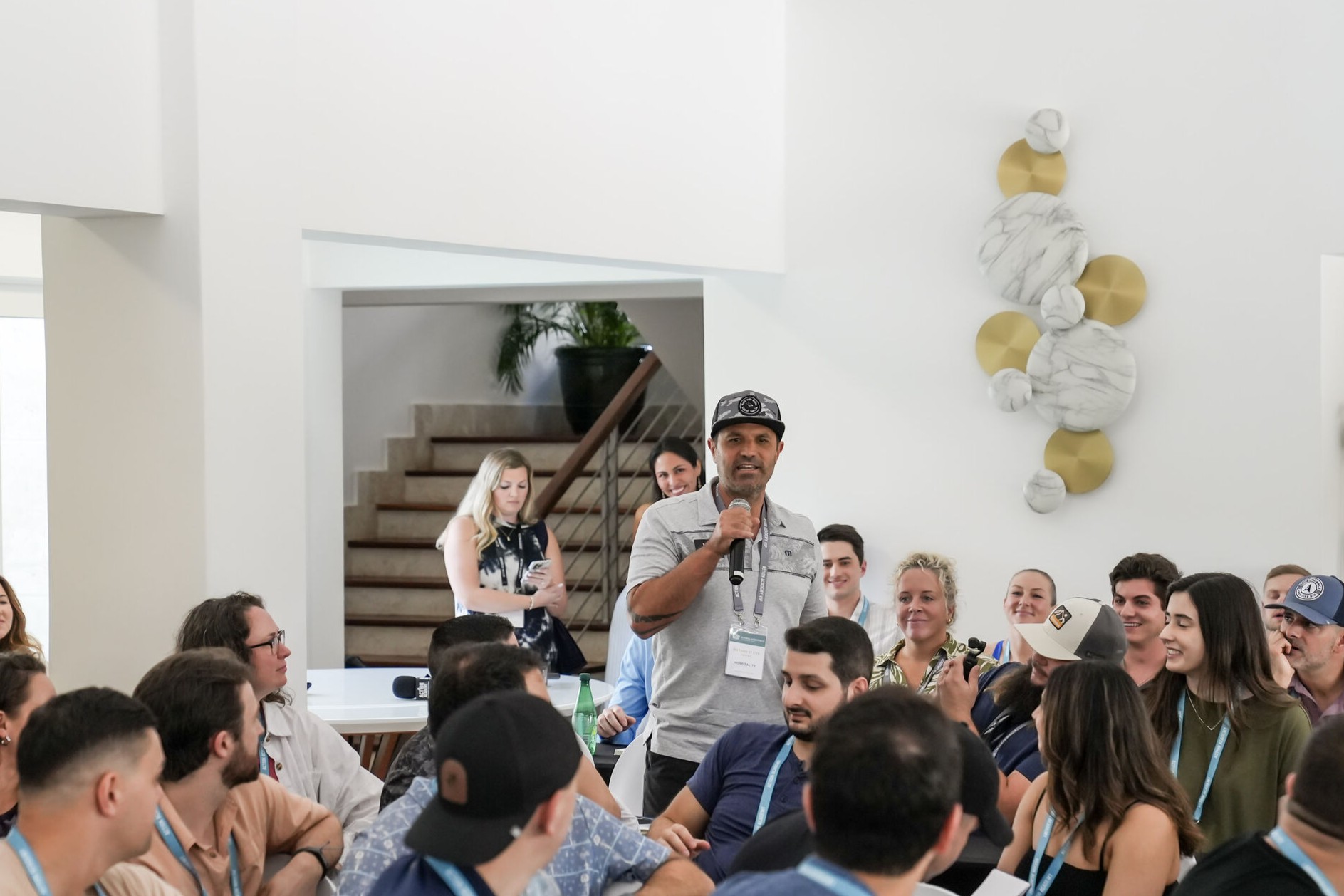
“We purchased a building for $821,000 and now we’re budgeted in 2025 for $800,000 of NOI. That’s exceptional by any standard,” says Nathan St. Cyr, co-founder of Howzit Hostels and host of The Hotel Investor Playbook podcast.
In a real estate market where traditional investments face rising interest rates and changing dynamics, St. Cyr and his business partner Mike have discovered a surprisingly lucrative niche: hostels. Their journey from corporate careers to creating North America’s top-rated small hostel offers valuable insights for investors seeking alternative strategies with compelling returns.
From Corporate Success to Hostel Entrepreneurship
St. Cyr’s path to hostel investing began with a familiar catalyst. “My entire life has been about finding a way to create financial freedom,” he explains. “That started over 25 years ago, reading Rich Dad, Poor Dad when it was first published.”
His initial goal was modest: accumulate $500,000 in assets generating a 10% return for $50,000 annual income. But as his career progressed, building performance-based sales teams and helping increase a company’s value by approximately $1.5 billion, his vision expanded dramatically.
“That original $500,000 goal has now become a path to creating a $400 million company,” St. Cyr says. “Instead of creating someone else’s company to increase their value a billion dollars, let’s go do this on our own.”
The Accidental Hostel Discovery
The pivot to hostels wasn’t planned. St. Cyr and Mike were initially searching for apartment buildings in Hawaii when they encountered a listing with an intriguing note: “previously being run as a hostel.”
This chance discovery led them to research the global hostel market. What they found surprised them: an asset class with approachable purchase prices and hotel-like margins, particularly in Hawaii where traditional hotels rarely trade for under $25 million.
“We looked at this and thought, ‘Wait a minute, this property is selling for a couple million dollars,'” St. Cyr recalls. “Could we potentially purchase more affordable pieces of commercial-backed, hotel-zoned real estate without competing with hoteliers at hotel costs?”
The 3X Revenue Model
The business model’s appeal became clear when they analyzed the revenue potential. St. Cyr explains it simply: “Let’s say you have an economy-based hotel room at $100 per night. If we maximize and optimize the space, we can put three bunks or six beds in that room at $50 per bunk. Now we’ve taken an average daily rate of $100 for that room and turned it into $300.”
This 3x revenue potential creates margins exceeding traditional multifamily investments while maintaining more affordable entry points than hotels. Additionally, the hospitality business model offers numerous operational levers to increase revenue and decrease expenses.
“The more levers you can pull to increase top-line revenue and decrease expenses, the more you can force equity, build wealth, and compress time,” St. Cyr explains.
Redefining the Hostel Experience
Recognizing that hostels carry certain stigmas in the American market, St. Cyr and Mike focused intensely on elevating the experience. “We decided that obsessing over the guest journey and renovating to our standards would be key to increasing occupancy and average daily rate,” he says.
Their approach has paid off. Howzit Hostels is now ranked as the number one small hostel in North America, offering what St. Cyr describes as an “unbelievable boutique swaggy feel” that defies traditional hostel stereotypes.
“If you visit howzithostels.com and you have preconceived notions about what a hostel is, and then you see our website or Instagram page, you’ll think, ‘That’s not what I expected. This is impressive.'”
Signs of a Growing U.S. Hostel Market
While hostels remain more established in Europe and other international markets, St. Cyr sees clear indicators that the U.S. market is catching up:
- Major Acquisitions: In 2019, European hostel giant Generator purchased Freehand, which had four U.S. properties in major cities like Los Angeles and Miami, for $400 million. “If one of the biggest players in the European market sees value in the U.S. and invests $400 million, we’re onto something,”St. Cyr notes. Generator itself was recently valued at approximately $900 million.
- Industry Organization: The formation of the North American Hostel Association (NAHA) has created legitimacy and trade agreements for the sector.
- Specialized Booking Platforms: New online travel agencies focused specifically on hostels are emerging to serve the growing market.
Business-First Approach as Competitive Advantage
Unlike many hostel operators who enter the business after falling in love with the concept while traveling, St. Cyr and Mike approached it from a business perspective first.
“We came into it with a business mindset, and then we fell in love with the guest experience and the impact it was having,” he explains. “Most hostel owners start as travelers who had great experiences and want to recreate that. It’s a passion project for them.”
This business-first approach, combined with their complementary strengths, St. Cyr in team building and Mike in systems development, has allowed them to create a scalable operation.
“Initially, 80% of our time was spent learning the business, being in the business, putting the right people and processes in place,” St. Cyr says. Today, they’ve implemented the Entrepreneurial Operating System (EOS) throughout their business, reducing their operational involvement to just “three to five hours per week,” freeing them to focus on growth and acquisitions.
The Path to $400 Million
After bootstrapping their initial property and proving their concept, St. Cyr and Mike are now in “full acquisition mode,” seeking capital partners to accelerate growth. Their investment company, Malama Capital (named after the Hawaiian word meaning “to protect and to preserve”), targets properties in the $3-10 million range.
Their investment thesis focuses on several key factors:
- High traveler volume: Their business model requires substantial foot traffic to achieve the occupancy levels needed for strong returns.
- Experiential focus: Their full-service approach caters to the growing demand for experiential travel.
- Strategic positioning: They target properties that might be too small or require too much renovation for boutique hotel investors, yet are too expensive for typical hostel operators.
For investors, the returns can be substantial. St. Cyr notes they target “returns north of 20% IRRs and 2.5 to 3 multipliers over a seven-year hold period.”Their recent fundraising success, raising over $2 million in just a couple of weeks without going public with their offering, demonstrates growing investor confidence in their model.
Lessons for Real Estate Investors
The Howzit Hostels story offers several valuable insights for real estate investors considering alternative asset classes:
- Look for underserved niches: The U.S. hostel market lags behind international markets, creating opportunity for early movers.
- Focus on operational excellence: In hospitality, superior operations can dramatically increase NOI and property values.
- Redefine expectations: By elevating the hostel concept beyond backpacker accommodations, they’ve tapped into broader market demand.
- Build complementary partnerships: St. Cyr credits much of their success to the complementary skills he and Mike bring to the business.
As traditional real estate sectors face challenges, alternative investments like hostels offer a compelling option for investors willing to explore beyond conventional asset classes. With the right operational approach and market selection, the returns can be exceptional, turning an $821,000 investment into an asset generating $800,000 in annual NOI in just a few years.
For those interested in learning more about hostel investing, The Hotel Investor Playbook podcast offers ongoing insights into their journey and the broader hospitality investment landscape.
Similar Articles
Explore similar articles from Our Team of Experts.