
Central Florida’s real estate market is undergoing what Matthew Buckley describes as a “correction” rather than a crash, a distinction that matters for both buyers and sell...

Wall Street to Side Street: The Growing Divide in Manhattan's Office Market

Written by:
Date:
16 Dec 2024
Share via Facebook

Share via Linkedin

Share via X

Copy to clipboard


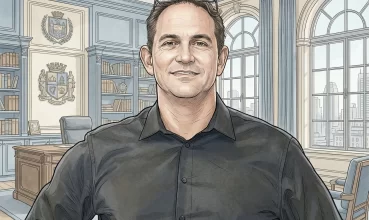
The New York City office market is experiencing an unprecedented dichotomy, with prime properties attracting blue-chip tenants while overall vacancy rates hover at historic highs. Bert Rosenblatt, Managing Principal at Cresa’s New York City office, offers unique insights into the market’s current state and its potential trajectory.
New York’s office market presents a stark contrast: while vacancy rates have reached 22% – representing approximately 120 million square feet of available space – the city’s most prestigious buildings continue to secure high-profile tenants. “The nicest, fanciest buildings in New York City are all rented,” explains Rosenblatt. “But buildings that haven’t been renovated in 25 or 30 years, or maybe on side streets and not on avenues, those buildings are really suffering.”
Recent high-profile deals underscore this trend. Private equity giant KKR expanded its presence in Hudson Yards, taking an additional 300,000 square feet, while Bridgewater, the world’s largest hedge fund, relocated from Connecticut to secure 100,000 square feet in Manhattan. These moves reflect a broader pattern of elite firms prioritizing premium space with extensive amenities.
“These companies have very deep pockets, and the rent is almost irrelevant,” Rosenblatt notes. “All that’s really relevant is that they get the smartest people they can find.” To attract and retain talent, buildings are being equipped with unprecedented amenities – from gyms and roof decks to private clubs and even speakeasies. “There’s been a massive amount of dollars thrown at trying to get people back to work. The idea is, basically, this is nicer than your apartment.”
The market’s current state reflects the ongoing impact of remote work. While major companies like Amazon and Salesforce are pushing for full-time office returns, many firms are downsizing their footprint while upgrading their space. Rosenblatt points to KPMG as a prime example – the accounting giant recently reduced its space from 850,000 to 450,000 square feet.
Looking ahead, Rosenblatt sees several potential catalysts for market recovery, with interest rates playing a crucial role. “If rates come down, that’s going to have a really good effect on the US economy, and then on the New York City office leasing market,” he explains. Additionally, the conversion of older office buildings to residential use could help address the supply-demand imbalance, with some areas of Manhattan already being rezoned for this purpose.
Despite current challenges, Rosenblatt remains optimistic about New York’s future. “New York is very hard to kill,” he asserts, pointing to the city’s diverse economic base spanning finance, law, arts, and technology. The city continues to attract young talent, with surveys showing that half of college-age Americans express interest in living in New York at some point in their lives.
This magnetic pull of talent, combined with the city’s multi-industry ecosystem, suggests a path to recovery – albeit one that may take several years to fully materialize. “It’s much more active now than it was even two years ago,” Rosenblatt concludes, “but we need new economy type tenants, AI tenants, tech tenants, to come back. It can’t just be all private equity and banks and law firms.”
Similar Articles
Explore similar articles from Our Team of Experts.